Is It Safe?
While beautiful, periwinkle deserves respect.
Parts of the plant contain naturally occurring alkaloids and can be toxic if eaten by people or pets.
For that reason:
- do not use it in homemade herbal remedies;
- keep it away from curious children;
- prevent pets from chewing the leaves or stems.
Always seek medical advice if accidental ingestion occurs.
How to Grow Periwinkle
Growing this hardy plant is simple.
Sunlight
- Partial shade is ideal.
- Full shade is tolerated.
- Morning sun with afternoon shade often produces the best results.
Soil
Periwinkle adapts well to:
- sandy soil;
- clay;
- loam;
- rocky ground.
Good drainage is more important than soil type.
Watering
After planting:
- water regularly until established.
Once mature:
- water only during extended dry periods.
Overwatering can encourage fungal diseases.
Spacing
Plant young periwinkles about 12 to 18 inches (30–45 cm) apart.
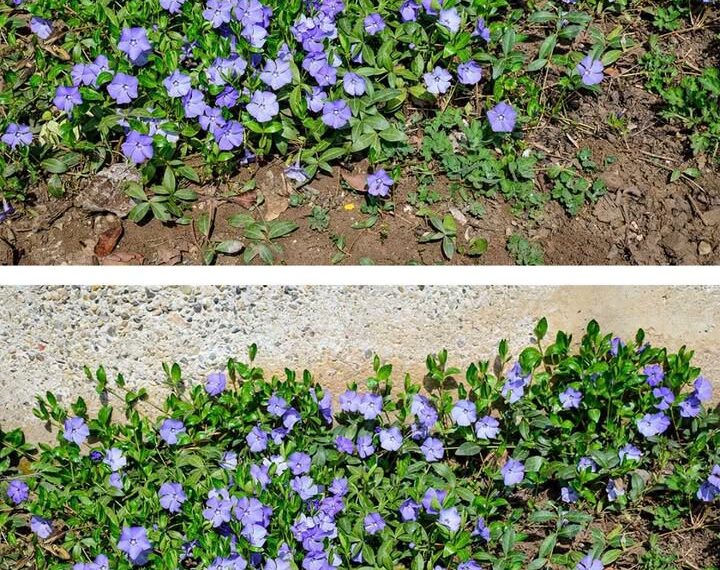
Within one or two growing seasons, they usually knit together into a dense carpet.
Easy to Propagate
One of the reasons gardeners love periwinkle is how easily it multiplies.
Simply:
- Select a healthy trailing stem.
- Cut a section with several leaf nodes.
- Plant it in moist soil.
- Keep it lightly watered until roots develop.
Because the stems naturally root where they touch the ground, propagation is often effortless.
Where It Looks Best
Periwinkle works beautifully in:
- woodland gardens;
- beneath trees;
- around shrubs;
- rock gardens;
- borders;
- retaining walls;
- cemetery plantings;
- shaded pathways;
- slopes and embankments.
Its cascading habit also makes it attractive spilling over the edges of raised beds or containers.
One Important Drawback
Periwinkle’s greatest strength can also become its biggest weakness.
In favorable conditions, it spreads quickly and may outcompete native vegetation. In some regions, it is considered invasive.
To keep it under control:
- edge planting beds regularly;
- trim wandering stems;
- avoid planting near natural forests or protected habitats;
- check whether it is recommended—or restricted—in your local area before planting.
Final Thoughts
Periwinkle may not be the flashiest plant in the garden, but its combination of beauty, resilience, and practicality makes it a favorite among experienced gardeners. It forms a lush evergreen carpet, suppresses weeds, stabilizes soil, thrives in shady spots where grass struggles, and produces charming flowers that brighten the landscape each spring.
Its relatives have even contributed to life-saving medical treatments, highlighting the remarkable value of plants in scientific research. Still, it’s important to remember that while these pharmaceutical discoveries came from plant compounds, periwinkle itself is not safe to use as a home remedy.
Whether you’re searching for an attractive ground cover or simply appreciate plants with an interesting story, periwinkle proves that sometimes the most unassuming plants have the greatest impact.