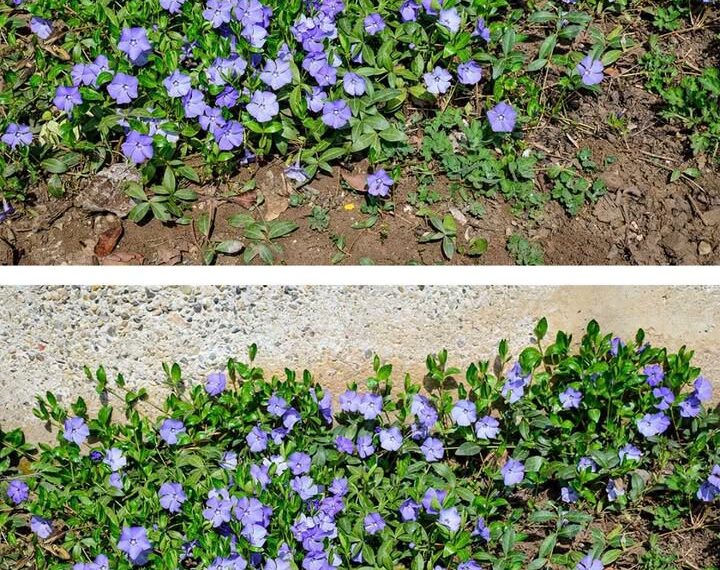
At first glance, this beautiful plant may seem like nothing more than a colorful ground cover with delicate purple-blue flowers. But don’t let its modest appearance fool you. Often overlooked in gardens and landscapes, periwinkle (Vinca) is one of the hardest-working plants you can grow.
From preventing soil erosion to suppressing weeds and attracting beneficial pollinators, this evergreen perennial has earned its place in gardens around the world. In traditional herbal medicine, certain species have also been studied for compounds that led to important pharmaceutical discoveries. However, it’s important to note that the plant itself should never be self-medicated due to its toxicity.
Whether you’re looking for a low-maintenance landscaping solution or simply want to learn why so many gardeners swear by this plant, here’s everything you need to know.
What Plant Is It?
The plant shown in the image is commonly known as periwinkle or creeping myrtle.
The two species most commonly grown in gardens are:
- Vinca minor (Common Periwinkle) – smaller leaves and flowers, very cold-hardy.
- Vinca major (Large Periwinkle) – larger leaves and blooms, grows more vigorously in warmer climates.
Both species produce glossy evergreen foliage and beautiful five-petaled flowers that bloom in shades of blue, violet, lavender, or white.
Why Gardeners Love It
Periwinkle isn’t just attractive—it solves several common gardening problems.
1. It Creates a Living Carpet
Instead of bare soil, mulch, or gravel, periwinkle spreads into a lush green carpet.
This natural blanket:
- fills empty spaces;
- softens garden borders;
- creates year-round greenery;
- reduces maintenance.
2. It Helps Prevent Soil Erosion
One of periwinkle’s greatest strengths is its dense root system.
As the stems spread, they root wherever they touch the soil, helping to:
- stabilize slopes;
- reduce runoff after heavy rain;
- protect loose soil from washing away.
For this reason, many landscapers recommend it for hillsides and difficult areas where grass struggles to grow.
3. It Naturally Suppresses Weeds
Once established, periwinkle forms such a dense mat that very little sunlight reaches the soil.
This makes it difficult for many weeds to germinate.
Although it won’t eliminate every weed, it can significantly reduce the amount of weeding needed.
4. It Thrives Where Grass Won’t
Many homeowners struggle with shady areas beneath trees.
Grass often grows poorly because of:
- limited sunlight;
- tree roots competing for water;
- dry soil.
Periwinkle, however, thrives in partial to full shade, making it one of the best alternatives to traditional lawns.
5. It Requires Very Little Maintenance
Once established, periwinkle asks for surprisingly little.
It generally needs:
- occasional watering during prolonged drought;
- light trimming if it spreads beyond its intended area;
- removal of damaged stems after winter.
Unlike many flowering plants, it doesn’t require constant attention.
Beautiful Blooms Every Spring
Although the evergreen foliage is attractive year-round, the real show begins in spring.
The plant produces hundreds of cheerful blooms that brighten gardens with shades of:
- lavender;
- violet;
- blue;
- white.
Some varieties continue flowering sporadically through summer and even into autumn.
A Favorite for Pollinators
Periwinkle flowers attract several beneficial insects, including:
- bees;
- butterflies;
- hoverflies.
While it isn’t considered one of the top nectar plants, it can still provide an early-season food source when other flowers are scarce.
An Important Place in Medical History
One reason people sometimes describe periwinkle as “more than just a plant” is because Madagascar periwinkle (Catharanthus roseus), a different but related species, has played a significant role in medicine.
Researchers discovered compounds called vincristine and vinblastine, which were developed into prescription chemotherapy drugs used to treat certain cancers, including some leukemias and lymphomas.
However, this does not mean the garden plant should be consumed or used as a home remedy. These medications are purified, carefully dosed, and produced under strict pharmaceutical standards.
Is It Safe?
TO CONTINUE READING THE ARTICLE PLEASE SEE PAGE 2