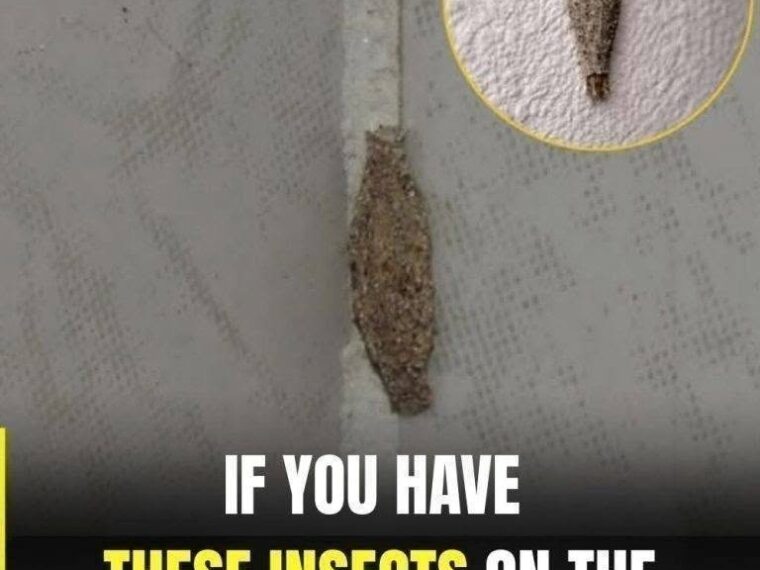
Have you ever noticed a strange, tiny, cigar-shaped or seed-like object attached to a wall, ceiling, window frame, or corner of your home?
At first glance, it can look like a piece of dirt, a small cocoon, or even something stuck to the wall. But the unusual object shown in the image is most likely the portable case of a case-bearing moth larva, commonly known as a plaster bagworm or household casebearer.
These tiny creatures are often discovered indoors, especially in quiet, humid areas. Although their appearance can be alarming, they are generally more of a nuisance than a danger to people.


What Are Those Little Cases on the Wall?
The object in the photograph isn’t simply an insect sitting on the wall. It is a protective case constructed by a moth larva.
The larva produces silk and combines it with tiny materials from its surroundings, including:
- Dust
- Hair
- Fibers
- Plant material
- Dead insects
- Other small particles
The result is a narrow, elongated case that provides camouflage and protection.
The larva lives inside this case and can move around while remaining partially concealed. When it needs to feed, it may extend itself from the opening and crawl along walls, ceilings, floors, and other surfaces.
This explains why these objects sometimes appear to be mysteriously “stuck” to walls.
Why Are They Found Inside Houses?
Case-bearing moth larvae often prefer quiet, humid environments where organic debris and food sources are available.
You may be more likely to find them in places such as:
- Bathrooms
- Bedrooms
- Closets
- Garages
- Basements
- Storage rooms
- Under furniture
- Around windows
- Behind curtains
- Along ceiling corners
- Near baseboards
Humidity is particularly important.
Homes with poor ventilation, condensation, damp walls, or consistently humid rooms can provide favorable conditions for these larvae.
However, finding one does not automatically mean your house is dirty. These insects can occur in perfectly clean homes because they are attracted to environmental conditions and small amounts of organic material that naturally accumulate indoors.
What Do They Eat?
The larvae aren’t usually interested in human food.
Instead, they can feed on tiny sources of organic material, particularly spider webs and the organic debris trapped inside them.
They may also consume:
- Dead insects
- Hair
- Dust containing organic particles
- Natural fibers
- Shed insect material
- Other small organic debris
This is one reason they are often noticed in corners that haven’t been disturbed for a while.
A home with numerous old spider webs can therefore provide a surprisingly suitable environment for them.
Are They Dangerous to Humans?
TO CONTINUE READING THE ARTICLE PLEASE SEE PAGE 2