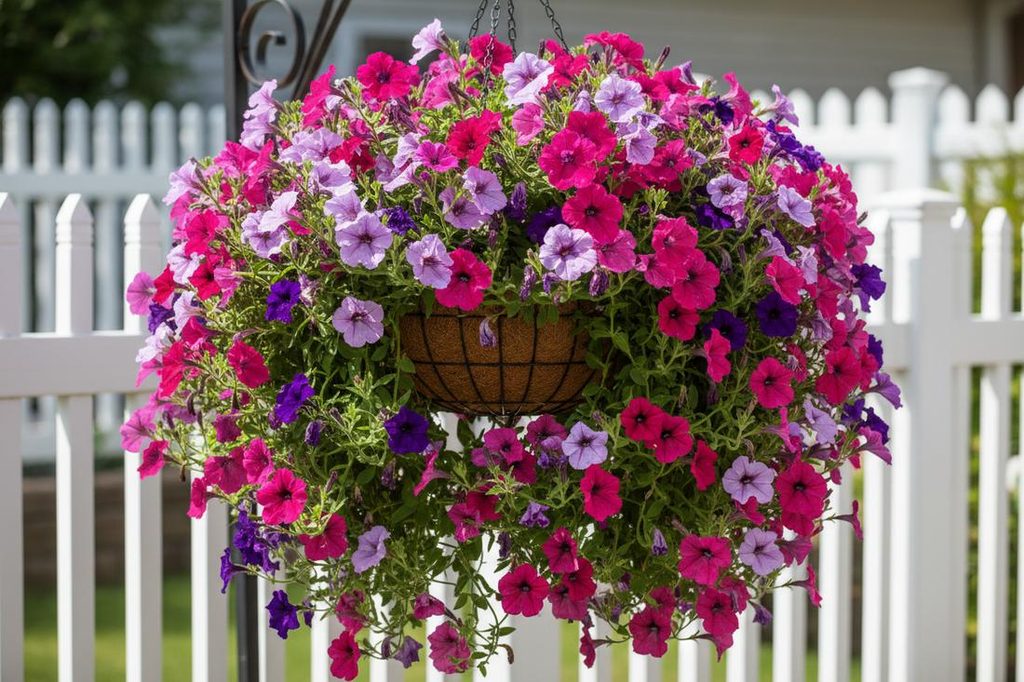
When spring arrives, one of the most beautiful ways to welcome the season is by decorating your porch, balcony, or garden with hanging flower baskets. Filled with colorful petunias, trailing flowers, and lush green foliage, they can instantly transform an ordinary outdoor space into a cheerful floral display.
But anyone who has grown flowers in hanging baskets knows that keeping them looking beautiful isn’t always easy.
The biggest challenge is often water. Hanging baskets tend to dry out much faster than ordinary garden beds because they are exposed to sunlight, wind, and warm air from every direction. Sometimes, you water your flowers in the morning, only to discover that their leaves are already drooping by the afternoon.
That’s why one unusual gardening trick has attracted so much attention: placing a clean, unused baby diaper at the bottom of a hanging flower basket before adding the soil.
It might sound strange to put a diaper in a flowerpot, but there is actually a scientific explanation behind the idea.
Baby diapers contain highly absorbent materials designed to hold moisture. When used carefully in gardening, these materials may help retain some of the water that would otherwise drain away.
But does this unusual trick really work? Can it keep flowers hydrated for longer? And what happens after an entire month?
Let’s explore how this method works, how to try it properly, and what gardeners should know before using it.
1. What happens when you put a baby diaper inside a flower basket?
The secret behind this unusual gardening trick is hidden inside the absorbent layer of a disposable baby diaper.
Most modern disposable diapers contain a material called superabsorbent polymer (SAP). One commonly used type is sodium polyacrylate.
This material has a remarkable ability to absorb and retain large quantities of liquid. When it comes into contact with water, it swells and transforms into a soft, gel-like substance.
Instead of allowing all the water to drain away immediately, the absorbent material holds some of it.
This is why the idea of using diaper materials in gardening has attracted attention.
A scientific study published in 2025 investigated the potential of recovering superabsorbent polymers from disposable diapers and reusing them to improve soil water retention. Researchers found that the recovered materials could increase the amount of water retained in a sandy soil model and support mustard seed germination and seedling growth under the experimental conditions. PubMed Central (PMC)+1
However, there is an important distinction: the study examined recovered, treated absorbent material, not an ordinary intact diaper placed underneath a hanging flower basket.
2. Why hanging flower baskets dry out so quickly
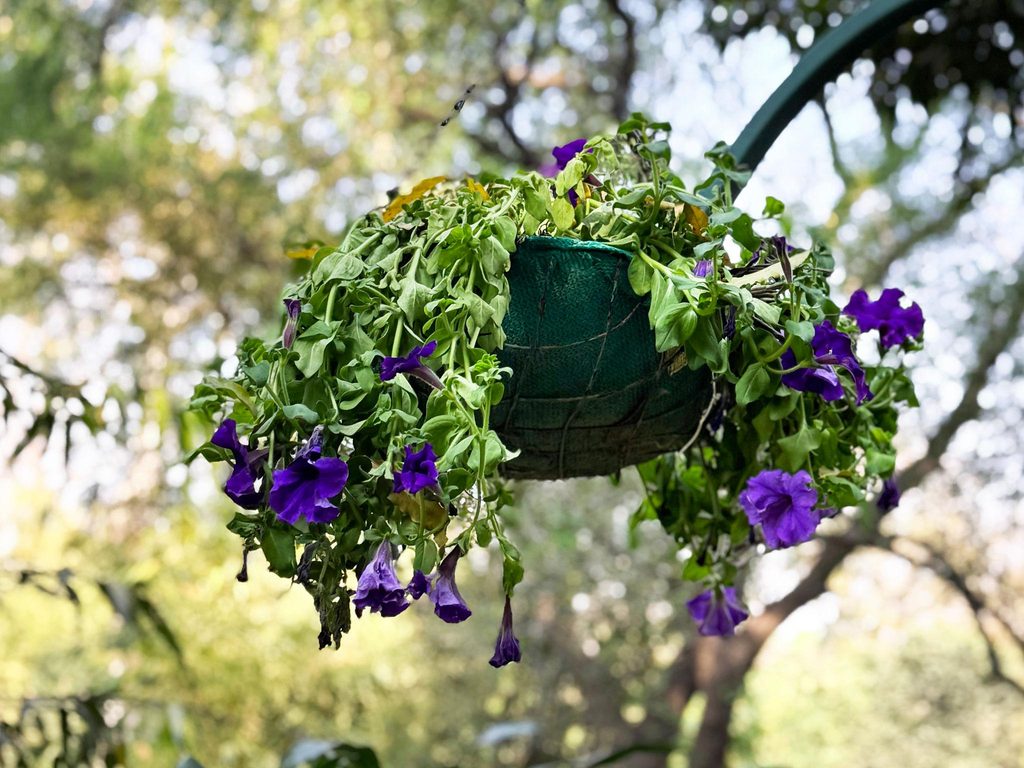
If you have ever grown flowers in hanging baskets, you probably know how frustrating it can be to keep them hydrated.
Unlike plants growing directly in the ground, hanging flowers have a relatively small amount of soil available to store moisture.
Several factors contribute to this problem.
Sunlight: Hanging baskets are often positioned in sunny locations where the potting mixture warms up quickly.
Wind: Air circulates around the entire basket, increasing moisture loss from the soil and leaves.
Limited soil volume: There is simply less growing medium available to hold water.
Drainage: Hanging baskets need drainage holes to prevent waterlogging, but excess water can escape quickly.
Thirsty flowers: Plants such as petunias, calibrachoa, and trailing geraniums can require frequent watering, particularly during warm weather.
The result is that a beautiful basket can go from looking fresh and colorful to looking tired and droopy in a surprisingly short period.
This is precisely the problem that moisture-retaining materials are designed to address.
3. How does the absorbent material inside a diaper work?
TO CONTINUE READING THE ARTICLE PLEASE SEE PAGE 2