Are They Dangerous to Humans?
The good news is that these little creatures are not generally considered dangerous to humans.
They don’t normally bite people, sting people, or behave aggressively.
Simply discovering a few cases on your wall isn’t a reason to panic.
The main concern is usually that they are unwanted household pests and that their presence may indicate conditions that allow them to thrive, particularly humidity, accumulated dust, spider webs, or undisturbed areas.
Could They Damage Your Clothes?
This is where some confusion arises.
People sometimes see a small case-bearing larva and immediately assume they have a serious clothes-moth infestation.
That’s not necessarily the case.
Some case-bearing moth species can be associated with natural fibers, while others primarily feed on accumulated organic debris and materials found in their environment.
If you are finding large numbers of larvae or noticing holes in wool, fur, carpets, silk, or other natural-fiber materials, it is worth investigating further rather than assuming all the insects are the same species.
Look for additional signs such as:
- Small holes in clothing
- Damaged carpets
- Larval cases inside closets
- Larvae around stored fabrics
- Fine debris or frass
- Adult moths flying around storage areas
If you find actual fabric damage, identifying the species becomes much more important.
Why Do They Build These Strange Cases?
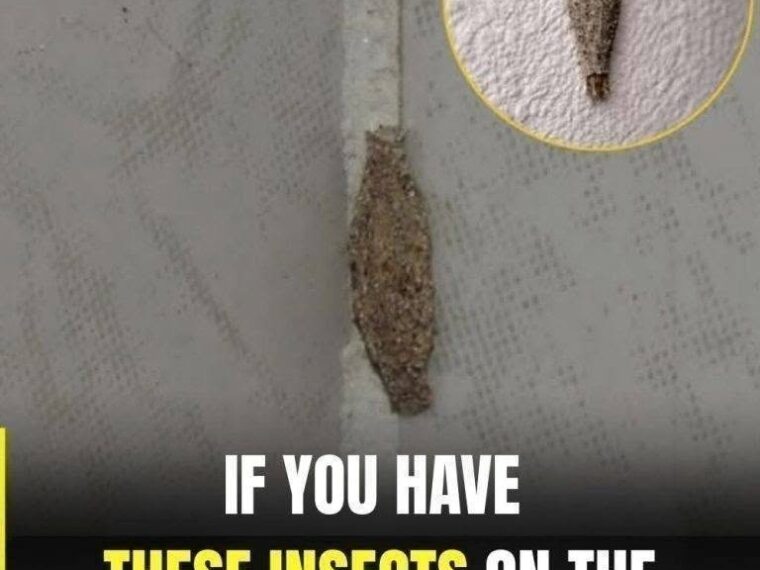
The case is essentially the larva’s mobile shelter.
Instead of creating a permanent cocoon and remaining in one location, the larva carries its protective case with it.
The case provides several advantages.
1. Protection
The case helps protect the soft-bodied larva from predators and environmental conditions.
2. Camouflage
Because the larva incorporates material from its surroundings, the case can blend remarkably well with walls, dust, wood, fabric, and other surfaces.
3. Mobility
Unlike a stationary cocoon, the case allows the larva to move while remaining protected.
4. Reduced exposure
Only part of the larva needs to emerge while it moves or feeds.
This unusual lifestyle is why these creatures can look more like tiny pieces of debris than living animals.
Why Do They Appear More Often in Some Homes?
Several conditions can make a home more attractive to case-bearing larvae.
High humidity
Moisture is one of the biggest factors.
Poor ventilation and condensation can create favorable conditions, especially in bathrooms and other humid areas.
Spider webs
Old spider webs can provide both food and shelter.
Dust and organic debris
Small amounts of hair, dead insects, fibers, and other material can accumulate in corners and provide potential food.
Undisturbed areas
These larvae tend to be easier to notice in places that aren’t frequently cleaned or disturbed.
Behind furniture, under beds, inside closets, and around ceiling corners are common places to inspect.
How to Get Rid of Them Naturally
If you only see an occasional case, you usually don’t need an aggressive pesticide treatment.
Start with simple household measures.
1. Remove the visible cases
Use a vacuum cleaner or simply remove the cases from the wall.
If you use a vacuum, empty the container or dispose of the vacuum contents appropriately afterward.
2. Clean corners and ceilings
Pay special attention to:
- Ceiling corners
- Baseboards
- Behind furniture
- Window frames
- Closet corners
- Under beds
- Areas behind curtains
Removing accumulated dust and webs eliminates some of the resources these larvae use.
3. Remove spider webs
This is particularly useful because old webs can provide an important food source.
Regularly vacuum corners, ceilings, and other areas where spiders create webs.
4. Reduce indoor humidity
Ventilation can make a significant difference.
After showering, use an exhaust fan or open a window when appropriate. Avoid allowing condensation to remain on walls and windows for long periods.
A dehumidifier can also help in persistently damp rooms.
5. Keep stored fabrics clean
If you are finding cases inside closets, inspect stored clothing, blankets, carpets, and other natural-fiber materials.
Wash or clean suitable fabrics and store vulnerable items in clean, sealed containers.
Don’t Spray Everything Immediately
One of the biggest mistakes people make after seeing an unfamiliar insect is reaching immediately for a strong insecticide.
For a small number of case-bearing larvae, that may be unnecessary.
A better first approach is identification + cleaning + moisture control.
If the insects continue appearing despite cleaning, or if you discover significant fabric damage, then a professional pest-control inspection may be appropriate.
What If You Keep Finding More?
Finding one or two cases occasionally isn’t necessarily a serious problem.
However, if you are discovering dozens of cases repeatedly, especially in several rooms, it’s worth looking for the underlying cause.
Check for:
Moisture → spider webs → accumulated organic debris → undisturbed areas → possible fabric infestation
You may need to address more than just the insects themselves.
For example, if a room has persistent condensation, removing the visible cases without improving ventilation may only provide a temporary solution.
Are They a Sign of an Unclean Home?
Not necessarily.
This is an important point.
The presence of case-bearing moth larvae doesn’t automatically mean that someone isn’t cleaning their home.
Even a well-maintained house contains microscopic organic material, hair, dust, dead insects, and occasional spider webs.
Environmental conditions can be just as important as cleanliness.
Nevertheless, regular cleaning can significantly reduce the food and shelter available to them.
How to Prevent Them From Returning
Prevention is easier when you focus on the conditions that attract them.
Keep humidity under control
Ventilate damp rooms and address leaks or persistent condensation.
Vacuum regularly
Don’t concentrate only on floors. Vacuum:
- Corners
- Baseboards
- Behind furniture
- Closet edges
- Window frames
- Ceiling edges
Remove spider webs
Regularly eliminating old webs can reduce available food.
Don’t allow dust to accumulate
Dust isn’t necessarily their primary food, but organic material trapped in dust can contribute to the environment they exploit.
Inspect closets
If you store wool, silk, fur, feathers, or other natural materials, inspect them periodically.
Seal cracks and gaps where practical
Reducing insect entry points can help limit the number of insects that establish themselves indoors.
When Should You Be Concerned?
A few larvae on a wall are generally not a major cause for concern.
However, consider getting professional help if you notice:
- A rapidly increasing population
- Significant damage to clothing or carpets
- Repeated infestations despite thorough cleaning
- Large numbers of adult moths
- Larvae throughout closets and storage areas
- Persistent moisture problems
- Other signs of a larger pest infestation
A professional can determine whether you’re dealing with a harmless nuisance species or a moth species capable of damaging stored fabrics.
The Bottom Line
That strange little “insect” attached to your wall may actually be a case-bearing moth larva hiding inside a portable protective case.
Although the appearance can certainly be unsettling, these creatures are generally not dangerous to people. Their presence is often associated with humid, quiet areas containing spider webs and small amounts of organic debris.
Instead of panicking, start by removing the cases, vacuuming corners and hidden areas, eliminating spider webs, cleaning closets, and improving ventilation.
And remember: seeing one of these cases doesn’t automatically mean your house is infested or dirty. Sometimes, nature simply finds a surprisingly comfortable little corner inside our homes.