Finding a tiny insect crawling in someone’s hair can be quite alarming, especially when it looks unusual and you have no idea what it is. Is it a head louse? A small beetle? Could it be a parasite living on the scalp?
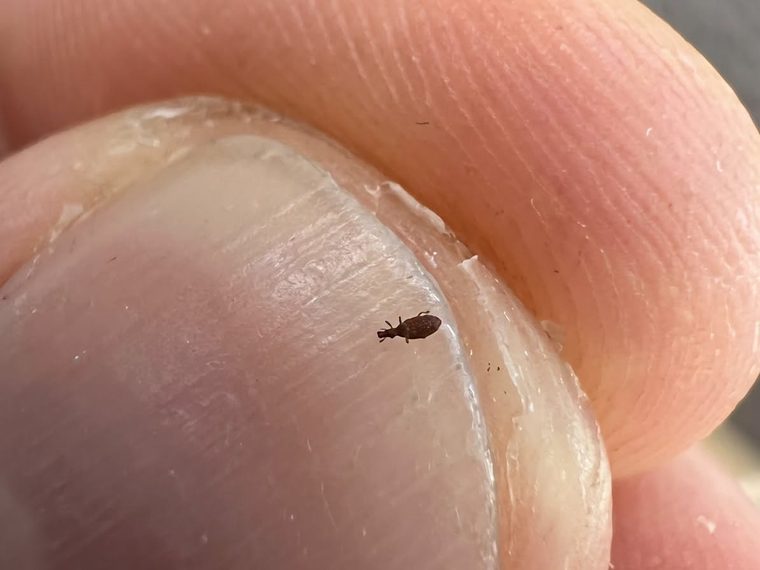
Recently, a photograph of a very small, dark-coloured insect found in someone’s hair caught people’s attention. At first glance, the creature looks like a tiny beetle, with an elongated body, a distinct head and several small legs.
But identifying insects found in hair is important because not every tiny bug is a head louse, and not every insect found on a person’s head actually lives there.
Looking closely at the photograph, the insect appears more beetle-like than a typical human head louse. However, the image alone is not detailed enough to establish its exact species. A reliable identification would require a clearer photograph showing its legs, antennae and body structure.
In this article, we’ll explain what it might be, how to distinguish it from head lice, what to do if you find one in someone’s hair and when treatment may be necessary.
1. What Is the Tiny Bug Found in the Hair?
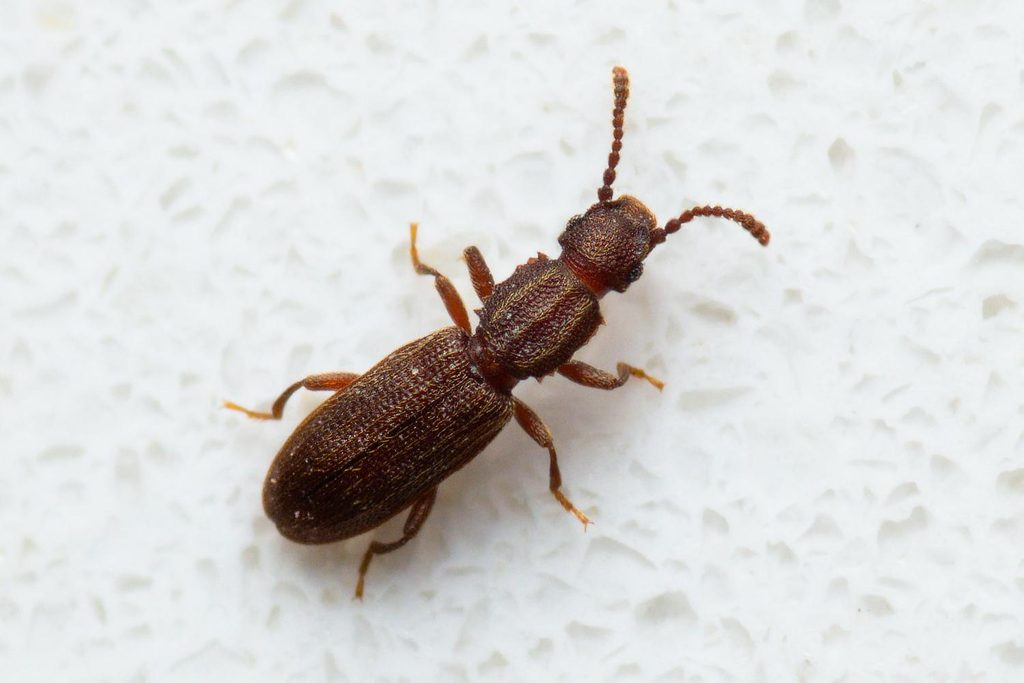
The insect in the photograph has a small, dark brown body with an elongated oval shape. Its appearance raises an interesting possibility: it could be a small beetle rather than a human parasite.
Some tiny beetles are only a few millimetres long and can easily be mistaken for other insects when photographed close to the skin.
For example, small stored-product beetles, including grain beetles and certain weevils, have compact bodies and visible legs. They may occasionally land on clothing, bedding or hair after coming into contact with their surroundings.
However, finding a beetle in someone’s hair does not automatically mean that it is living there.
Unlike head lice, most small household beetles do not feed on human blood, lay eggs in human hair or establish an infestation on the scalp.
To identify the insect correctly, it is important to examine its physical characteristics rather than relying only on its size or colour.
2. Could It Actually Be a Head Louse?
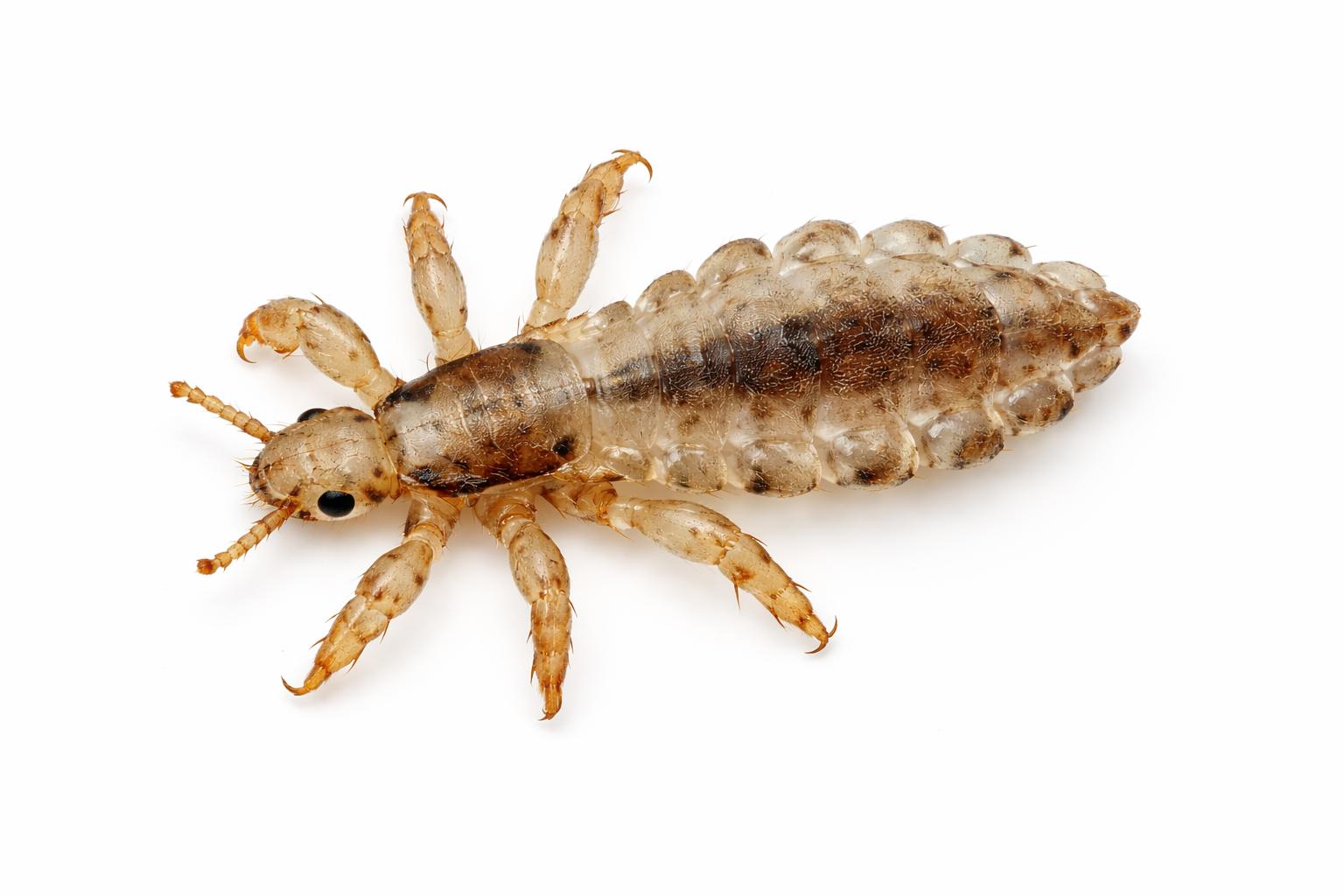
One of the first possibilities people consider when discovering a tiny insect in someone’s hair is head lice.
Head lice are tiny parasitic insects that live on the human scalp and feed on small amounts of blood. Adult head lice are generally around 2–3 mm long, approximately the size of a sesame seed.
They have several distinctive characteristics:
- Six legs equipped with small claws.
- A flattened body that helps them move between hair strands.
- A tan, greyish or sometimes darker appearance.
- No wings and no ability to jump or fly.
- A mouth adapted to feeding on human blood.
Unlike ordinary beetles, head lice are specifically adapted to living in human hair. Their legs allow them to grip individual hair strands, making it difficult to remove them simply by shaking or brushing the hair.
The insect in the photograph appears darker and more compact than a typical head louse. However, colour alone cannot rule out lice because they can appear darker against certain backgrounds.
According to the CDC, the most reliable way to confirm an infestation is to find a living adult louse or nymph in the hair. CDC+1
3. How to Tell the Difference Between a Beetle and a Head Louse
Although these insects can look similar in a small photograph, there are important differences.
| Characteristic | Head louse | Small beetle |
|---|---|---|
| Body | Flattened | Often rounded or oval |
| Colour | Tan, grey or brownish | Often dark brown or black |
| Wings | No wings | Many species have wing covers |
| Legs | Six legs with gripping claws | Six legs, adapted for walking |
| Food | Human blood | Varies by species |
| Lives in human hair | Yes | Generally no |
A particularly important difference is the body structure.
Head lice have a flattened body and specialised legs designed to hold onto hair. Beetles generally have a more rigid external body covering, sometimes with visible wing cases.
The insect in the photograph has an oval, dark silhouette that makes a small beetle a possibility. Nevertheless, the available photograph does not show enough anatomical detail to establish this identification.
4. What Do Head Lice Eggs Look Like?
TO CONTINUE READING THE ARTICLE PLEASE SEE PAGE 2