4. What Do Head Lice Eggs Look Like?
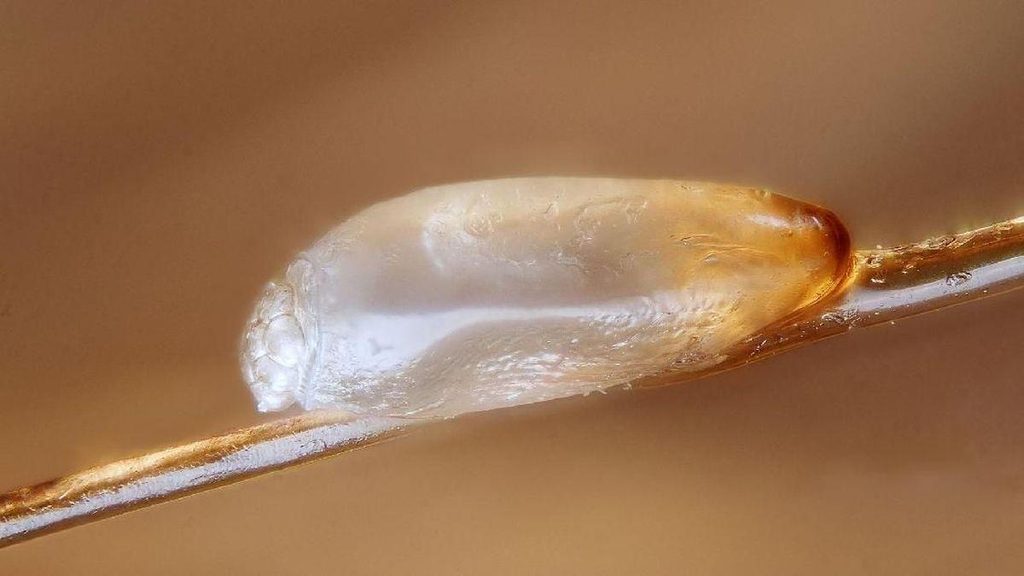
If the insect turns out to be a head louse, it is important to look for its eggs, commonly called nits.
Female head lice attach their eggs firmly to individual hair strands, usually close to the scalp.
Unlike dandruff, which can usually be brushed or shaken away, nits are attached with a natural adhesive substance produced by the female louse.
Here are some characteristics to look for:
- They are very small and oval-shaped.
- Their colour is generally yellowish, white or brownish.
- They are firmly attached to individual hair strands.
- They are commonly found behind the ears and around the back of the neck.
- They are usually located close to the scalp when they are viable.
It is important not to confuse empty egg cases with active eggs. Finding old nits farther away from the scalp does not necessarily mean that someone currently has an infestation.
The CDC explains that finding live lice is the best confirmation of an active head lice infestation. Pediculosis+1
5. Why Do People Get Head Lice?
Head lice are much more common than many people realise.
They can affect anyone, regardless of age, hair type, personal hygiene or how frequently they wash their hair.
The most common way they spread is through direct head-to-head contact with someone who already has lice.
This can happen in several everyday situations:
At school: Children often play closely together, making direct hair-to-hair contact more likely.
During sleepovers: Sharing close spaces and pillows can sometimes contribute to transmission.
When sharing personal accessories: Brushes, combs, hats and hair accessories may occasionally transfer lice.
During family activities: Close contact between family members can allow lice to spread from one person to another.
One important fact is that head lice do not jump or fly. They crawl from one person’s hair to another.
They are also not a sign of poor hygiene. Clean hair can become infested just as easily as hair that is washed less frequently. CDC+1
6. What Symptoms Should You Look For?
Not everyone with head lice experiences immediate symptoms.
In fact, some people may have lice for several weeks before noticing anything unusual.
The most common symptom is itching, which happens because of an allergic reaction to substances introduced by the lice when they feed.
Other possible signs include:
- A tickling sensation in the hair.
- Frequent scratching of the scalp.
- Small red bumps around the hairline.
- Irritation behind the ears.
- Difficulty sleeping because of scalp itching.
- Visible lice moving between hair strands.
The back of the neck and the areas behind the ears are particularly useful places to examine.
However, itching alone does not confirm head lice. Dry skin, dandruff and other scalp conditions can cause similar symptoms.
7. How to Check Someone’s Hair for Head Lice
If your friend is worried about the insect, the best approach is to examine the hair carefully before using any treatment.
Here is a simple method.
Step 1: Find a well-lit area
Use natural daylight or a bright lamp so you can see the scalp clearly.
Step 2: Divide the hair into small sections
Use your fingers or a regular comb to separate the hair and expose the scalp.
Step 3: Examine the important areas
Pay particular attention to the hair behind both ears, around the hairline and at the back of the neck.
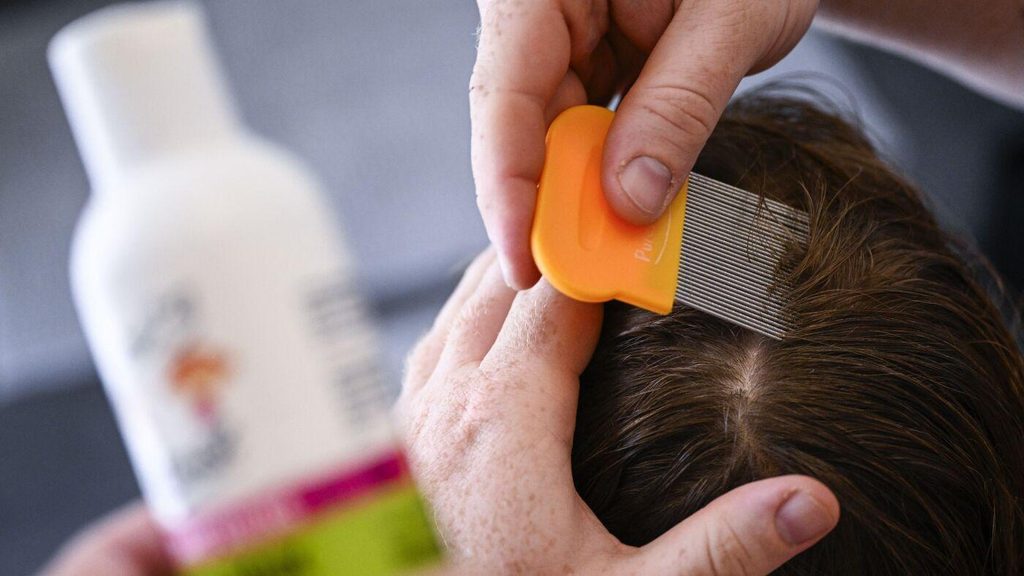
Step 4: Use a fine-toothed lice comb
A specialised metal lice comb can help detect and remove crawling lice.
Step 5: Check the comb after each pass
Wipe it on a white tissue or paper towel. This makes it easier to notice small insects or eggs.
Step 6: Repeat the examination
Continue checking different sections until the entire scalp has been examined.
If you find a living louse, it is worth keeping it in a small sealed container for identification, especially if it looks different from an ordinary head louse.
8. What Should You Do If It Really Is Head Lice?
If a live head louse is confirmed, there is no need to panic.
Head lice are unpleasant, but they are treatable and are not known to spread diseases.
There are several established ways to manage an infestation.
Use a specialised lice treatment
Pharmacies offer products specifically designed to eliminate head lice. Some contain ingredients that kill live lice, while others work through physical mechanisms.
Always follow the instructions on the packaging and ask a pharmacist or healthcare professional which product is appropriate.
Comb the hair carefully
A fine-toothed metal lice comb is an important tool for removing lice and eggs.
Wet-combing with conditioner can help slow the movement of lice and make them easier to remove.
Repeat the checks
Some treatments do not kill every egg during the first application. Depending on the product, a second treatment may be necessary around seven to ten days later.
Check close contacts
Household members and people who have had close head-to-head contact should also be checked. Anyone with a confirmed infestation should receive appropriate treatment.
The CDC recommends treating people with active infestations at the same time to help prevent reinfestation. CDC+1
9. How to Clean Your Home After Discovering Head Lice
If head lice are confirmed, a few simple cleaning measures can help reduce the possibility of reinfestation.
Fortunately, you do not need to disinfect your entire home.
Concentrate on items that have been in contact with the affected person’s head during the two days before treatment.
Here is what to do:
- Wash pillowcases, sheets and recently used towels.
- Wash recently worn hats and clothing when appropriate.
- Clean combs and brushes using hot water.
- Vacuum sofas, carpets and upholstered furniture where the person has rested.
- Avoid sharing brushes, hair accessories and hats.
Items that cannot be washed can be sealed in a plastic bag for two weeks.
There is no need to spray insecticides around the home or use chemical foggers. These products can expose people to unnecessary chemicals and are not recommended for controlling head lice. CDC+1
10. Can a Tiny Beetle Live in Human Hair?
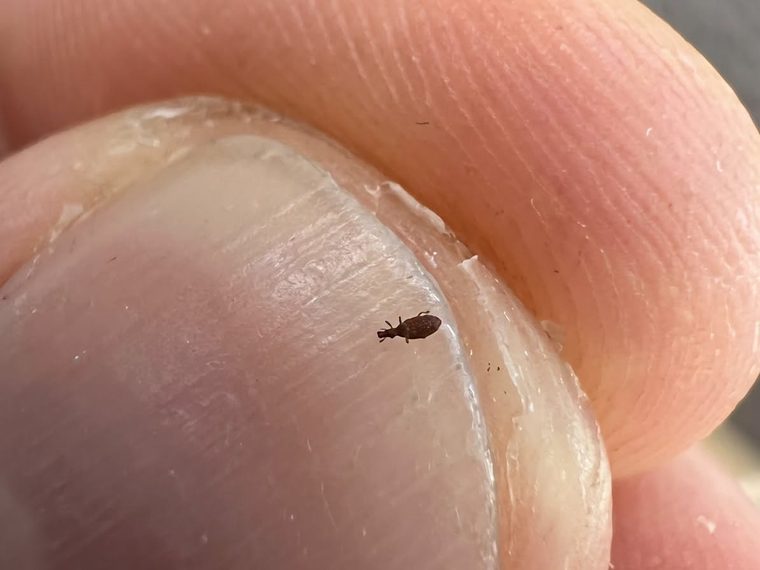
This is an important question because the insect in the original photograph does not clearly resemble a typical head louse.
Most small beetles are not human parasites. They do not depend on human blood and generally cannot establish a breeding population in someone’s hair.
A beetle may occasionally end up in someone’s hair after:
- Flying or crawling onto the person’s head.
- Falling from a tree or nearby plant.
- Coming into contact with clothing or bedding.
- Being transferred from an infested stored-food product or another household environment.
Finding one beetle does not necessarily indicate a household infestation or a health problem.
If the insect is confirmed to be a beetle, there is generally no reason to use head lice medication.
Simply remove it, keep the specimen for identification and check whether similar insects are appearing elsewhere.
If several insects are repeatedly found, identifying the species will help determine where they are coming from.
11. How Can You Prevent Head Lice in the Future?
Although there is no guaranteed way to prevent every case of head lice, a few habits can reduce the risk of transmission.
- Avoid direct head-to-head contact with someone who has an active infestation.
- Do not share combs, brushes or hair accessories.
- Avoid sharing hats, scarves and other items that touch the hair.
- Check children’s hair regularly, particularly after close contact with someone who has lice.
- If an infestation is discovered, check household members and close contacts.
- Follow the recommended treatment instructions carefully.
Remember that ordinary cleanliness is not enough to prevent head lice. The most effective preventive measure is reducing opportunities for direct hair-to-hair contact. CDC+1
Final Thoughts: What Was the Bug Found in My Friend’s Hair?
Finding a tiny insect in someone’s hair can certainly be surprising, especially when it looks nothing like the insects people normally associate with head lice.
Looking at the original photograph, the insect appears to have a compact, dark, oval-shaped body. Its appearance raises the possibility of a small beetle rather than a typical human head louse.
However, it would be irresponsible to identify it as a specific beetle species based on this photograph alone.
The most important thing is to examine the person’s scalp and determine whether any live head lice or firmly attached eggs are present.
If no lice are found and the insect is identified as an ordinary beetle, head lice treatment is unnecessary.
If live lice are discovered, appropriate treatment is available and the problem can be managed without excessive worry.
Have you ever found a strange little insect in someone’s hair? Did it turn out to be a head louse, a tiny beetle or something completely different? Share your experience in the comments!