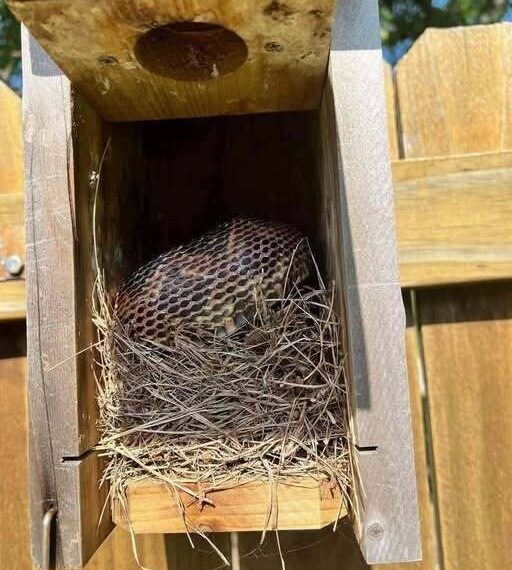
Seeing a snake around your home can be unsettling, especially when you discover one in an unexpected place. The image above shows a snake occupying what appears to be a birdhouse, surrounded by nesting material. Although situations like this can look alarming, the presence of a snake usually has a simple explanation: the area provides shelter, warmth, or access to potential prey.
The good news is that homeowners can significantly reduce the likelihood of repeated encounters without relying on dangerous chemicals or harmful traps. The most effective approach is to make the property less attractive to snakes by removing the conditions they need to survive.
Why Snakes Come Near Homes
Snakes do not usually enter residential areas because they are specifically attracted to people or houses. They are generally looking for three basic things:
- Food
- Water
- Shelter
A yard with tall grass, piles of wood, dense vegetation, rodents, frogs, insects, or other small animals can provide an excellent hunting environment.
Snakes may also use sheds, garages, crawl spaces, wood piles, garden structures, and other protected areas as temporary shelter. Extension specialists recommend focusing on habitat modification rather than searching for a magical chemical repellent.
This is why simply killing or removing one snake may not solve the underlying problem. If the food and shelter remain available, another snake may eventually pass through the same area.
1. Keep Grass and Vegetation Under Control
One of the simplest ways to make a property less attractive to snakes is to keep grass relatively short and vegetation around frequently used areas manageable.
Tall grass gives snakes places to move unseen and can also provide shelter for mice and other small animals that snakes may hunt.
Regularly:
- Mow lawns.
- Remove excessive weeds.
- Trim dense ground cover.
- Cut vegetation away from walkways.
- Keep the immediate area around buildings relatively open.
Shorter vegetation also makes it easier for you to see what is happening around your property before stepping into an area where a snake could be hiding.
A useful principle
If you reduce hiding places for rodents and other prey, you can also reduce the food opportunities available to snakes.
2. Remove Wood, Brush and Debris Piles
Piles of firewood, boards, leaves, rocks, cardboard, garden equipment and other debris can create surprisingly attractive hiding areas.
A snake may use a pile because it provides shade, protection from predators and access to prey.
Instead of leaving materials scattered around the yard:
- Stack firewood neatly and away from the house.
- Remove unnecessary lumber.
- Clear piles of branches.
- Dispose of accumulated leaves.
- Keep gardening materials organized.
- Avoid allowing debris to accumulate against exterior walls.
University extension guidance specifically recommends removing brush, debris and wood piles because these areas can provide shelter for snakes as well as rodents.
3. Reduce Rodent Activity
This is one of the most important steps.
If mice and rats have easy access to food and shelter around your home, snakes may have a reason to visit.
Check for:
- Birdseed scattered underneath feeders
- Unsecured garbage
- Pet food left outside
- Fallen fruit
- Compost that attracts rodents
- Open food-storage containers
- Gaps around sheds and outbuildings
If you feed birds, consider positioning feeders farther from the house and keeping spilled seed under control. Birdseed should also be stored in a tightly closed container.
Similarly, pet food should not be left outdoors for long periods.
The goal isn’t necessarily to eliminate every mouse or insect from your property. Instead, you’re reducing the conditions that create a concentrated food source for snakes.
4. Don’t Overwater the Yard
Water can indirectly attract snakes by attracting the animals they eat.
Overwatering can increase populations of:
- Frogs
- Slugs
- Worms
- Insects
- Other small creatures
Those animals can become food for snakes.
That doesn’t mean you should stop watering your garden. Rather, avoid unnecessary standing water and excessive irrigation, particularly around areas close to the house.
Repair leaking outdoor faucets and irrigation lines and avoid allowing water to remain unnecessarily around foundations, sheds and other structures.
5. Trim Shrubs and Trees Near the House
Dense vegetation directly against walls can create hidden pathways and sheltered spaces.
Where practical, trim shrubs so that the lower area beneath them is visible and accessible for inspection. Keeping branches and dense vegetation away from the building can also make it easier to identify potential entry points.
A clear perimeter around the house has another advantage: you can see potential problems before they become serious.
6. Inspect the House for Small Openings
TO CONTINUE READING THE ARTICLE PLEASE SEE PAGE 2