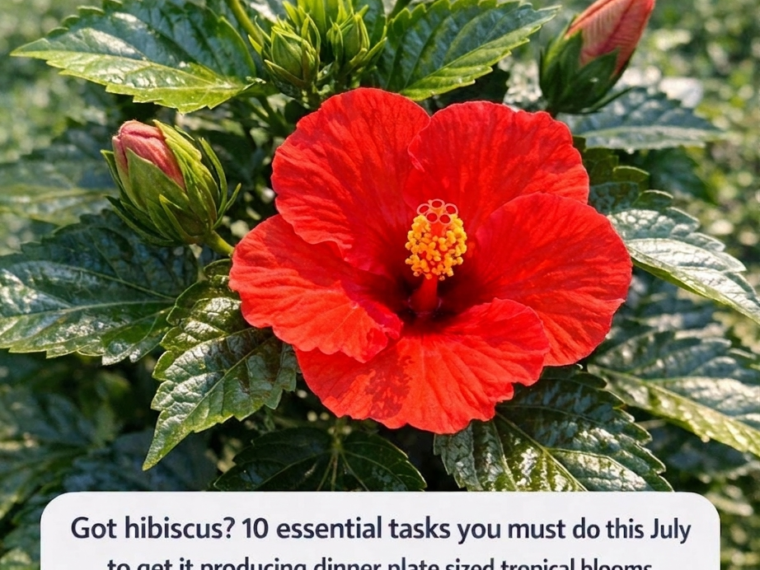
Nothing transforms a summer garden quite like a hibiscus covered in enormous, colorful flowers. Whether you grow tropical hibiscus (Hibiscus rosa-sinensis) or hardy hibiscus (Hibiscus moscheutos), July is one of the most important months of the year. The heat, long daylight hours, and rapid growth create the perfect conditions for spectacular blooms—but only if your plants receive the care they need.
Many gardeners assume hibiscus only need sunshine and water. In reality, a few simple maintenance tasks performed during July can make the difference between a plant with a handful of flowers and one bursting with giant blooms measuring up to 10 inches (25 cm) across.
If you’ve been dreaming of lush, tropical flowers that stop neighbors in their tracks, here’s exactly what to do this month.
Why July Matters for Hibiscus
During July, hibiscus plants enter their peak growing season. They are producing new leaves, developing flower buds, and using enormous amounts of water and nutrients.
Missing even one key care step can lead to:
- Tiny flowers
- Buds dropping before opening
- Yellow leaves
- Slow growth
- Fewer blooms
Fortunately, these problems are easy to avoid.
1. Water Deeply—Not Just a Little Every Day
Hibiscus are thirsty plants, especially during hot weather.
Instead of giving them a quick sprinkle every day, water deeply so moisture reaches the entire root system.
Best watering method
- Water early in the morning.
- Soak the soil 8–12 inches deep.
- Let the top inch of soil dry slightly before watering again.
Container-grown hibiscus may require watering once or even twice daily during heat waves.
Avoid allowing pots to completely dry out.
2. Feed Every Two Weeks
Large flowers require lots of nutrients.
July is the perfect time to fertilize regularly.
Look for a fertilizer that contains:
- Higher potassium
- Moderate nitrogen
- Micronutrients like magnesium and iron
A formula such as:
10-10-10
or
12-4-18
works well depending on your soil and plant type.
Avoid overfeeding with nitrogen.
Too much nitrogen creates huge green plants—but very few flowers.
3. Remove Every Spent Bloom
Deadheading encourages continuous flowering.
As flowers fade:
- pinch or snip them off
- remove developing seed pods
- inspect for hidden buds
The plant redirects energy into producing new flowers instead of seeds.
4. Pinch Long Shoots
If your hibiscus is growing tall but sparse, pinch the growing tips.
This simple trick encourages:
- more branches
- fuller plants
- dozens of additional flower buds
Only pinch soft new growth—not woody stems.
5. Mulch Around the Roots
July heat quickly dries soil.
A 2–3 inch layer of mulch helps:
TO CONTINUE READING THE ARTICLE PLEASE SEE PAGE 2