Rainwater harvesting sounds simple: place a barrel under a downspout, collect what falls from the sky, and use it to water your garden. For many homeowners, it can be a practical way to reduce water consumption and make better use of rainfall.
But there is an important detail that often gets overlooked: rainwater collection is not governed by exactly the same rules everywhere. Depending on where you live, there may be requirements concerning how water is collected, how large storage systems can be, where tanks can be installed, and what the water may legally be used for.
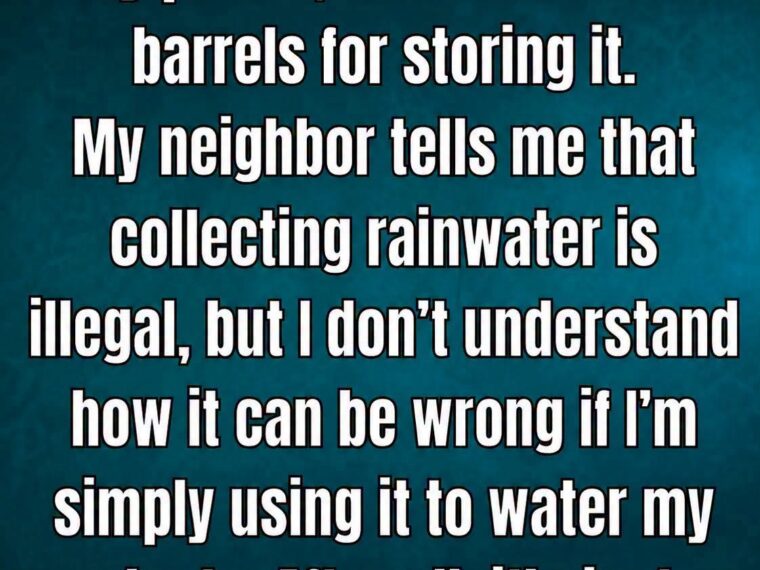
The image above captures a common question: “If it is just rainwater and I am only using it for my plants, how could collecting it possibly be wrong?”
The answer depends heavily on local law.
If you’re in Morocco, there is particularly useful information to know: Moroccan water law expressly recognizes the right of property owners, lawful occupants, and operators to collect, store, use, and otherwise make use of rainwater falling on their properties. Article 62 of Law 36-15 on Water provides this right, while also stating that technical conditions for collection and storage installations and rules or quality standards according to the intended use are to be established through regulations.
So the viral idea that “collecting rainwater is illegal in Morocco” is misleading. The more accurate question is: what type of collection system are you installing, where is it installed, and what are you doing with the water?
Why Do People Collect Rainwater?
Rainwater harvesting has been used for centuries. Before modern water-distribution systems existed, households and communities relied on roofs, cisterns, underground reservoirs and other structures to capture rainfall.
Today, a simple system can be used for purposes such as:
- Watering gardens
- Irrigating ornamental plants
- Cleaning outdoor areas
- Washing certain outdoor equipment
- Supporting landscaping
- Reducing dependence on treated mains water
- Storing water for periods when rainfall is limited
For gardeners, the attraction is obvious.
Instead of allowing rainwater running off a roof to disappear into a drainage system, a collection system can redirect some of that water into a storage barrel or tank.
However, collecting water is only the first part of the equation.
You also need to think about water quality, storage, insects, contamination, structural safety and local regulations.
1. First Rule: Check the Law Where You Live
This is the most important rule.
Don’t assume that something is legal—or illegal—because you saw a social-media post saying so.
Rainwater regulations differ between countries, states, provinces, municipalities and sometimes even specific types of property.
Some jurisdictions allow household rainwater harvesting with few restrictions. Others regulate the size of storage tanks, plumbing connections, installation locations or permitted uses.
And some places distinguish between:
- Small household collection systems
- Large commercial systems
- Agricultural irrigation systems
- Underground cisterns
- Systems connected to buildings
- Systems used for drinking water
What about Morocco?
Morocco’s Law No. 36-15 on Water contains a specific chapter dealing with the development and use of rainwater.
Article 62 states that owners, operators and lawful possessors of property have the right to collect, store, use and make use of rainwater falling on their properties. It also gives territorial authorities the ability to collect, store and distribute rainwater for domestic, industrial, irrigation and other uses.
Importantly, the same article says that the technical conditions for constructing, managing and maintaining rainwater collection and storage facilities, as well as rules for their use and water-quality standards according to the intended use, are established through regulations.
That means the legal picture is more nuanced than the statement:
“Rainwater harvesting is illegal.”
2. Don’t Confuse Rainwater With Groundwater
This is a distinction many people miss.
Collecting rainwater from your roof is fundamentally different from drilling a well or pumping water from an underground aquifer.
A rain barrel catches water that has fallen onto your property.
A well accesses groundwater, which is subject to a different regulatory framework.
Moroccan water legislation separately regulates groundwater abstraction and other uses of the public hydraulic domain. For example, the rules governing wells, groundwater withdrawals and certain water abstractions involve authorization requirements depending on the circumstances.
So if someone tells you:
“You need permission to collect rainwater because you need permission to use water.”
That statement is too broad.
The source of the water matters.
3. Your Roof Is Part of the Water System
A rainwater barrel may look harmless, but the roof is effectively the first component of your collection system.
Rain doesn’t arrive at your barrel perfectly clean.
As it travels across a roof, it can pick up:
- Dust
- Dirt
- Leaves
- Bird droppings
- Insects
- Plant debris
- Roofing particles
- Pollutants from the surrounding environment
This is why the quality of harvested rainwater can vary considerably.
For garden irrigation, this may be acceptable depending on the circumstances and the plants involved.
For drinking water, however, you should never assume that water collected from a roof is automatically safe to drink.
4. The First Rain After a Dry Period Can Be Especially Dirty
One useful technique in rainwater harvesting is called first-flush diversion.
The basic idea is simple.
After a long dry period, dust and debris can accumulate on your roof. When the first rainfall arrives, that material can be washed into the gutters.
A first-flush device diverts an initial portion of the runoff away from the main storage tank.
Once the initial dirty runoff has passed, cleaner rainwater can enter the tank.
This isn’t necessarily required for every small garden system, but it is an important design consideration if water quality matters.
5. Keep the Storage Tank Covered
An open barrel may seem convenient, but leaving stored rainwater exposed creates several problems.
An uncovered container can become a breeding location for mosquitoes and other insects.
It can also collect:
- Leaves
- Dust
- Animal waste
- Insects
- Algae
- Organic debris
A properly covered tank helps reduce these problems.
You should also make sure that openings are protected with appropriate screening where necessary.
6. Don’t Assume Rainwater Is Drinking Water
This is probably the most important health-related warning.
Rainwater is not automatically potable simply because it looks clean.
Even water that appears crystal clear can contain microorganisms or contaminants.
If harvested rainwater is intended for drinking, cooking or other potable uses, the system needs to be specifically designed, maintained and treated for that purpose, and the applicable local standards must be followed.
For an ordinary garden barrel, the safest approach is generally to treat the collected water as non-potable water unless it has been properly treated and tested for the intended use.
7. Be Careful About Connecting It to Your Household Plumbing
This is where a simple rain barrel can become a much more complicated project.
If you collect rainwater in a standalone barrel and use a watering can or garden hose to water plants, the system is relatively straightforward.
But connecting harvested rainwater directly to indoor plumbing introduces additional concerns.
You need to prevent untreated rainwater from accidentally flowing backward into a drinking-water supply.
This is known as cross-connection or backflow risk.
A professionally designed system should therefore separate non-potable rainwater from potable water infrastructure and comply with applicable plumbing requirements.
8. Don’t Put a Huge Tank Somewhere Without Considering the Weight
TO CONTINUE READING THE ARTICLE PLEASE SEE PAGE 2