Bananas are one of the simplest fruits to add to your diet, but the banana you choose can actually make a difference in how your body digests it and how it affects your blood sugar, fullness, and gut health.
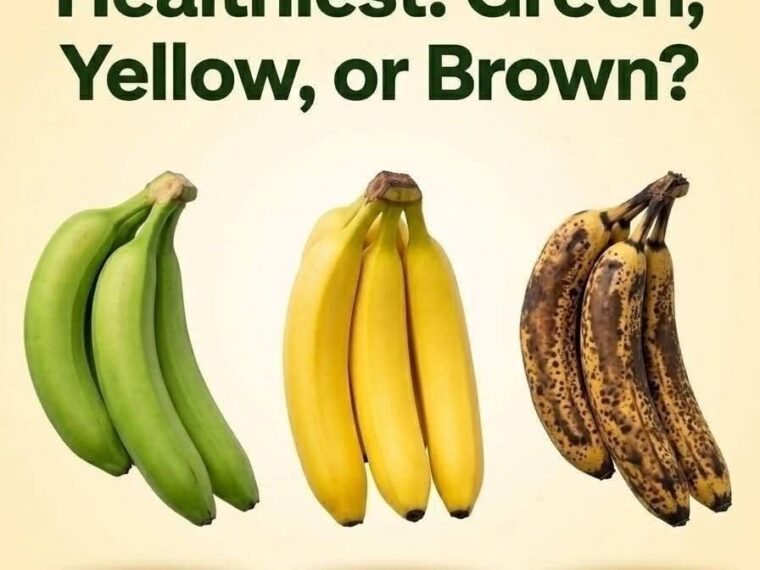
As bananas ripen, their texture, sweetness, and carbohydrate composition change. A firm green banana is quite different from a soft, heavily speckled brown banana—even though they are technically the same fruit.
So, is a green banana healthier than a yellow one? And are brown bananas still nutritious?
The answer depends on what you’re looking for.
Green Bananas: More Resistant Starch
Green bananas contain considerably more resistant starch than ripe bananas.
Resistant starch is a type of carbohydrate that isn’t completely digested in the small intestine. Instead, some of it reaches the large intestine, where gut bacteria can ferment it.
This is one reason green bananas can behave differently from ripe bananas in the digestive system.
Because green bananas contain more resistant starch and less readily available sugar, they generally have a less sweet taste and a firmer, starchier texture.
Potential benefits include:
- Greater support for beneficial gut bacteria
- A potentially slower rise in blood glucose compared with a riper banana
- Greater satiety for some people
- A useful source of carbohydrate and dietary fiber
However, green bananas aren’t necessarily better for everyone. Some people find large amounts of resistant starch harder to digest and may experience gas or bloating.
Yellow Bananas: The Everyday Middle Ground
As a banana ripens, some of its starch is converted into simpler sugars.
That’s why a yellow banana tastes noticeably sweeter than a green one.
Yellow bananas are soft enough to eat comfortably while still providing valuable nutrients, including:
- Potassium
- Vitamin B6
- Vitamin C
- Carbohydrates
- Fiber
- Manganese
For most people, a normally ripe yellow banana is simply an easy, nutritious fruit to include in a balanced diet.
It’s particularly convenient as a snack before physical activity because it provides readily available carbohydrate.
Brown-Spotted Bananas: Sweeter and Softer
When bananas develop brown spots, they are becoming more ripe.
Their starch continues to break down into simpler sugars, making the fruit softer and sweeter.
That doesn’t mean the banana suddenly becomes “unhealthy.”
A brown-spotted banana still contains many of the same nutrients found in less-ripe bananas.
In fact, very ripe bananas can be particularly useful in cooking.
Their natural sweetness makes them excellent for:
- Banana bread
- Smoothies
- Oatmeal
- Pancakes
- Homemade muffins
- Desserts
Instead of throwing away a banana simply because the peel has become heavily spotted, check the fruit itself. If the flesh looks and smells normal, it can often still be used.
So Which One Should You Choose?
TO CONTINUE READING THE ARTICLE PLEASE SEE PAGE 2