So Which One Should You Choose?
There isn’t one banana that is universally the healthiest.
Instead, different stages of ripeness may suit different nutritional goals.
Choose green bananas if:
You want more resistant starch and prefer a less sweet fruit.
Choose yellow bananas if:
You want a balanced combination of sweetness, texture, carbohydrates, and nutrients.
Choose brown-spotted bananas if:
You want a naturally sweeter banana for baking, smoothies, or other recipes.
The most important point is that ripeness changes the banana’s carbohydrate profile, but all three stages can fit into a healthy diet.
What About Blood Sugar?
This is where banana ripeness gets particularly interesting.
As bananas ripen, some of their starch is converted into sugars. Consequently, a ripe banana generally provides more rapidly available carbohydrate than a very green banana.
However, the effect of eating a banana on blood glucose depends on much more than its color.
Portion size, individual metabolism, what else you eat with the banana, physical activity, and overall diet can all influence the response.
For someone monitoring blood glucose, it can therefore be more useful to consider the whole meal and portion rather than assuming that every green banana is automatically “good” and every brown banana is “bad.”
The Peel Doesn’t Tell the Whole Story
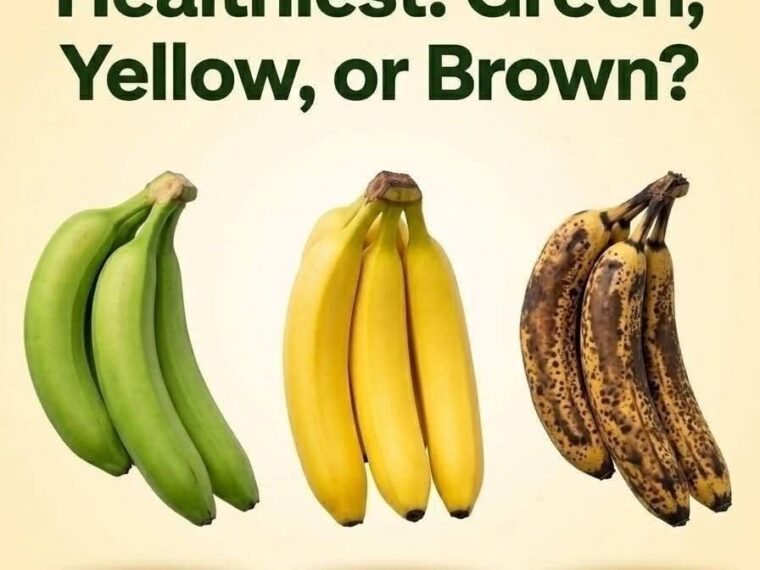
The image shows three dramatically different-looking bananas, but the peel can sometimes make the difference appear greater than it actually is.
A banana covered in brown spots hasn’t suddenly lost all its nutritional value.
Likewise, a green banana isn’t automatically superior simply because it contains more resistant starch.
Nutrition is rarely that simple.
The best choice depends on your preferences, digestive tolerance, dietary goals, and how you intend to eat the fruit.
A Simple Way to Use All Three
You don’t necessarily have to choose one stage forever.
Try using them differently:
Green: Slice into cooked dishes or use when you specifically want a firmer, less-sweet banana.
Yellow: Eat as a convenient snack or add to breakfast.
Brown-spotted: Mash into oatmeal, smoothies, pancakes, or banana bread to take advantage of its natural sweetness.
That way, instead of worrying about whether one banana is “healthy” and another is “unhealthy,” you can take advantage of what each stage offers.
The Bottom Line
The green, yellow, and brown bananas in the image are not three completely different foods. They represent different stages of ripening, and ripening changes the banana’s starch, sugar, texture, and sweetness.
Green bananas contain more resistant starch. Yellow bananas offer a convenient balance of sweetness and texture. Brown-spotted bananas are sweeter and excellent for cooking.
So the next time you see a banana becoming brown, don’t automatically throw it away.
It may simply be reaching the perfect stage for your next smoothie, breakfast, or homemade banana bread.