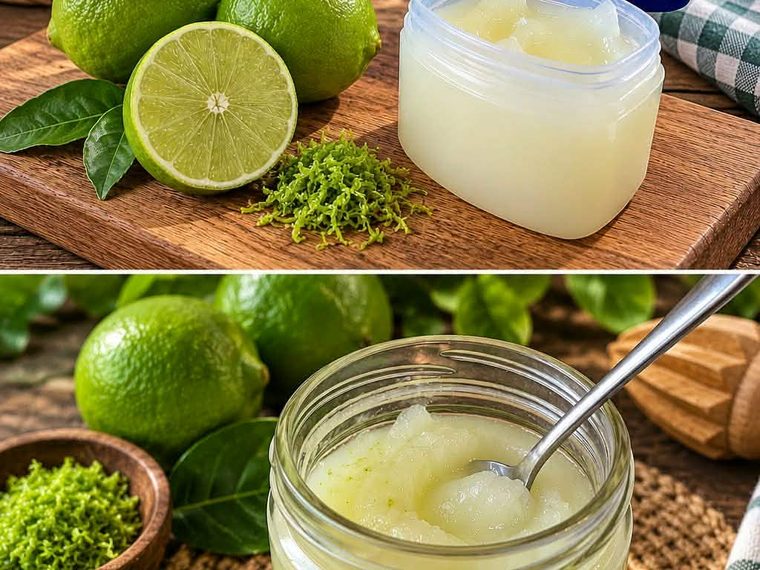
For generations, petroleum jelly has had a permanent place in many people’s bathroom cabinets. It is inexpensive, easy to find, and remarkably versatile. From protecting dry skin to helping lock in moisture, this simple product has been used in countless beauty routines.
One popular home beauty trick involves Vaseline mixed with fresh lime or lemon ingredients, similar to the mixture shown in the image. The combination has become popular online because it is simple to prepare and uses ingredients that many people already have at home.
But does this old-fashioned beauty trick really work?
The answer requires a little explanation.
Vaseline can be genuinely useful for protecting and moisturizing dry skin, while citrus ingredients contain acids and vitamin C. However, putting citrus juice directly on the skin is not suitable for everyone and can cause irritation or increase sensitivity to sunlight.
So before trying the recipe, it’s important to understand what Vaseline actually does, what citrus can do, and how to use the combination safely.
What Is Vaseline?
Vaseline is a well-known brand of petroleum jelly.
Petroleum jelly is an occlusive substance, meaning that it forms a protective layer over the surface of the skin.
Rather than adding large amounts of water to the skin, petroleum jelly helps reduce water loss from the skin’s surface.
This is why it can be especially useful for areas that become dry or rough, such as:
- Lips
- Hands
- Elbows
- Knees
- Heels
- Cuticles
- Very dry patches of skin
Its simplicity is one of its biggest advantages.
You don’t need a complicated collection of beauty products to benefit from petroleum jelly.
Why Do People Add Lime or Lemon?
Citrus fruits such as lime and lemon contain naturally occurring acids and vitamin C.
This is one reason citrus has appeared in traditional home beauty recipes for many years.
People commonly associate lemon or lime with:
- Fresh-looking skin
- Removing surface oils
- Exfoliation
- Brightening the appearance of dull skin
- A fresh citrus scent
However, there is an important distinction between traditional beauty practices and scientifically established skin treatments.
Just because an ingredient is natural doesn’t automatically mean it is safe for every skin type.
Fresh citrus juice can be irritating, particularly on sensitive or damaged skin.
What Happens When You Combine Vaseline and Citrus?
The two ingredients have very different properties.
Vaseline: helps create an occlusive barrier that reduces moisture loss.
Citrus juice: contains acids and other compounds that can affect the skin’s surface.
The combination therefore isn’t a magical skin treatment. The Vaseline mainly provides the moisturizing and protective component.
If the mixture feels smooth and leaves the skin feeling softer, that is largely because the petroleum jelly helps retain moisture.
The citrus component is not necessary for petroleum jelly to perform its basic moisturizing function.
The Biggest Benefit of Vaseline: Locking In Moisture
One of the most useful ways to use petroleum jelly is after washing the skin.
When your skin is slightly damp, applying a thin layer of petroleum jelly can help slow the evaporation of water from the skin.
This is particularly useful for very dry areas.
For example, after a shower you could apply a small amount to:
- Dry heels
- Elbows
- Knees
- Dry hands
- Cuticles
You don’t need a thick coating.
A small amount spread evenly is usually enough.
Why This Can Be Especially Helpful for Dry Heels
Feet often become dry because the skin on the heels is exposed to pressure and friction.
Walking, standing, wearing open shoes, and dry weather can all contribute to rough-looking heels.
A simple routine is:
- Wash your feet.
- Pat them dry.
- Leave the skin slightly moisturized.
- Apply a thin layer of petroleum jelly.
- Put on clean cotton socks.
The socks help keep the petroleum jelly in place while reducing contact with bedding or clothing.
This is a much simpler approach than buying multiple products for dry feet.
Can Vaseline Make Skin Soft?
Yes, petroleum jelly can make dry skin feel noticeably softer.
However, it is important to understand why.
It doesn’t magically transform the skin overnight.
Instead, it helps reduce moisture loss, allowing the skin’s natural hydration to be better maintained.
This can make rough areas feel smoother and more comfortable.
For very dry skin, this simple approach can sometimes be more useful than constantly changing products.
What About Dry Lips?
TO CONTINUE READING THE ARTICLE PLEASE SEE PAGE 2