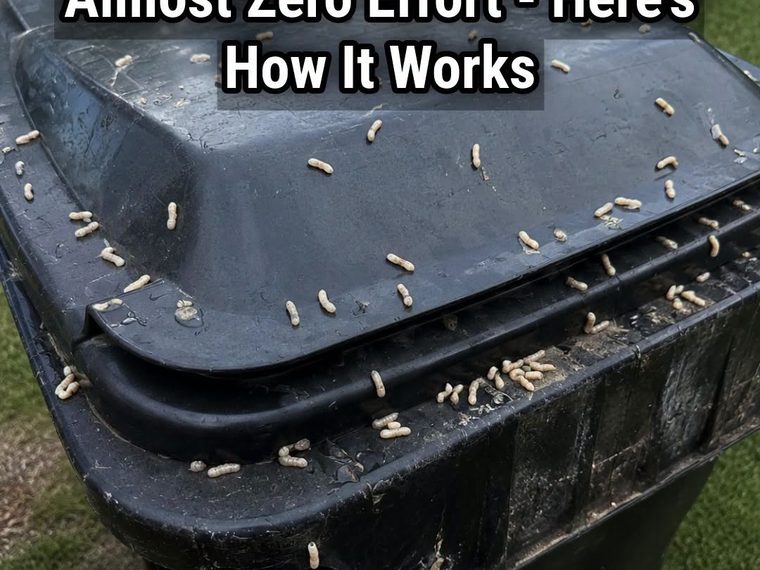
If you’ve ever opened your outdoor trash bin on a hot day and discovered tiny white maggots crawling around inside, you know how unpleasant the experience can be.
The good news is that you don’t necessarily need expensive sprays, harsh chemicals, or complicated cleaning routines to reduce the problem. One of the simplest approaches is to make sure food waste—especially meat, fish, and other moist scraps—is sealed away from flies before it goes into the trash bin.
A particularly easy trick is to wrap food scraps tightly or place them in a sealed bag before putting them in the bin, and, when possible, keep particularly attractive food waste frozen until collection day.
It sounds almost too simple, but there’s a reason it works.
Why Are Maggots Appearing in Your Trash Bin?
First, it helps to understand what you’re actually seeing.
Maggots aren’t a separate type of insect. They are fly larvae.
The problem usually starts when adult flies find something attractive inside your trash bin. Food scraps, meat, fish, leftovers, pet food, and other organic waste can provide exactly the environment flies are looking for.
A fly may lay eggs on or near suitable food material.
Those eggs can hatch into larvae, which are the small, pale creatures commonly called maggots.
So if you see maggots in your garbage, the real problem isn’t simply that maggots somehow appeared from nowhere.
Flies found an opportunity to reproduce.
That changes the way you should approach the problem.
Instead of simply trying to kill the maggots after they appear, it makes sense to concentrate on preventing flies from reaching suitable food waste in the first place.
The Almost-Zero-Effort Trick: Seal Food Waste Before Throwing It Away
The simplest habit is this:
Don’t put exposed, wet food scraps directly into the trash bin.
Instead, place them inside a tightly closed bag or another suitable sealed container before putting them into your household garbage.
This is particularly useful for foods that attract flies, including:
- Raw meat
- Fish
- Chicken
- Seafood shells
- Meat bones with scraps attached
- Leftover cooked meat
- Wet pet food
- Dairy or food residues
- Very ripe fruit
- Vegetables beginning to rot
The idea is straightforward.
If flies can’t easily reach the food, they’re less likely to lay eggs on it.
You aren’t trying to create a magical barrier around the entire trash bin. You’re simply removing one of the biggest attractions inside it.
An Even Better Version: Freeze Meat and Fish Scraps
If your garbage is collected only once or twice a week, there’s another surprisingly simple strategy.
Keep particularly smelly or fly-attracting food waste in a sealed bag or container in the freezer until the day before—or the day of—trash collection.
This can be especially useful for:
- Fish scraps
- Chicken packaging
- Meat trimmings
- Seafood waste
- Bones containing food residue
Freezing prevents the waste from sitting warm for several days and becoming an attractive source of odors and nutrients for flies.
When collection day arrives, you simply put the sealed waste into the appropriate garbage container.
This requires very little additional work once it becomes part of your routine.
Important consideration
Only use this approach if you have enough freezer space and if you’re comfortable storing food waste separately from food intended for consumption. A dedicated, tightly sealed container or bag can make this much more hygienic.
Why Hot Weather Makes the Problem Worse
Maggot problems often become much more noticeable during warm weather.
Heat accelerates decomposition and makes food waste smell stronger. Those odors can attract flies.
Warm conditions can also allow fly eggs and larvae to develop more quickly.
That’s why a trash bin that seems perfectly fine in cool weather can suddenly become a major problem during summer.
You might empty the bin regularly and still notice maggots because the combination of:
food + moisture + warmth + flies
creates ideal conditions for the problem.
This is also why preventing flies from accessing food waste can be more effective than waiting until the bin is full of larvae.
Keep the Trash Bin Tightly Closed
This sounds obvious, but it’s one of the easiest things to overlook.
A lid that doesn’t close properly gives flies easy access to the contents.
Check whether:
- The lid closes completely.
- The hinges are functioning correctly.
- The bin isn’t overfilled.
- Garbage bags aren’t preventing the lid from closing.
- Food isn’t stuck around the rim.
- There aren’t cracks or openings that allow insects to enter.
A tightly closed bin doesn’t guarantee that you will never have maggots, but it makes the environment considerably less accessible to flying insects.
Don’t Leave Food Waste Sitting Beside the Bin
Another common mistake is putting garbage bags outside the bin before collection day.
Even if the bags are tied, damage, leaks, or small openings can expose food odors.
If possible, keep food-containing garbage inside a properly closed container until collection.
This is particularly important in warm weather.
A bag sitting in the sun can become warm quickly, making food waste more noticeable to insects.
The “Dry Bin” Trick Can Also Help
Moisture is another important part of the problem.
A wet trash bin containing food residue provides a much more unpleasant environment than a clean, relatively dry one.
One easy habit is to place absorbent material at the bottom of the bin.
For example, depending on your local waste rules, you can use:
- A few sheets of newspaper
- Paper packaging
- Cardboard
- A suitable absorbent liner
The goal is simply to absorb leaking liquids.
This can help prevent the bottom of the bin from becoming a pool of decomposing food residue.
However, don’t treat this as a replacement for sealing particularly attractive food waste. It’s better viewed as an additional precaution.
What About Salt?
TO CONTINUE READING THE ARTICLE PLEASE SEE PAGE 2