Can This Really Keep Bananas Yellow for 16 Days?
This is where the viral claim needs some context.
Sixteen days should not be considered a guaranteed shelf life.
How long bananas remain yellow depends on several factors, including:
- How ripe they were when purchased
- Room temperature
- Humidity
- Banana variety
- Physical damage
- Exposure to heat
- Ethylene production
- Storage conditions
A bunch that stays attractive for two weeks in one kitchen may ripen much faster in another.
Therefore, it’s better to treat the “16 days” claim as a potential result under favorable conditions rather than a promise.
Temperature Matters More Than You Might Think
One of the most important factors affecting banana ripening is temperature.
A very warm kitchen can cause bananas to ripen considerably faster.
Try to keep your bananas away from:
- The stove
- The oven
- Direct sunlight
- A sunny windowsill
- A dishwasher that produces heat
- Other warm appliances
Instead, choose a location that is relatively cool, dry, and away from direct sunlight.
What About Wrapping the Banana Stems?
Another popular banana-storage trick involves wrapping the stems with plastic wrap.
The idea is that the stems are an important source of ethylene release, so covering them may help slow the ripening process.
If you want to experiment with this method, you can:
- Keep the bananas together.
- Wrap the top of the stem with a small piece of plastic wrap.
- Make sure it is secure but not excessively tight.
- Store the bananas away from heat.
- Check them regularly.
The effect may not be dramatic, but it’s an inexpensive experiment worth trying.
Should You Put Bananas in the Refrigerator?
Once bananas have reached the ripeness you want, refrigeration can sometimes help slow further ripening.
However, there is an important downside.
The peel may turn brown.
Cold temperatures can cause banana skins to darken. This doesn’t necessarily mean that the fruit inside has gone bad.
You may open a banana with a dark brown peel and discover that the inside is still perfectly edible.
So if your bananas are already ripe and you aren’t going to eat them immediately, refrigeration can be useful.
Don’t Throw Away Bananas Just Because They’re Brown
This is probably the most important lesson.
A brown banana isn’t automatically a rotten banana.
Instead of looking only at the color of the peel, inspect the fruit itself.
A ripe banana can be perfectly suitable for eating if it:
- Smells normal
- Has no mold
- Isn’t leaking
- Isn’t unusually slimy
- Doesn’t have obvious signs of spoilage
In fact, very ripe bananas can be particularly useful in cooking because they contain more sweetness and have a soft texture.
7 Great Ways to Use Overripe Bananas
1. Make Homemade Banana Bread
Overripe bananas are fantastic for banana bread.
Their soft texture makes them easy to mash, while their natural sweetness adds plenty of flavor.
You can combine mashed bananas with ingredients such as:
- Flour
- Eggs
- Butter or oil
- Baking powder or baking soda
- Cinnamon
- Vanilla
- Nuts
It’s one of the easiest ways to rescue bananas that are past their ideal eating stage.
2. Make Banana Pancakes
Another simple option is banana pancakes.
Mash one or two ripe bananas and combine them with eggs and oats or flour.
You can add:
- Cinnamon
- Vanilla
- Blueberries
- Chopped walnuts
- Chocolate chips
It’s a great breakfast and an easy way to prevent food waste.
3. Freeze Them for Later
If you know you aren’t going to eat your bananas in time, freeze them.
For the best results:
- Peel the bananas.
- Cut them into chunks.
- Place them in a freezer-safe bag or container.
- Freeze them.
- Use them later for smoothies, baking, or desserts.
Frozen bananas are especially useful because they can make smoothies thick and creamy.
4. Make a Banana Smoothie
A ripe or frozen banana can become the base of a delicious smoothie.
Try combining:
1 banana + milk + yogurt + cinnamon
You can also add:
- Peanut butter
- Cocoa powder
- Oats
- Strawberries
- Blueberries
- Honey
Frozen banana pieces can provide a naturally creamy texture without needing much ice.
5. Make Banana “Nice Cream”
Here’s another clever way to use very ripe bananas.
Slice the bananas and freeze them.
Once frozen, blend them in a powerful food processor or blender until smooth and creamy.
The result is a simple frozen banana dessert often called banana nice cream.
You can customize it with:
- Cocoa
- Peanut butter
- Vanilla
- Berries
- Chopped nuts
6. Add Banana to Oatmeal
A ripe banana can also naturally sweeten oatmeal.
Mash half or one banana and stir it into your oatmeal while it cooks.
Then add toppings such as:
- Cinnamon
- Walnuts
- Chia seeds
- Pumpkin seeds
- Fresh berries
It’s an easy breakfast that helps use bananas before they become waste.
7. Bake Banana Muffins
If you have several bananas that are becoming too ripe at the same time, banana muffins are another excellent option.
They’re easy to prepare and can be frozen after baking.
That means you can turn a bunch of overripe bananas into a convenient homemade snack instead of throwing them away.
Should Bananas Be Kept Away From Other Fruit?
It can be helpful to experiment with this.
Because bananas produce ethylene, they can influence the ripening of some other fruits stored nearby.
If you have fruit that you want to keep fresh for longer, consider keeping your bananas in a separate area.
This can be especially useful if you regularly buy large quantities of fruit.
The Best Place to Store Bananas
For most households, a good banana-storage location should be:
Cool + dry + away from direct sunlight + away from heat
A kitchen counter can work well if it isn’t exposed to excessive heat.
Avoid placing the bunch directly next to your oven or stove.
And remember that bananas can be easily bruised, so don’t place heavy objects on top of them or squeeze them into an overcrowded fruit bowl.
Try Your Own Banana Storage Experiment
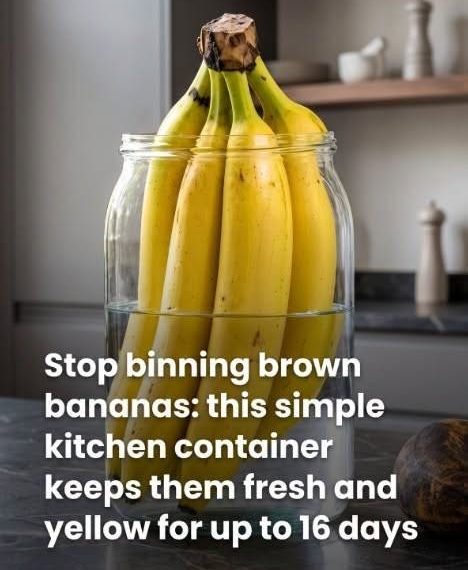
If you’re curious whether the glass-container method actually works better in your home, why not test it yourself?
Buy three similar bunches of bananas.
Group A: Traditional Storage
Leave the bananas on the counter as you normally would.
Group B: Glass Container
Place the bananas inside a large glass container similar to the one shown in the image.
Group C: Alternative Method
Try another approach, such as separating the bunch or wrapping the stems.
Then photograph each group every day.
Record what happens on:
- Day 1
- Day 3
- Day 5
- Day 7
- Day 10
- Day 14
Compare:
- Peel color
- Firmness
- Brown spots
- Aroma
- Overall appearance
This simple experiment can tell you much more about what works in your particular kitchen than a viral social media claim.
Common Mistakes That Make Bananas Ripen Faster
Keeping Them Near the Stove
Heat accelerates ripening, so a countertop next to your stove isn’t ideal.
Leaving Them in Direct Sunlight
A sunny windowsill can become surprisingly warm.
Buying Too Many at Once
If your household doesn’t eat many bananas, buying a huge bunch can make food waste more likely.
Ignoring Bruised Fruit
Damaged bananas tend to deteriorate faster.
Throwing Them Away Too Early
Brown spots aren’t necessarily a sign that the banana is spoiled.
How to Reduce Banana Waste
The easiest strategy is to create a simple routine.
When you bring bananas home:
1. Check them for bruises.
2. Keep them away from excessive heat.
3. Store them in a suitable location.
4. Monitor their ripeness every day or two.
5. Eat the ripest bananas first.
6. Use very ripe bananas for baking.
7. Freeze anything you won’t be able to eat.
This approach can save both food and money.
Frequently Asked Questions
Can bananas really stay yellow for 16 days?
They can sometimes remain attractive for an extended period under favorable conditions, but 16 days is not guaranteed. Ripening depends on temperature, starting ripeness, humidity, variety, and other factors.
Does a brown banana mean it is spoiled?
No. A brown peel often simply means the banana is very ripe. Check the inside for mold, unusual odors, leaking, or other signs of spoilage.
Is a glass container the best way to store bananas?
It’s an interesting method to try, but there isn’t a universal storage method that guarantees bananas will stay yellow for a specific number of days. Proper temperature and avoiding damage are also important.
Should I refrigerate bananas?
Once bananas are ripe, refrigeration can help slow further softening. However, the peel may turn darker or brown in the refrigerator.
What should I do with very ripe bananas?
Use them for banana bread, pancakes, muffins, smoothies, oatmeal, or homemade frozen banana desserts. You can also peel and freeze them for later.
Final Thoughts
The glass-container trick shown in the image is certainly simple enough to try.
However, the claim that it will keep every bunch of bananas fresh and yellow for up to 16 days shouldn’t be treated as a guarantee. Bananas ripen at different rates, and your kitchen temperature and storage conditions can make a major difference.
The bigger lesson is that proper banana storage can help reduce unnecessary food waste.
Keep your bananas away from excessive heat, protect them from bruising, monitor their ripeness, and don’t throw them away simply because the peel has turned brown.
And when your bananas become too ripe to enjoy on their own, don’t consider them useless. That’s often when they’re at their best for banana bread, pancakes, smoothies, muffins, and frozen desserts.
So the next time your bananas start developing those familiar brown spots, pause before throwing them into the trash. They may still have plenty of delicious life left in them. 🍌