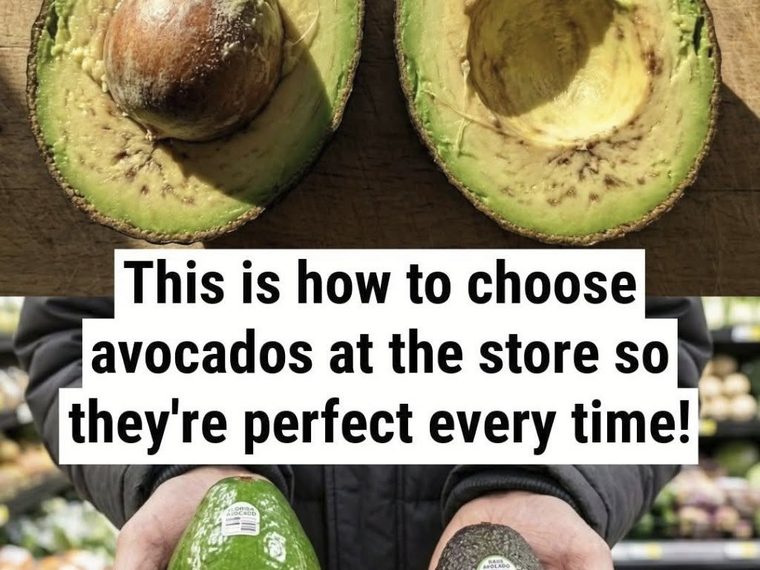
Choosing the perfect avocado can sometimes feel like a guessing game. One avocado may look beautiful on the outside but turn out hard and flavorless inside, while another can appear perfectly ripe and reveal brown, stringy or mushy flesh when cut open.
The good news is that you can become much better at selecting avocados by paying attention to a few simple signs. The variety, color, firmness, weight, skin texture and even the small stem area can all provide useful clues about ripeness and quality.
Whether you are buying avocados for guacamole, salads, sandwiches, toast or smoothies, these simple shopping tips can help you bring home fruit that is much more likely to be creamy, flavorful and ready to eat.
1. Know Which Type of Avocado You Are Buying
Not all avocados ripen and look exactly the same.
The most common variety in many supermarkets is the Hass avocado. It typically has rough, pebbly skin that becomes darker as the fruit ripens. However, other varieties can remain green even when they are ripe.
This is important because color alone is not a reliable indicator of ripeness.
If you are buying a Hass avocado, a darker green to nearly black skin often indicates that the fruit is further along in the ripening process. However, an extremely dark avocado may also be overripe, especially if it has soft spots or damaged areas.
For green-skinned varieties, firmness and other characteristics are more useful than color.
2. Don’t Judge an Avocado Only by Its Color
A common mistake is assuming that the darkest avocado must be the best one.
That’s not necessarily true.
Avocados change color differently depending on their variety. Some become dark as they ripen, while others stay relatively green.
Instead of relying on color alone, consider several characteristics together:
- Skin appearance
- Firmness
- Weight
- Shape
- Presence of bruises
- Stem condition
- How soon you plan to eat it
Using several clues gives you a much better idea of what is happening inside the fruit.
3. The Gentle Firmness Test
One of the easiest ways to judge an avocado is to gently hold it in the palm of your hand and apply light pressure with your fingers.
A ripe avocado should have a little give without feeling mushy.
Think of it this way:
Very hard:
The avocado is probably not ready to eat yet.
Slightly yielding:
Usually a good choice if you plan to eat it within a day or two.
Soft but still relatively firm:
Likely ready to eat now.
Very soft or mushy:
It may be overripe or damaged inside.
Avoid squeezing an avocado aggressively with your fingertips. Repeated pressure can bruise the flesh and create dark spots even if the fruit was initially good.
Instead, gently hold the fruit in your palm and apply light, even pressure.
4. Check the Weight
A surprisingly useful trick is to compare avocados of similar size.
A good avocado often feels heavier than you might expect for its size, because much of that weight comes from its water-rich flesh.
Pick up two or three avocados that are approximately the same size. Compare how they feel in your hand.
The heavier one may have a good amount of usable flesh.
Weight isn’t a guarantee of quality, however. An avocado can still be overripe or damaged despite feeling heavy, so use this technique together with the other checks.
5. Examine the Skin
Take a close look at the surface.
A healthy avocado should generally have relatively intact skin without major cuts, deep bruises or areas that look collapsed.
Small natural imperfections are not necessarily a problem. Avocado skin can have spots, variations in texture and minor marks that don’t affect the flesh.
What you want to avoid are:
- Large sunken areas
- Deep cuts
- Cracks exposing the flesh
- Significant bruising
- Large soft patches
- Signs of mold
- Leaking or damaged areas
Deep damage to the skin can sometimes correspond to deterioration inside.
6. Try the Stem-End Test Carefully
Another popular technique involves looking at the small stem or cap at the narrow end of the avocado.
If the stem area is still firmly attached, the fruit may need more time to ripen.
If the small cap comes away easily, you may be able to see the color underneath.
A greenish color can be consistent with good ripeness, while a brown or very dark area may suggest that the flesh underneath is beginning to deteriorate.
However, this test isn’t foolproof. Removing stems from produce at the store can damage the fruit and isn’t always appropriate, especially if the retailer doesn’t permit it.
When possible, simply inspect the stem area without removing it.
7. Pay Attention to the Shape
TO CONTINUE READING THE ARTICLE PLEASE SEE PAGE 2