Step 1: Choose dried or live mealworms
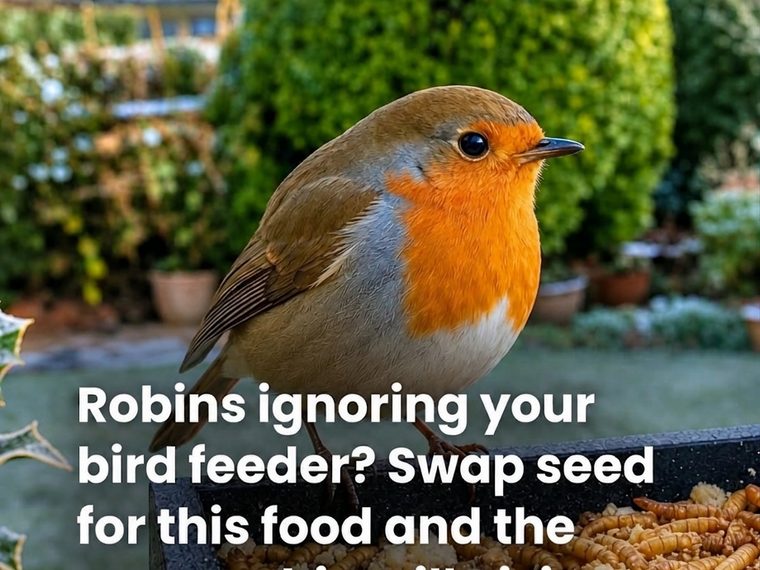
Dried mealworms are convenient because they are easy to store and handle. You can briefly soak dried mealworms in water to soften them, especially when feeding during the breeding season.
If you choose live mealworms, make sure they are fresh and in good condition. Do not offer dead, discoloured or spoiled ones.
Step 2: Use a small, suitable feeding spot
Robins often forage on or near the ground. You can use a purpose-made mealworm feeder or place a small portion in a clean, sheltered location where the bird can find it easily.

Choose a quiet spot with nearby shrubs or other natural cover, but keep it reasonably open so the bird can see approaching danger. Keep the feeding area away from places where cats can hide and ambush birds.
Step 3: Start with a small quantity
Put out only a little food at first. If the robin eats it, you can offer a little more on another occasion.
Avoid leaving large amounts of food outside. The RSPB advises that mealworms should be eaten or cleared away by dusk on the same day, particularly when scattered on the ground.
3. Other Foods That Can Help Attract Robins
Mealworms are an excellent starting point, but you can offer a few other suitable foods to provide variety.

- Small pieces of apple or pear: Offer fresh pieces in small quantities and remove anything that becomes mouldy.
- Suitable suet products: Bird-safe suet pellets or cakes provide energy and can be especially useful during cold weather.
- Natural insects: A wildlife-friendly garden can supply spiders, beetles, woodlice and other invertebrates.
- Fresh drinking water: A shallow container gives birds a place to drink and bathe, provided the water is changed daily and the container is cleaned regularly.
RSPB+2

Avoid mouldy or salty food, and do not use cooking fat left over from roasting meat. These can be unsuitable or harmful to garden birds. Keep any food intended for birds away from pets, too.
4. Make Your Garden a Place Robins Want to Return To
Food is only part of the picture. Robins are more likely to use a garden regularly when it provides safe places to forage and shelter.

Try these simple changes:
Leave some fallen leaves. A small, undisturbed patch can support insects and spiders that robins naturally search for.
Grow shrubs and bird-friendly plants. Dense shrubs, ivy and other suitable plants can provide cover, while berry-producing plants offer food for a range of birds.
Keep a quiet corner. Place food away from busy doors and walkways, and give birds nearby cover without creating hiding places for cats.
Provide fresh water. Water is useful throughout the year, especially when natural sources freeze or dry out.
The RSPB recommends supporting natural food sources and providing shelter as part of a bird-friendly garden.

5. Keep the Feeding Area Clean and Safe
A feeding station can help birds, but it can also become a place where disease spreads if food and droppings accumulate.
Follow these precautions:
- Clean feeding equipment at least once a week.
- Remove old, wet or mouldy food before adding fresh food.
- Keep food as dry as possible.
- Clean away droppings and food debris beneath feeding spots.
- Change drinking water daily and clean the container regularly.
- If you notice sick birds, stop feeding temporarily and follow local wildlife-health guidance.
These precautions reflect the RSPB’s updated advice on reducing disease risks around garden bird feeding.

An important seasonal note about seeds
For readers following UK RSPB guidance, the current recommendation is to pause feeding seeds and peanuts from May 1 through October 31, then offer them again from November through April. Small amounts of mealworms and suitable suet can be offered throughout the year. Guidance may differ in other countries, so check advice from your local wildlife organisation.
6. How Long Will It Take for a Robin to Visit?
There is no fixed timetable. A robin that already visits neighbouring gardens may discover your food quickly, while another may take longer or never use that particular spot.
To improve your chances:
- Put out a small amount of mealworms at a consistent time.
- Keep the feeding location quiet and predictable.
- Avoid standing too close while the bird is feeding.
- Watch from a window or another sheltered position.
- Be patient if other birds find the food first.

Robins can be territorial, so you may see one bird visiting repeatedly rather than several feeding together. However, their movements depend on food availability, weather, competition and individual behaviour. Daily visits are possible, but never guaranteed.
Final Thoughts: Try Mealworms Before Giving Up on Your Bird Feeder
If robins keep ignoring your seed feeder, the answer may be simpler than you think. Try offering a small portion of mealworms, place them in a suitable sheltered spot, and keep the area clean.
Combine this with fresh water, natural foraging opportunities and safe places to hide. Over time, your garden may become a regular stop for a robin looking for food.
The best part is that you do not need a large garden or expensive equipment. A small, thoughtfully arranged feeding spot can make a difference.
Have you ever attracted a robin to your garden with mealworms? Share your experience and tell us which food your garden birds seem to prefer.