Few houseplants are as captivating as the Prayer Plant. With its beautifully patterned leaves, rich shades of green, and fascinating habit of moving its foliage throughout the day, this tropical plant can quickly become the star of any indoor plant collection.
But while Prayer Plants are undeniably beautiful, they have a reputation for being a little particular. Brown leaf edges, curling leaves, drooping stems, and faded colors can all appear when their growing conditions are not quite right.
The good news is that once you understand what this plant needs, caring for it becomes much easier.
The secret to growing a lush, full Prayer Plant is simple: give it bright indirect light, consistently moist—but never soggy—soil, warmth, and plenty of humidity.
Understanding the Prayer Plant
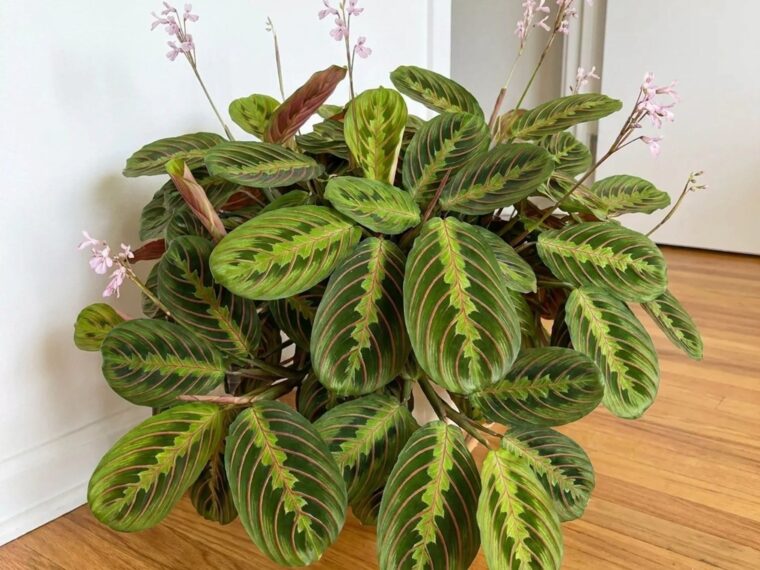
The classic Prayer Plant is known botanically as Maranta leuconeura. It is a tropical foliage plant famous for its oval leaves decorated with dramatic patterns, colorful veins, and contrasting undersides.
Its most fascinating feature is its daily leaf movement. During the day, the leaves usually spread outward and appear more open. As evening approaches and light levels change, the leaves can gradually lift upward, resembling hands held together in prayer. This fascinating movement is one of the reasons the plant earned its popular name.
Common varieties include:
- Red Prayer Plant, known for its striking red veins.
- Green Prayer Plant, often decorated with darker green markings.
- Rabbit’s Foot Prayer Plant, recognized by its distinctive leaf pattern.
- Maranta ‘Fascinator’, a colorful variety with bold red veining.
While the different varieties may have slightly different appearances, their basic care requirements are generally very similar.
1. Give Your Prayer Plant the Right Light
Light is one of the most important factors in keeping a Prayer Plant healthy.
The ideal location provides bright, indirect light. Think about the soft, filtered light the plant would naturally receive beneath the canopy of a tropical forest.
A good location might be:
- A few feet away from a bright window.
- Near an east-facing window with gentle morning light.
- Near a north-facing window.
- Behind a sheer curtain if the room receives stronger sunlight.
Avoid placing your Prayer Plant in intense, direct sunlight for long periods. Too much direct sun can fade or bleach the beautiful leaf patterns and may scorch the foliage.
At the same time, extremely dark conditions can slow growth and cause the colorful patterns to become less vibrant.
A simple rule to remember:
Bright room? Perfect. Direct hot sun on the leaves? Not ideal.
If the leaves begin to look washed out or faded, the plant may be receiving too much direct light. If growth becomes weak and the foliage loses some of its beautiful color, the plant may need a brighter location.
2. Keep the Soil Consistently Moist
Prayer Plants generally do not enjoy the same dry treatment that many other houseplants can tolerate.
They prefer soil that remains lightly and consistently moist, especially during the active growing season.
However, there is an important difference between moist soil and waterlogged soil.
The roots still need access to oxygen.
If the potting mix remains constantly soaked, the plant can develop root problems and the stems may begin to rot. Never allow the plant to sit in standing water for long periods.
A practical watering routine is to check the soil regularly and water when the surface begins to dry slightly.
When watering:
- Water the soil thoroughly.
- Allow excess water to drain through the bottom of the pot.
- Empty any water collected in the saucer.
- Return the plant to its normal location.
During winter, growth may slow down, so the plant may need less frequent watering.
The goal is to avoid both extremes: do not keep the soil soaking wet, but do not allow it to become completely dry for extended periods either.
3. Humidity Is the Secret to Beautiful Leaves
If there is one thing that many Prayer Plant owners struggle with, it is humidity.
Because the Prayer Plant is tropical, dry indoor air can cause problems. Brown or crispy leaf edges are often a sign that the plant is experiencing environmental stress.
Low humidity is one possible cause.
If the air in your home is particularly dry, especially during winter or when heating and air conditioning systems are running, your Prayer Plant may benefit from additional humidity.
Here are several easy ways to improve humidity around the plant.
Group Your Plants Together
Plants naturally release moisture into the air. Keeping several houseplants close together can create a slightly more humid environment around them.
Use a Pebble Tray
Place the pot on a tray containing pebbles and a small amount of water.
Make sure the bottom of the pot sits above the water level rather than directly in the water.
Use a Humidifier
A humidifier can be especially helpful in dry homes.
If you have several tropical houseplants, placing a humidifier nearby can benefit the entire collection.
Choose a Naturally Humid Room
A bright bathroom can sometimes be a great location for a Prayer Plant, provided the plant still receives enough indirect light.
4. Keep Your Prayer Plant Warm
Prayer Plants dislike cold temperatures and sudden environmental changes.
They generally perform best in a consistently warm indoor environment.
Keep them away from:
- Cold drafts.
- Air-conditioning vents.
- Open windows during cold weather.
- Heating systems blowing hot, dry air directly onto the leaves.
The most important thing is consistency.
A comfortable room with stable temperatures is usually much better than a location that becomes extremely hot during the day and cold at night.
If you would not feel comfortable sitting next to a cold draft or directly in front of a heater, your Prayer Plant probably will not enjoy it either.
5. Choose a Light, Well-Draining Potting Mix
A Prayer Plant likes moisture, but that does not mean it wants dense, compacted soil.
Choose a potting mix that can retain some moisture while still allowing excess water to drain away.
A simple mixture might include:
- Quality houseplant potting soil.
- Coco coir or another moisture-retaining material.
- Perlite to improve drainage and airflow.
The finished soil mixture should feel light and airy rather than heavy and muddy.
The pot should also have drainage holes.
This is essential because excess water needs somewhere to go. Without drainage, water can collect around the roots and create unhealthy growing conditions.
6. Feed Your Prayer Plant During the Growing Season
Prayer Plants do not need excessive amounts of fertilizer.
During the active growing season, you can feed your plant with a suitable balanced houseplant fertilizer according to the instructions on the product.
Moderate feeding is usually better than overfeeding.
More fertilizer does not automatically mean faster growth or a healthier plant.
In fact, too much fertilizer can create problems and may cause stress or damage to the roots.
During the slower-growing months, especially in winter, reduce or pause feeding depending on your plant’s growth and growing conditions.
Always remember that fertilizer cannot solve problems caused by poor lighting, incorrect watering, or unhealthy roots.
7. Pruning for a Fuller, Bushier Plant
One of the easiest ways to keep your Prayer Plant looking beautiful is to remove damaged or dying foliage.
Use clean, sharp scissors or pruning shears to trim:
- Yellow leaves.
- Brown or badly damaged leaves.
- Weak stems.
- Unattractive or dying growth.
Regular pruning and maintenance can help keep the plant looking neat and encourage you to inspect it regularly for potential problems.
If your Prayer Plant becomes long and sparse, selective trimming can also help manage its shape.
Marantas can naturally spread and trail, so you can decide whether you prefer a compact, bushy plant or a more relaxed, cascading appearance.
8. How to Propagate a Prayer Plant
Once your Prayer Plant is healthy and growing well, you may be able to create new plants from it.
Propagation is a wonderful way to expand your collection or share plants with friends and family.
Two common methods are division and cuttings.
Division
When repotting a mature Prayer Plant, carefully examine the root system.
If the plant has naturally formed separate sections with their own roots and stems, these sections may be gently divided and planted into separate pots.
Each new section should have healthy roots and enough foliage to continue growing.
Stem Cuttings
Healthy stem cuttings can also be used for propagation.
Choose a healthy section of stem and make a clean cut.
The cutting can then be placed in a suitable growing medium or propagated using a method appropriate for the plant.
Warm temperatures, gentle indirect light, and good humidity can help create favorable conditions for new root development.
Common Prayer Plant Problems and How to Fix Them
Even with good care, your Prayer Plant may occasionally show signs that something is wrong.
The good news is that the leaves often provide clues about what the plant needs.
Brown Leaf Tips or Edges
TO CONTINUE READING THE ARTICLE PLEASE SEE PAGE 2