4. Can a fan dry out your eyes, skin, and throat?

Yes. For some people, prolonged airflow can increase moisture loss from exposed surfaces of the body.
Your eyes are protected by a thin layer of tears that keeps their surface lubricated. Moving air can cause this moisture to evaporate more quickly, potentially worsening dry-eye symptoms.
You may notice:
- Burning or stinging eyes in the morning.
- A gritty sensation, as if something is in your eyes.
- Dry lips or mouth.
- An irritated throat.
- Dry or uncomfortable skin.
The American Academy of Ophthalmology identifies wind and airflow from fans as potential contributors to dry-eye symptoms.
People who already have dry eyes, wear contact lenses, or have conditions that affect tear production may be particularly sensitive.
To minimize irritation, avoid directing the fan straight at your face. Point it toward a wall or another part of the room instead. If you have persistent eye pain, significant redness, or changes in vision, seek advice from an eye-care professional rather than assuming the fan is responsible.
5. The surprising benefits of sleeping with a fan

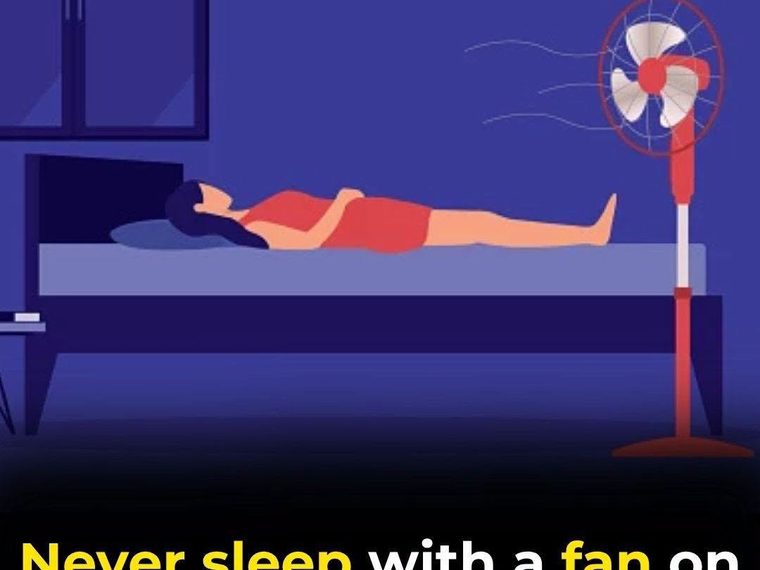
Although the image warns against using a fan, there are several reasons why keeping one on at night can actually be helpful.
It helps your body stay comfortable
A hot bedroom can make it difficult to fall asleep. Air moving across your skin helps your body release heat, which can improve comfort during warm nights.
A fan can be especially useful when temperatures remain high after sunset and opening a window does not provide enough relief.
It can provide soothing background noise
Some people find the steady hum of a fan relaxing. This consistent sound may help mask intermittent noises, such as traffic, distant conversations, or sounds from neighboring apartments.
However, the effect varies from person to person. If the fan is noisy or produces an irritating vibration, it may interfere with sleep instead.
It improves air circulation
A fan can help prevent a bedroom from feeling stuffy by circulating the air already present in the room.
However, remember that a normal fan does not remove pollutants or reliably filter dust, pollen, or other allergens. Ventilation and appropriate air filtration may still be necessary.
The Sleep Foundation notes that fans can provide cooling comfort and soothing background noise, while also identifying potential disadvantages for people with allergies or sensitivity to noise.
6. Is sleeping with a fan dangerous for babies and young children?

Parents should take particular care when managing a baby’s sleeping environment.
A fan may help circulate air in a warm room, but it should not replace established safe-sleep practices. For infants, the priority is a safe sleeping surface, an appropriate temperature, and avoiding overheating.
Follow these precautions:
- Place babies on their backs for every sleep.
- Use a firm, flat mattress with a fitted sheet.
- Keep pillows, loose blankets, stuffed toys, and other soft objects out of the infant’s sleep space.
- Make sure the fan, its cord, and any electrical connections are completely out of reach.
- Avoid directing a strong stream of air continuously at the baby’s face.
- Check that the baby is comfortably dressed and not overheating.
A fan should never be treated as a substitute for safe-sleep guidance or supervision appropriate to the child’s age.
Some observational research has examined whether room fans are associated with a lower risk of sudden infant death syndrome (SIDS), but that does not prove that fans prevent SIDS. Parents should follow current recommendations from their pediatrician and relevant public-health authorities.
7. How to sleep safely and comfortably with a fan on
You do not necessarily need to stop using your fan. Instead, make a few simple adjustments to reduce potential problems.

1. Keep the fan away from your face
Position it so that air circulates around the room rather than blowing directly into your eyes, nose, and mouth. Adjust the direction if you wake up feeling dry or congested.

2. Clean the fan regularly
Dust the blades and grille frequently, especially if you have allergies or pets. Always unplug the fan before cleaning it.

3. Use a low speed or oscillating setting
Gentle airflow may be sufficient to keep you comfortable. An oscillating fan distributes air more broadly and reduces continuous direct exposure.

4. Consider using a timer
If you mainly need a fan to fall asleep, set it to switch off after an hour or two. This is optional, not a medical requirement, but it may help if you become uncomfortable later in the night.

5. Check electrical safety
Use a fan in good condition, place it on a stable surface, and keep the cord away from walkways and bedding. Do not use a damaged plug, frayed cable, or overheating appliance. Follow the manufacturer’s instructions.
These measures are consistent with general guidance on reducing irritation and improving comfort when sleeping with a fan.
8. Who should consider avoiding a fan at night?
Although many people can use a fan without problems, some should pay closer attention to their symptoms.
| If you experience… | What you can try |
|---|---|
| Dry eyes or mouth | Redirect the airflow away from your face. |
| Sneezing or a runny nose | Clean the fan and bedroom; reduce exposure to allergens. |
| Asthma symptoms or wheezing | Stop the direct airflow and assess whether dust or allergens are contributing. Follow your asthma action plan. |
| Dry or irritated skin | Reduce the airflow and avoid directing it continuously at exposed skin. |
| Difficulty sleeping because of noise | Use a quieter setting or another cooling method. |
| Persistent coughing or breathing problems | Seek medical advice rather than assuming the fan is the only cause. |
If you have asthma, severe allergies, or another respiratory condition, your individual triggers matter more than a blanket rule about fans. Seek urgent medical assistance for severe breathing difficulty.
9. What are the alternatives if you do not want to sleep with a fan?


If a fan makes you uncomfortable, there are other ways to make your bedroom more pleasant.
- Use lightweight bedding. Cotton sheets and breathable sleepwear can help you remain comfortable during warm weather.
- Keep sunlight out during the day. Curtains or blinds can reduce heat entering the bedroom.
- Ventilate when outdoor conditions are suitable. Opening windows may help if the outside air is cooler and outdoor pollution, pollen, and security concerns are not an issue.
- Take a comfortably cool shower before bed. This may help you feel refreshed before sleeping.
- Consider an air purifier if allergens are a problem. A suitably sized HEPA purifier can reduce airborne particles, although it does not cool the room.
- Use air conditioning if available. This can lower indoor temperature more effectively than a fan alone.
The best option depends on the climate, the temperature inside your home, and your personal comfort.
10. The biggest myth about sleeping with a fan
The most misleading part of the warning in the image is the word never.
There is no general medical rule requiring healthy adults to switch off every fan before going to sleep. For many people, a fan is a practical and inexpensive way to remain comfortable during hot weather.
The real concerns are more specific: a dusty fan may circulate allergens, continuous airflow may worsen dry eyes or irritated airways, excessive noise may disturb sleep, and faulty electrical equipment can present a safety risk.
In other words, the problem is not simply that a fan is running while you sleep. It is how the fan is used and how your body responds to it.
Final verdict: Should you turn off your fan before going to bed?
For most healthy adults, sleeping with a fan on is generally safe. You do not need to panic if you have been doing it for years without experiencing any problems.
If the fan helps you sleep comfortably and you wake up feeling well, there is usually no reason to stop using it solely because of the warning in the image.
For better results, keep it clean, avoid directing strong airflow at your face, and make sure it is electrically safe. If you regularly wake up with dry eyes, congestion, coughing, or other symptoms, try adjusting your setup or sleeping without the fan to see whether your symptoms improve.
Ultimately, the goal is not to follow a frightening social-media warning. It is to create a bedroom environment that supports comfortable, healthy sleep.