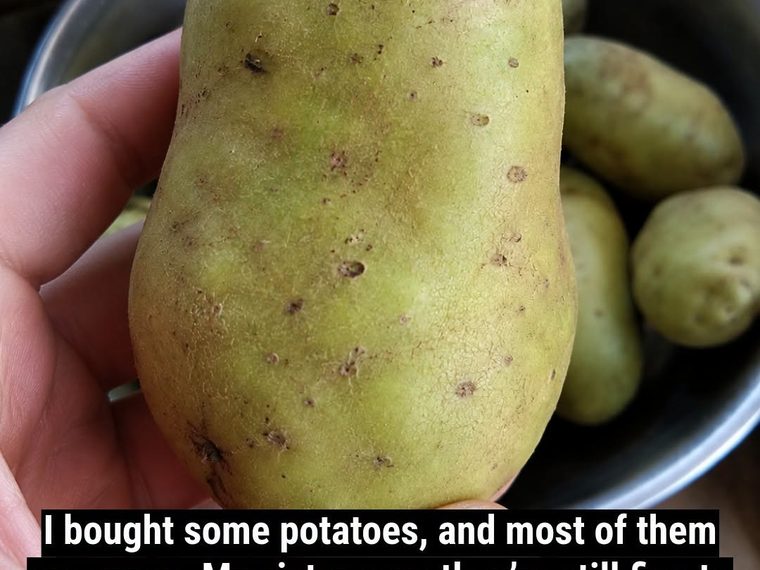
You bring home a bag of potatoes, ready to prepare a delicious dinner, but when you take a closer look, you notice that several of them have turned green. Some have small brown spots, while others have a greenish tint across much of their skin. Your sister insists that they are perfectly fine to eat, but you have heard that green potatoes can be dangerous.
So, who is right?
The important thing to know is that green potatoes are not always safe to eat. The green color itself is not the poison, but it can be a warning sign that the potato has been exposed to light and may contain elevated levels of natural toxins called glycoalkaloids, particularly solanine and chaconine.
The good news is that you can learn how to recognize potentially unsafe potatoes, understand when peeling may help, and decide when it is best to throw them away.
In this guide, we will explain why potatoes turn green, whether cooking makes them safe, how to store potatoes correctly, and what to do if someone accidentally eats a green potato.
1. Why Do Potatoes Turn Green?


Potatoes turn green when they are exposed to light. This can happen in a supermarket, during transportation, or at home when potatoes are left on a kitchen counter or stored in a transparent bag near a window.
The green color comes from chlorophyll, the natural pigment that plants produce when exposed to light. Chlorophyll itself is not toxic. However, the same conditions that encourage greening can also stimulate potatoes to produce higher levels of glycoalkaloids.
These compounds are part of the potato plant’s natural defense system against insects, pests, and other threats.
There are several common reasons why potatoes become green:
- Exposure to sunlight: Potatoes left in direct sunlight may develop green patches relatively quickly.
- Artificial lighting: Prolonged exposure to indoor or supermarket lighting can also contribute to greening.
- Improper storage: Potatoes stored in clear bags, near windows, or in brightly lit areas are more likely to turn green.
- Long storage periods: Older potatoes may develop additional quality problems, especially when stored in unsuitable conditions.
Green skin does not tell you exactly how much toxin a potato contains. Two potatoes that look equally green may have different glycoalkaloid levels. That is why appearance alone cannot guarantee that a potato is safe.
2. What Is Solanine, and Why Can It Be Dangerous?

Solanine is one of the natural toxic compounds associated with potatoes. Another important compound is alpha-chaconine. Together, these glycoalkaloids can cause illness when consumed in sufficiently high amounts.
Small amounts occur naturally in potatoes, especially in the skin and outer tissues. Concentrations may rise when potatoes are exposed to light, damaged, stressed, or sprouting.
When too much is consumed, potato glycoalkaloids can irritate the digestive system and affect the nervous system.
Possible symptoms of potato glycoalkaloid poisoning include:
- Nausea and vomiting
- Stomach cramps or abdominal pain
- Diarrhea
- Headache
- Dizziness
- In more serious cases, confusion, weakness, or other neurological symptoms
Symptoms may develop within several hours, although the timing can vary depending on the amount consumed and other factors.
Important: Not every green potato will cause poisoning, and not every person who eats a small amount will become ill. Nevertheless, there is no reliable way to judge the exact toxin concentration by looking at the potato.
This is why it is better to take visible greening seriously rather than assume the potatoes are harmless.
3. Can You Eat Potatoes That Are Slightly Green?


The answer depends on how much greening there is, whether the potato is damaged or sprouting, and how deeply the green color extends.
Here is a practical guide to help you decide what to do.

Situation 1: Normal-colored potato
Generally safe
A firm potato with normal skin, no green patches, no extensive sprouting, and no signs of decay is generally safe when properly prepared and cooked.

Situation 2: A very small green patch
Use caution
Some food-safety guidance allows a small, localized green area to be removed generously, including the surrounding skin and flesh. However, if you are unsure how extensive the greening is, discarding the potato is the safer choice.

Situation 3: Green over much of the surface
Discard
Do not try to rescue a heavily green potato by peeling it or cooking it. Its glycoalkaloid concentration may be elevated, and the amount cannot be reliably determined by sight.
Situation 4: Green, heavily sprouted, or shriveled potatoes
Discard if significantly affected
Extensive greening combined with long sprouts, shriveling, or a bitter taste is a reason to discard the potato. Small sprouts on an otherwise firm, non-green potato can often be removed, but that does not make a green potato safe.
What about the potatoes in your photograph?
The potato being held appears to have a substantial yellow-green or greenish area over much of its skin. Because the extent of greening looks considerable, I would recommend discarding that potato rather than serving it for dinner. The photograph cannot establish its actual toxin concentration, and the same caution should be applied to other similarly green potatoes in the bowl.
4. Does Peeling Remove the Toxins?
TO CONTINUE READING THE ARTICLE PLEASE SEE PAGE 2