4. Does Peeling Remove the Toxins?


Peeling can reduce glycoalkaloid levels because these compounds are often concentrated in the skin and the tissues immediately beneath it.
However, peeling does not guarantee that a green potato is safe to eat.
Here is why:
- Glycoalkaloids can be present beneath the skin.
- Their concentration varies from one potato to another.
- Removing a thin layer may not remove enough of the affected tissue.
- A heavily green potato may contain elevated levels that cannot be assessed at home.
If a potato has only a small, isolated green spot, some food-safety recommendations permit cutting away the affected area generously, removing the surrounding skin and flesh, and checking the remaining potato carefully.
If green coloration extends across a large portion of the potato, the safer option is to throw it away.
Do not taste a suspicious potato to test whether it is safe. Bitterness is a warning sign, but the absence of bitterness does not prove that the potato is safe.
5. Can Cooking, Boiling, or Frying Make Green Potatoes Safe?


This is one of the most common misunderstandings about green potatoes.
Many people assume that boiling, frying, roasting, or baking will destroy any harmful substances. Unfortunately, potato glycoalkaloids are relatively heat-stable under ordinary cooking conditions.
| Cooking method | Does it reliably make green potatoes safe? |
|---|---|
| Boiling | No |
| Baking | No |
| Roasting | No |
| Frying | No |
| Microwaving | No |
| Peeling and removing affected areas | May reduce levels, but cannot guarantee safety in heavily green potatoes |
Some cooking methods may reduce glycoalkaloid levels to varying degrees, particularly when combined with peeling. However, ordinary household cooking cannot reliably make a heavily green potato safe.
For this reason, do not put green potatoes into a pot of boiling water or a frying pan hoping that the heat will eliminate the danger.
The best approach is to select potatoes that are suitable for cooking before you start preparing your meal.
6. What Happens If You Accidentally Eat a Green Potato?
Accidentally eating a small amount of green potato does not automatically mean you will become ill. The risk depends on the glycoalkaloid concentration, how much was eaten, and the individual’s circumstances.
Nevertheless, it is important to know what to watch for.
Possible symptoms
Symptoms of glycoalkaloid poisoning can include:
- Nausea
- Vomiting
- Diarrhea
- Abdominal cramps
- Headache or dizziness
More serious poisoning can cause neurological symptoms and other complications.
What should you do?
If you have eaten a potato that you later discover was heavily green:
- Stop eating the remaining potato.
- Do not induce vomiting.
- Keep a note of approximately how much was eaten and when.
- Contact a medical professional or local poison information service for advice, especially if a substantial amount was consumed or the person affected is a child.
- Seek urgent medical care if severe vomiting, marked weakness, confusion, fainting, or other serious symptoms develop.
Do not wait for symptoms if you suspect a significant exposure. Children may be particularly vulnerable because a smaller amount of food represents a larger dose relative to their body weight.
7. Why Do Some Green Potatoes Taste Bitter?

A bitter taste can be a warning sign of elevated glycoalkaloid levels. Some people may also notice an unpleasant or burning sensation in the mouth.
However, taste is not a reliable safety test.
A potato can contain elevated glycoalkaloids without tasting obviously bitter, and you should never deliberately sample a suspicious potato to determine whether it is safe.
If a potato tastes unexpectedly bitter while you are eating it, stop eating it and discard the remaining portion. Do not attempt to cover the taste with salt, spices, sauces, or other ingredients.
8. How to Store Potatoes So They Do Not Turn Green


Preventing green potatoes is easier than deciding whether to salvage them.
The goal is to store potatoes in conditions that limit exposure to light while allowing enough ventilation to prevent moisture buildup.
Step 1: Choose a dark storage location
Keep potatoes in a cupboard, pantry, or other dark area away from windows and direct sunlight.
Avoid leaving them on a kitchen counter for days, especially where sunlight reaches them.
Step 2: Use a breathable container
Store potatoes in a paper bag, ventilated basket, or suitable storage box. Avoid clear containers and tightly sealed plastic bags that trap moisture.
Step 3: Keep them cool, but not necessarily in the refrigerator
A cool, dark, well-ventilated place is generally suitable for storing potatoes. Avoid warm areas near ovens, radiators, and other heat sources.
Refrigeration recommendations vary by food-safety authority and intended use. Cold storage can cause changes in potato sugars, which may affect browning during high-temperature cooking. Follow local storage guidance and the product’s instructions.
Step 4: Keep potatoes dry
Excess moisture can encourage decay. Do not wash potatoes before storing them; wash them just before preparation.
Step 5: Inspect your supply regularly
Check potatoes for greening, soft spots, shriveling, extensive sprouting, and decay. Remove deteriorating potatoes so you can assess the rest of the batch.
Step 6: Buy reasonable quantities
If you only cook potatoes occasionally, buy smaller quantities rather than keeping a large bag for months. This reduces waste and makes it easier to use them while they remain in good condition.
9. What About Green Potatoes From the Supermarket?


Green potatoes sometimes appear in supermarket bags even when they look acceptable from the outside.
If you discover that most of your newly purchased potatoes are green, consider the following:
- Separate the green potatoes from those that look normal.
- Do not assume that the whole batch is safe simply because it was sold in a shop.
- Discard heavily green potatoes rather than trying to cook them.
- Keep normal-looking potatoes only if they are firm, free of decay, and otherwise in good condition.
- Photograph the affected potatoes and contact the retailer if most of the purchase is unsuitable.
If the majority of the bag is green, returning it or requesting a refund may be a better choice than trying to salvage the entire purchase.
Remember that potatoes in the same bag may have experienced similar storage conditions, but the glycoalkaloid levels can still vary. Examine each potato individually.
10. Are Green Spots the Same as Potato Disease?


Not necessarily.
Potato skin can develop various marks, including superficial scabs, bruises, and other blemishes. These are not all the same as greening, and a brown spot alone does not tell you whether glycoalkaloid levels are high.
The green color associated with light exposure is generally caused by chlorophyll production. It is different from many common potato diseases.
However, the appearance of a potato can be misleading. A potato may have green skin and other blemishes at the same time. Softness, mold, wet decay, or an unpleasant smell are additional reasons to discard an affected potato.
If you cannot determine whether the discoloration is harmless surface damage or more extensive deterioration, choose the safer option and do not eat it.
11. Can You Eat the Green Part and Throw Away the Rest?
The answer depends on what you mean by the green part.
If the potato has one tiny, localized green area, removing that area generously may reduce the risk, according to some food-safety guidance.
But if the potato is green across much of its surface, do not assume that the unpeeled or uncut parts are safe simply because they look normal. Glycoalkaloids are not always distributed evenly, and visible color does not provide a reliable measurement.
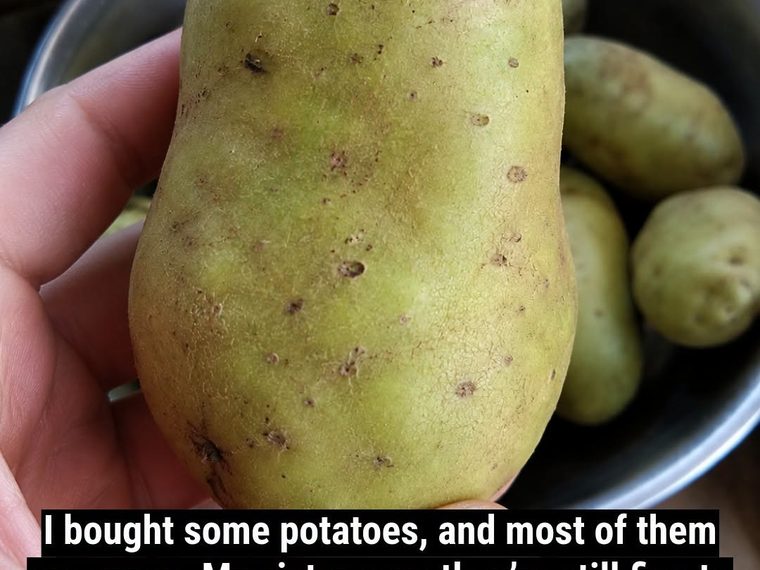
For a potato that looks like the one in your photograph, where the skin appears greenish over a substantial area, discarding it is the more cautious decision.
If several potatoes have extensive greening, discard those affected potatoes rather than trying to save them for a recipe.
12. Frequently Asked Questions About Green Potatoes
Are all green potatoes poisonous?
No. Green color itself comes from chlorophyll and is not poisonous. However, greening can indicate conditions that also promote elevated levels of toxic glycoalkaloids. Because those levels cannot be judged reliably by appearance alone, heavily green potatoes should be discarded.
Can I feed green potatoes to my chickens, rabbits, or other animals?
Do not feed green potatoes, green potato peelings, or heavily sprouted potatoes to animals. Glycoalkaloids can be toxic to animals as well as humans. Use an appropriate food-waste or disposal method instead.
Are potato sprouts dangerous?
Sprouts and the areas around the eyes can contain elevated glycoalkaloids. Small sprouts can often be removed from an otherwise firm, healthy, non-green potato, but extensively sprouted, shriveled, or green potatoes should be discarded.
Can I cut off the green skin and use the potato for mashed potatoes?
If the potato is extensively green, no. Cooking it into mashed potatoes does not reliably eliminate glycoalkaloids. If there is only a tiny isolated patch, removing the affected area generously may be acceptable under some guidance, but discarding it is the safer option when uncertain.
What if the potato is yellow inside but green outside?
Normal-looking flesh does not guarantee that a heavily green potato is safe. Glycoalkaloids can occur beneath the skin, so do not rely on the interior color alone.
Can I store potatoes in the refrigerator?
Storage recommendations vary. A cool, dark, ventilated location is a common choice for short- and medium-term storage. Refrigeration can alter potato sugars, so follow local food-safety guidance and instructions appropriate to the type of potato and intended cooking method.
What should I do if most of my bag is green?
Avoid eating the heavily green potatoes. Contact the retailer about a refund or replacement, and inspect any normal-looking potatoes individually before using them.
13. The Safest Decision for Your Dinner


When you are preparing dinner, it can feel wasteful to throw away potatoes you have just purchased. But the cost of replacing a few potatoes is much smaller than the risk of eating food that may contain elevated levels of natural toxins.
Here is the simplest rule to follow:
- Normal-looking potatoes: Generally fine to prepare if they are firm and show no signs of decay.
- A tiny, isolated green patch: Some guidance permits generous removal of the affected area, but discard the potato if you are uncertain.
- Potatoes that are extensively green: Throw them away.
- Green potatoes that are also heavily sprouted, shriveled, soft, or bitter: Do not eat them.
- Potatoes that have already been cooked: Cooking does not reliably remove the danger from heavily green potatoes.
For the potatoes shown in the photograph, I would not use the prominently green potato for dinner. If most of the other potatoes in the bowl are similarly green, I would return the bag to the shop or discard the affected potatoes rather than risk serving them.
Final Thoughts
Green potatoes are a useful reminder that even familiar foods need to be stored and prepared correctly. The green pigment itself is harmless, but the conditions that cause greening can also increase the levels of natural potato toxins.
You do not need to panic if you discover one small green patch. Instead, examine the potato carefully, avoid tasting suspicious areas, and remember that peeling and cooking cannot guarantee safety when greening is extensive.
When in doubt, throw it out. A fresh potato is easy to replace, and a few minutes of inspection can help protect everyone at your dinner table.