Other Natural Ingredients Ants May Dislike
Several household ingredients are commonly used as natural ant deterrents. While scientific evidence varies, many homeowners report success when these are used as part of a broader pest-management strategy.
White Vinegar
A solution of equal parts white vinegar and water can be sprayed onto ant trails.
It helps remove the pheromone scent trails ants rely on to navigate.
Lemon Juice
The acidity and strong citrus scent may temporarily disrupt ant trails.
Cinnamon
Ground cinnamon and cinnamon essential oil are popular natural repellents because their strong aroma may discourage ants from entering certain areas.
Peppermint Oil
A few drops diluted with water can be sprayed around doors and windows.
Many people use peppermint oil as a natural deterrent, although results can vary.
Coffee Grounds
Used coffee grounds are often sprinkled around garden beds.
Some gardeners believe they discourage ants, though scientific evidence is limited.
Diatomaceous Earth (Food Grade)
Food-grade diatomaceous earth is one of the more effective non-chemical options.
It damages the insects’ protective outer coating, causing them to dehydrate over time.
Unlike salt, it is widely recognized as a useful physical insect control method when kept dry.
Protect Your Garden Naturally
Healthy gardens are less attractive to pest infestations.
Simple practices include:
- keeping mulch away from foundations;
- repairing dripping outdoor faucets;
- trimming branches touching the house;
- sealing cracks around doors and windows;
- storing pet food indoors;
- harvesting ripe fruit promptly.
Common Mistakes to Avoid
Many people unknowingly make ant problems worse.
Avoid these mistakes:
- Using excessive amounts of salt, which can damage soil and plants.
- Ignoring the main colony while treating only visible ants.
- Leaving food sources available.
- Applying natural remedies only once and expecting permanent results.
Consistency is key.
Is Salt Safe for Plants?
Not always.
Although a small amount of salt on pavement or cracks is unlikely to cause problems, repeated or heavy applications can:
- damage plant roots;
- reduce soil fertility;
- interfere with water absorption;
- harm beneficial soil organisms.
For this reason, avoid spreading salt directly in flower beds, vegetable gardens, or around lawns.
When Should You Consider Stronger Measures?
If you notice:
- thousands of ants,
- multiple nests,
- carpenter ants inside your home,
- recurring infestations despite prevention,
it may be time to identify the species and consider targeted treatments or consult a pest control professional.
The Bottom Line
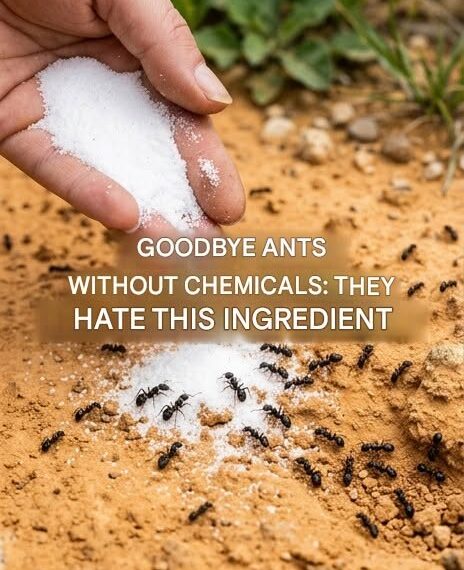
The claim that ants “hate” salt is partly true but oversimplified. Salt may temporarily discourage ants or disrupt their trails, but it is not a proven solution for eliminating entire colonies. Used sparingly, it can be one tool in a broader, chemical-free approach to managing ants.
For lasting results, combine natural deterrents with good sanitation, moisture control, and habitat management. By removing what attracts ants in the first place and using safe, targeted methods when needed, you can keep your yard and home far less inviting—without relying heavily on chemical pesticides.