🌿 Is Frozen Parsley as Good as Fresh Parsley?
Not exactly.
Freezing preserves parsley very well for cooking, but it can change the texture of the leaves.
After thawing, parsley may become softer and less crisp.
That doesn’t mean it has gone bad.
It simply means that frozen parsley is generally better suited to cooked dishes.
If you’re preparing a salad, garnish, or cold dish where the texture of fresh parsley matters, freshly stored parsley will usually be the better choice.
🫒 Can You Freeze Parsley With Oil?
Some home cooks also like to combine chopped parsley with oil and freeze the mixture in small portions.
This can be convenient for creating ready-to-use flavor portions for cooking.
However, fresh herbs stored in oil require special food-safety care.
Do not leave homemade fresh-herb-and-oil mixtures sitting at room temperature for days.
For longer storage, freezing is a safer practical option.
🌱 Don’t Throw Away the Parsley Stems
Here’s another useful kitchen trick.
Many people automatically throw away the stems.
But tender parsley stems can contain plenty of flavor.
Depending on their texture, they can be used in:
- Stocks
- Soups
- Sauces
- Marinades
- Herb pastes
- Pesto
- Smoothies
- Meat preparations
The thicker stems may be less pleasant to eat raw, but they can still add flavor to cooked preparations.
So instead of throwing away the entire bunch, use as much of the plant as practical.
🧊 The Best Strategy: Divide Your Parsley
If you buy a large bunch, you don’t have to use one preservation method for everything.
Try dividing it into two portions.
Portion 1: Keep it fresh
Store whole parsley in the refrigerator using the bouquet or paper-towel method.
This portion can be used for:
- Salads
- Garnishes
- Sandwiches
- Fresh sauces
- Cold dishes
Portion 2: Freeze it
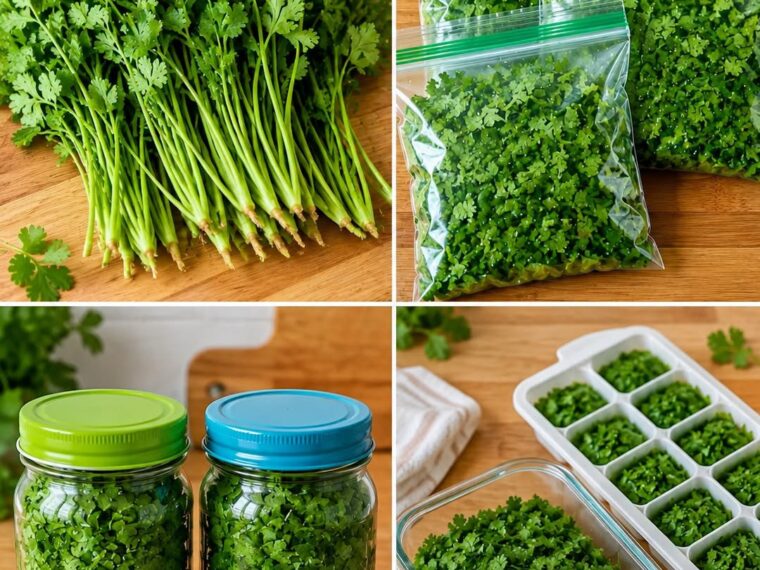
Chop the remaining parsley and freeze it in small portions.
This portion can be used for:
- Soups
- Stews
- Sauces
- Pasta
- Meat
- Fish
- Vegetables
This simple system gives you the best of both worlds: fresh parsley when texture matters and frozen parsley when convenience matters.
🚫 What Should You Never Do?
Avoid storing parsley while it is soaking wet.
Don’t leave it in a sealed bag filled with condensation.
Don’t ignore leaves that are already rotting.
And don’t assume that a viral storage trick can preserve fresh herbs indefinitely.
Even with excellent storage, fresh parsley is still a perishable food.
Always check it before use.
If you see visible mold, notice an unusual smell, or the parsley has become extensively slimy or decomposed, it’s best to discard it.
👨🍳 How Long Can Parsley Really Last?
There isn’t a universal number of days that applies to every bunch.
The actual storage life depends on:
- How fresh the parsley was when purchased
- How it was harvested and handled
- Refrigerator temperature
- Humidity
- Storage method
- How often the container is opened
- Whether the parsley was washed before storage
Good storage can make parsley last significantly longer than simply leaving it in its original packaging.
But claims that one method will guarantee perfectly fresh parsley for a specific number of weeks should be treated with caution.
Your eyes, nose, and common sense are better indicators than a calendar.
🌿 The Real Secret Chefs Use
The real secret isn’t one magical container or one mysterious ingredient.
It’s preparation.
Professional kitchens are designed around efficiency and waste reduction. Herbs are prepared in advance, stored appropriately, and kept ready for service.
You can use the same principle at home.
When you bring parsley home:
Sort it.
Remove damaged leaves.
Clean it if necessary.
Then dry it thoroughly.
Choose the right storage method.
Keep some whole in the refrigerator and freeze the rest if you won’t use it quickly.
Make it convenient.
Chop and portion the parsley so you can grab exactly what you need.
That little bit of preparation can save you money, reduce food waste, and make cooking much easier.
🌿 Final Takeaway
Fresh parsley doesn’t have to become wilted and unusable after a few days.
The key is managing moisture.
For short-term freshness, try storing the stems in a little water or wrapping properly dried parsley in paper towels.
For convenient everyday cooking, chop it and store it appropriately in the refrigerator.
For much longer storage, freeze chopped parsley in small portions.
And remember the golden rule:
Too dry, and parsley wilts. Too wet, and parsley deteriorates. The goal is balance.
So the next time you bring home a large bunch of beautiful green parsley, don’t simply throw it into the refrigerator and hope for the best.
Give it a few minutes of preparation.
That small step can help you keep more of the herb fresh, waste less food, and have flavorful parsley ready whenever your next meal needs a little extra freshness.