Imagine calling a plumber to repair something in your bathroom. He finishes the job, checks that everything is working properly, and then does something completely unexpected: he rolls a piece of aluminum foil into a small ball, drops it into your toilet tank and says, “You’re welcome.”
It sounds strange, doesn’t it?
This unusual trick has attracted attention because some people claim that placing aluminum foil inside a toilet tank can help prevent rust stains, reduce mineral deposits, keep the toilet cleaner and even save water.
But what is the real purpose of this trick? Does aluminum foil actually do anything when it sits inside a toilet tank, or is it simply another household hack that sounds more impressive than it really is?
Let’s look at the possible explanation, what plumbing experts recommend, and the safer ways to keep your toilet tank clean and working properly.
1. What Is the Aluminum Foil Trick?
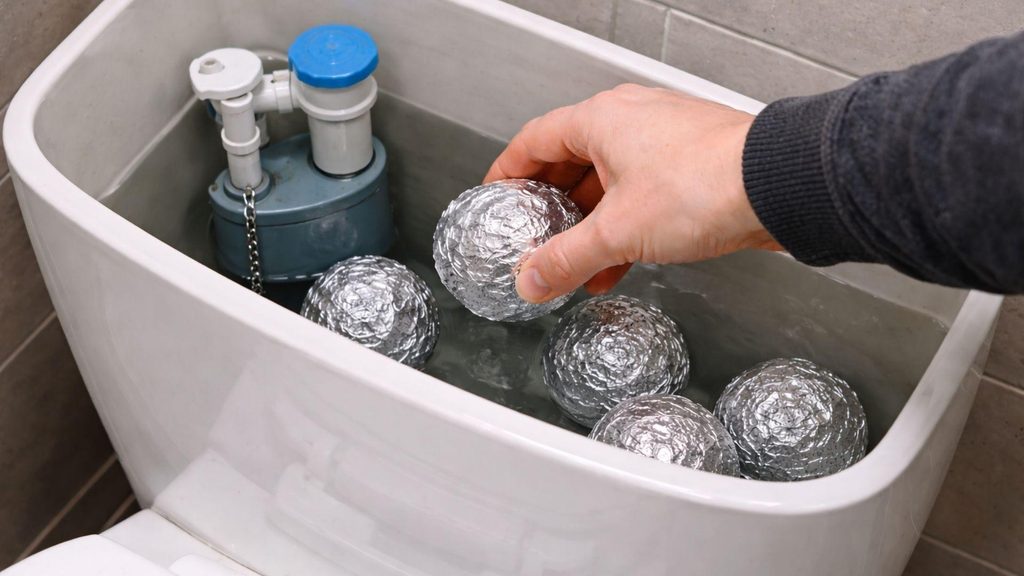
The trick involves taking a small piece of ordinary kitchen aluminum foil, rolling it into a compact ball and placing it inside the toilet tank.
The tank is the container behind or above the toilet bowl that stores water for flushing. It contains several mechanical components, including a fill valve, float, flush valve and sealing mechanism.
The idea behind the viral trick is that aluminum may interact with substances in the water and somehow help reduce staining or buildup.
Different versions of the hack make different claims. Some say the foil attracts rust, others claim it helps prevent limescale, while some suggest that it can improve flushing performance.
However, there is no reliable evidence that a loose ball of aluminum foil in a toilet tank provides these benefits. It is not a recognised plumbing maintenance method, and adding an unnecessary object to the tank may interfere with the flushing mechanism. Hunker+2
2. What Is the Plumber Supposedly Trying to Achieve?
There are several explanations circulating online for why someone might put aluminum foil in a toilet tank.
Claim 1: It prevents rust stains
One popular explanation is that aluminum somehow attracts rust particles or prevents metal components from corroding.
This sounds plausible because aluminum is used in certain corrosion-related applications. However, those applications depend on specific chemical and electrical conditions. Simply dropping a loose ball of foil into a toilet tank does not create a proven rust-prevention system.
Rust is mainly associated with the corrosion of iron-containing materials in the presence of water and oxygen. If rust keeps appearing in a toilet tank, the source of the iron or the corroding component needs to be identified.
Claim 2: It reduces limescale
Another claim is that aluminum foil attracts minerals such as calcium and magnesium, stopping them from settling on the tank walls and toilet bowl.
In reality, limescale forms when minerals in hard water precipitate and accumulate on surfaces. A loose piece of aluminum foil is not a water softener and has not been shown to prevent this process.
Claim 3: It keeps the toilet bowl cleaner
Some online versions suggest that the foil reacts with the water and helps remove dirt during every flush.
There is no established cleaning mechanism that supports this claim. Aluminum foil does not release a toilet-cleaning ingredient simply because it is sitting in ordinary tank water.
Claim 4: It saves water
Some household hacks suggest that placing an object inside a toilet tank displaces water and reduces the amount used during flushing.
Although displacement can theoretically reduce the volume of water stored in a tank, a loose foil ball is not a suitable or reliable way to adjust flushing volume. It may move around and interfere with the mechanism.
A properly designed dual-flush system or a manufacturer-approved adjustment is a much better solution.
3. Can Aluminum Foil Actually Prevent Rust?
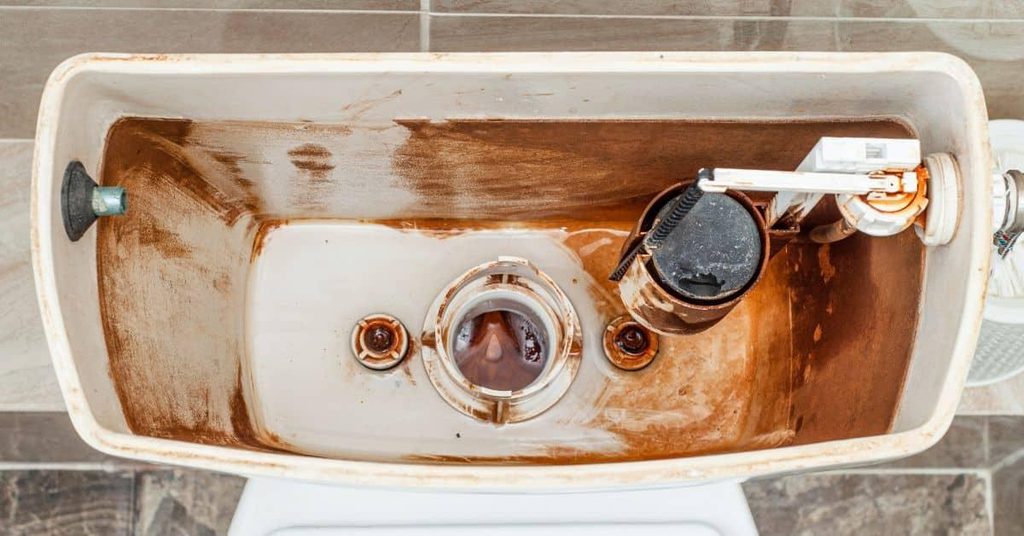
To understand why the trick is questionable, it helps to know how rust develops.
Rust is the result of corrosion involving iron or steel. When these materials are exposed to water and oxygen, they can gradually form reddish-brown iron oxides.
Aluminum behaves differently. It naturally forms a thin protective oxide layer when exposed to air. This is one reason aluminum is widely used in everyday products.
However, this does not mean that a ball of aluminum foil can protect the metal parts inside a toilet tank.
In certain industrial systems, aluminum can be used as a sacrificial anode to protect another metal from corrosion. But this requires a properly designed electrical connection and suitable conditions. A loose ball floating in a toilet tank does not provide that arrangement.
There is also a practical concern: aluminum can deteriorate under certain chemical conditions, particularly when exposed to unsuitable cleaning chemicals.
The bottom line: Do not rely on aluminum foil to prevent rust. If rust keeps appearing in your tank, identify the source instead of adding another object to the water.
4. What Happens Inside a Toilet Tank?
TO CONTINUE READING THE ARTICLE PLEASE SEE PAGE 2