4. What Happens Inside a Toilet Tank?
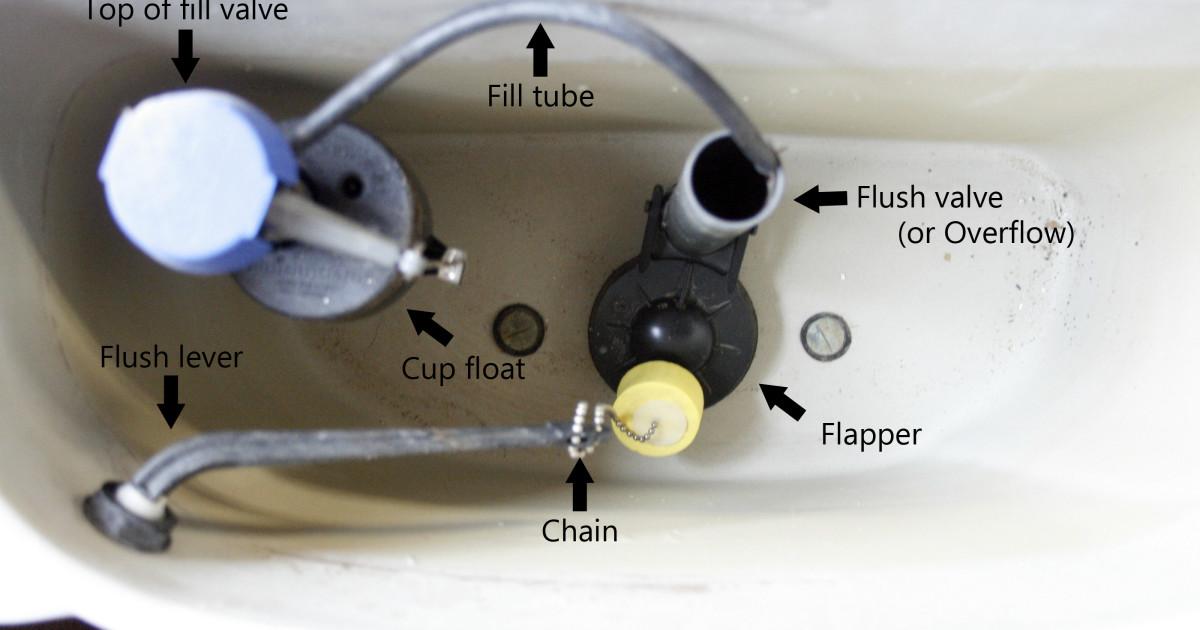
A toilet tank may look like a simple container, but it contains several components that must work together.
Understanding these parts explains why plumbers generally avoid placing unnecessary objects inside the tank.
The fill valve
This component controls the incoming water supply. After flushing, it allows the tank to refill.
The float
The float rises as the water level increases. Once the correct level is reached, it signals the fill valve to stop the water.
The flush valve or flapper
This component seals the opening at the bottom of the tank. When you press the flush button or handle, it opens and allows water to flow into the toilet bowl.
The overflow tube
This helps prevent the tank from overflowing if the water level becomes too high.
The refill tube
In many toilet designs, this small tube directs water into the overflow pipe to refill the toilet bowl after flushing.
All these components need to move freely and seal properly. An unnecessary object inside the tank could become trapped near a moving part or interfere with the flapper’s ability to close.
Kohler explains that the fill valve, float and flush valve work together to control the flushing and refill cycle. Kohler Assist+1
5. Could Putting Aluminum Foil in the Tank Damage Your Toilet?
Although a small piece of foil may initially appear harmless, leaving it inside the tank is not recommended.
Here are some potential problems:
It could interfere with the flushing mechanism. If the foil moves toward the flapper or flush valve, it could prevent the seal from closing correctly.
It could contribute to a running toilet. A flapper that cannot close properly may allow water to flow continuously into the bowl, increasing water consumption.
It could break into smaller pieces. If the foil deteriorates or becomes trapped against a component, small fragments may move around the tank.
It does not solve existing plumbing problems. A faulty fill valve, worn seal or incorrectly adjusted float needs the appropriate repair.
These problems are not guaranteed to happen every time someone puts foil in a tank, but there is no established benefit that justifies introducing the risk.
If you find aluminum foil inside your tank, remove it carefully while the toilet is not flushing. Do not force it past any mechanism. If it has become trapped, ask a plumber to remove it.
6. The Right Way to Clean a Dirty Toilet Tank
If your plumber’s mysterious trick was intended to clean the tank, there are much more dependable ways to achieve that result.
Over time, toilet tanks can develop mineral deposits, rust stains, dirt and discoloration.
A proper cleaning routine can help keep the tank in good condition.
What you need
- Rubber cleaning gloves.
- A soft sponge.
- A small soft-bristled brush.
- A bucket or plastic container.
- A cleaning product approved for your toilet tank’s materials.
Step-by-step instructions
Step 1: Turn off the water supply
Locate the shutoff valve near the toilet, usually on the wall or floor behind it.
Turn it off gently.
Step 2: Empty the tank
Remove the tank lid carefully and flush the toilet. The tank should empty without refilling.
If some water remains, you can remove it using a sponge.
Sponge Drying a Toilet Tank – iFixit Repair Guide
Step 3: Inspect the inside
Look for brown stains, mineral deposits, discoloration and damaged rubber components.
Check whether the flapper, fill valve and other parts appear worn or deteriorated.
Step 4: Apply a suitable cleaner
Choose a product specifically suitable for toilet tanks and follow its instructions.
Do not assume that every toilet-bowl cleaner is safe for the tank’s internal components.
Some products contain aggressive chemicals that can damage rubber seals and plastic mechanisms.
Step 5: Clean gently
Use a soft sponge or brush to remove accessible dirt.
Avoid abrasive pads, metal brushes and sharp objects that could scratch or damage the tank.
Step 6: Rinse thoroughly
Follow the cleaning product’s rinsing instructions. Make sure that no cleaning residue remains around the mechanism.
Step 7: Restore the water supply
Turn the shutoff valve back on and allow the tank to refill.
Flush once or twice to check that the system operates normally and that there are no leaks.
Important: Never mix bleach with vinegar, ammonia, toilet cleaners or other household chemicals. Mixing cleaning products can produce dangerous gases. Always follow the manufacturer’s instructions.
For heavy rust deposits, use a product specifically formulated for rust removal and compatible with the tank materials. Clorox also recommends draining the tank before treating significant rust or mold stains because a full tank dilutes cleaning products. Clorox™+1
7. How to Prevent Rust and Mineral Deposits in Your Toilet Tank
Instead of relying on aluminum foil, consider these practical maintenance habits.
Check your water supply
If brown or reddish stains repeatedly appear, the incoming water may contain iron or rust particles.
In some situations, the problem may also come from corroding metal pipes or fittings.
If the discoloration keeps returning, consider having the water supply checked.
Keep an eye on hard-water deposits
Hard water contains dissolved minerals, particularly calcium and magnesium.
These minerals can accumulate over time on surfaces and plumbing components.
If limescale is a recurring problem, a properly selected water-softening system may help reduce mineral deposits throughout the home.
Inspect the flushing mechanism
Occasionally check whether the float, fill valve and flapper are operating correctly.
A worn rubber seal can cause a toilet to run continuously, wasting water.
Replacing the damaged component is more effective than experimenting with household objects.
Avoid aggressive tank-cleaning tablets
Some in-tank bleach tablets and other strongly concentrated products can damage rubber and plastic components over time.
Use products approved by the toilet manufacturer.
Clean the tank when necessary
A periodic inspection can help you notice problems before they become serious.
You do not necessarily need to clean the tank every week. The frequency depends on the condition of the water and the manufacturer’s maintenance recommendations.
8. What Should You Do If Your Toilet Keeps Running?
A continuously running toilet is a common household problem, and it can waste a surprising amount of water.
If you notice water constantly moving into the toilet bowl, check the following:
- Inspect the flapper: It may be worn, damaged or incorrectly positioned.
- Check the chain: A chain that is too tight can prevent the flapper from closing properly.
- Inspect the float: It may be set too high or stuck.
- Check the fill valve: A faulty valve may fail to stop incoming water.
- Look at the overflow tube: Water flowing continuously into it may indicate an incorrect water level or a faulty fill valve.
If you are not comfortable working with the mechanism, a plumber can identify the problem and replace the necessary components.
A properly repaired toilet can help prevent unnecessary water waste.
9. Is There a Better Way to Save Water With Your Toilet?
Modern Dual Flush Toilet Button for Efficient Water Usage
Yes! If your goal is to reduce your water bill, there are several more reliable solutions.
Install or use a dual-flush system
A dual-flush toilet provides two flushing options, usually a smaller flush for liquid waste and a larger flush for solid waste.
This allows you to use less water when a full flush is unnecessary.
Adjust the fill level correctly
Some toilet models allow you to adjust the float or fill valve so the tank fills to the manufacturer’s recommended level.
Never lower the level so much that the toilet no longer flushes effectively.
Repair leaks quickly
A worn flapper or faulty fill valve can waste water continuously.
Repairing the problem is often one of the simplest ways to reduce unnecessary water consumption.
Choose an efficient toilet
If you are replacing an old toilet, consider a model designed to use less water per flush while maintaining good performance.
These measures offer practical, measurable benefits rather than relying on an untested foil trick.
10. So, Why Did the Plumber Say “You’re Welcome”?
This is the most interesting part of the story.
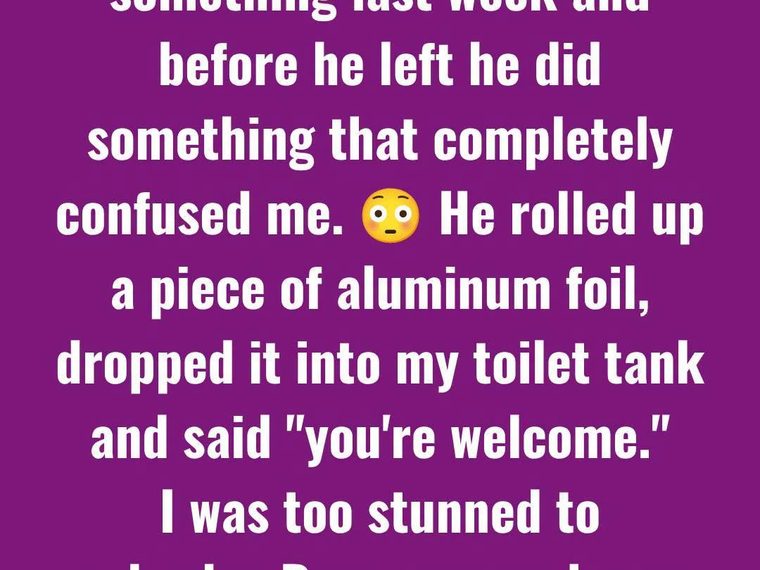
The image presents the plumber’s action as though he has performed a clever maintenance trick that the homeowner does not understand.
But there is no reliable evidence that dropping aluminum foil into a toilet tank is a standard professional plumbing technique.
There are several possibilities:
- He may have been demonstrating an internet cleaning hack.
- He may have been joking with the homeowner.
- The story may be a fictional social media post designed to generate curiosity and comments.
- The foil may have been intended for a specific experiment unrelated to ordinary toilet maintenance.
Without knowing exactly what repair was performed or what the plumber intended, it is impossible to establish his reason.
One important lesson is that a trick performed by someone described as a professional does not automatically become a proven plumbing method.
A genuine plumbing solution should have a clear purpose, a sound technical explanation and no unnecessary risk to the equipment.
Frequently Asked Questions
Does aluminum foil clean a toilet tank?
There is no convincing evidence that leaving a ball of aluminum foil inside a toilet tank cleans it or removes mineral deposits.
Can aluminum foil remove rust?
Damp aluminum foil is sometimes used as a light abrasive on certain metal surfaces, but that is different from leaving it submerged in a toilet tank. It should not be considered a tank-cleaning treatment.
Can foil prevent limescale?
No reliable evidence establishes that a loose foil ball prevents limescale. Limescale is related to the mineral content and chemistry of the water.
Can foil stop a toilet from leaking?
No. Leaks usually involve a faulty seal, flapper, fill valve, connection or another plumbing component. Aluminum foil cannot repair these parts.
Will aluminum foil make my toilet use less water?
There is no reliable evidence that this trick provides meaningful water savings. Use a suitable dual-flush system or manufacturer-approved water-level adjustment instead.
Should I leave the foil in the tank permanently?
No. There is no established benefit, and an unnecessary object could interfere with the flushing mechanism. It is better to remove it.
What is the safest way to keep a toilet tank clean?
Inspect it periodically, use compatible cleaning products, clean gently and follow the toilet manufacturer’s maintenance recommendations.
Final Thoughts: A Clever Plumbing Secret or Just Another Internet Myth?
The idea of placing a small aluminum foil ball inside a toilet tank is certainly unusual. It is the kind of household trick that makes people curious because it promises several benefits using something almost everyone already has in the kitchen.
However, the available evidence does not support the claims that aluminum foil prevents rust, removes limescale, stops leaks or makes toilets use less water.
Although the plumber’s action in the image makes for an interesting story, it should not be interpreted as a recommendation to put foil inside every toilet tank.
If you want a cleaner toilet, focus on proper tank maintenance. If you want to prevent rust, investigate the water supply and affected plumbing components. And if you want to save water, repair leaks and use an efficient flushing system.
Sometimes the best household trick is not adding something unusual to your plumbing, but understanding how the system actually works.