Cleaning a fireplace after enjoying a warm, cozy fire is probably one of the least enjoyable household chores. Ashes accumulate, fine dust spreads everywhere, and removing the remains of burnt wood can quickly become a messy job.
But what if a simple household item could make this task easier?
Aluminum foil, commonly known as tin foil, is sometimes used as a temporary liner in fireplaces to make collecting ashes easier. The idea is simple: instead of scraping every bit of ash from the fireplace floor, the residue is gathered in one place for easier removal.
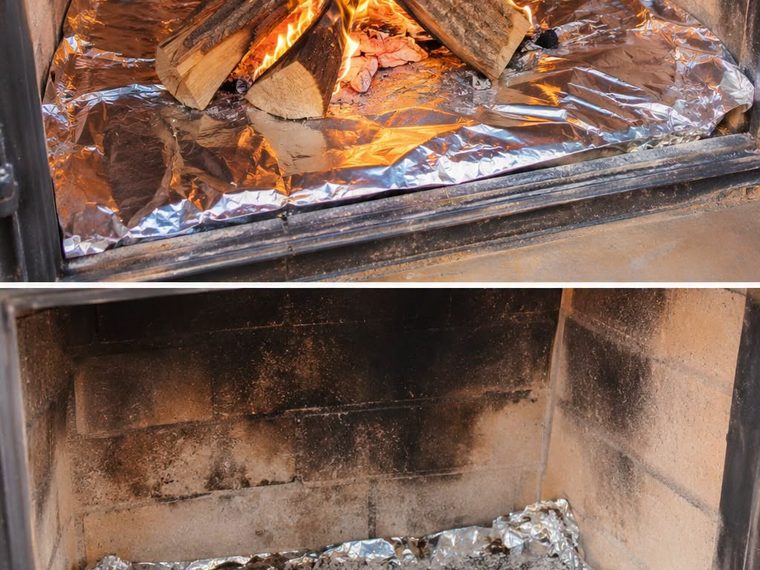
The photographs illustrate this idea: foil is placed across the fireplace floor before a fire, and the second image shows the foil covered with ashes after the fire has burned.
However, there is an important safety detail: ordinary aluminum foil should not automatically be used inside a working fireplace. It can melt at high temperatures, and fireplace manufacturers may prohibit placing materials on the firebox floor.
Let’s look at why people use this trick, what it is supposed to accomplish, and how to clean a fireplace safely.
Why Do People Put Aluminum Foil in Their Fireplace?
The main reason behind this household trick is convenience.
People who use this method hope to:
- Make ash collection easier after burning wood.
- Reduce the amount of ash that sticks to the fireplace floor.
- Make post-fire cleanup quicker.
- Keep some of the loose residue together rather than scattering it while cleaning.
The idea is attractive because aluminum foil is inexpensive, widely available, and easy to shape.
However, there is a significant problem: ordinary kitchen foil is not designed to withstand the temperatures found inside a wood-burning fireplace. It can soften, melt, tear, or become difficult to remove.
Important: Do not place ordinary aluminum foil under burning logs unless the fireplace manufacturer explicitly approves that use.
What Happens After the Fire Burns Out?
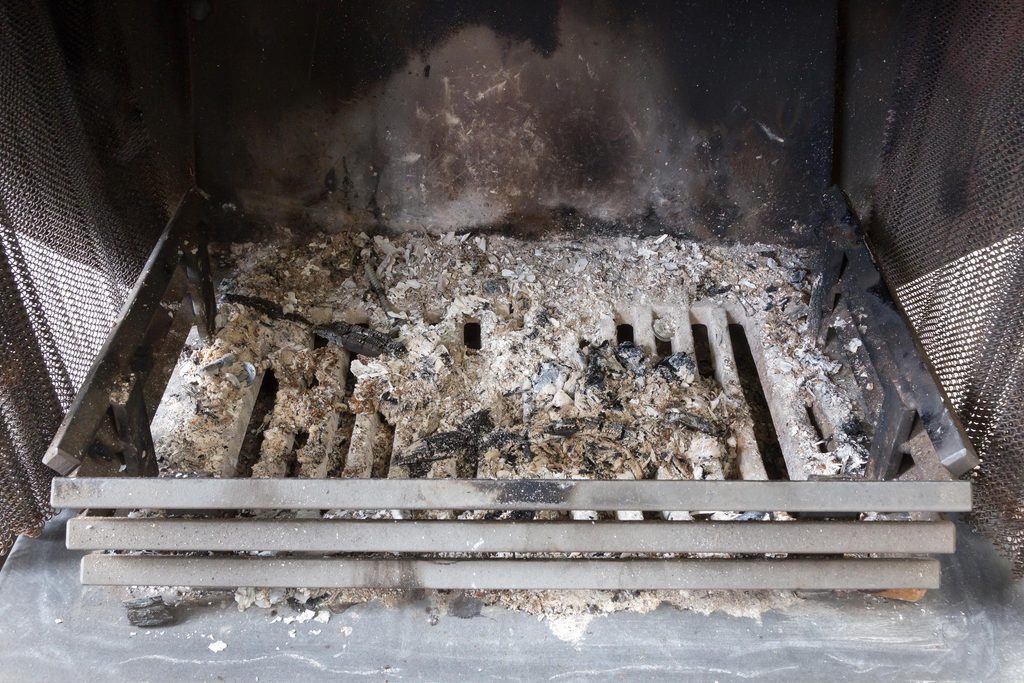
The second photograph shows the result people hope to achieve: ash and burnt wood residue collected on top of the foil.
In theory, a removable liner would make cleanup easier. In practice, foil exposed to direct flames and hot embers may be damaged or fused to the fireplace surface.
It can also interfere with the fireplace’s intended airflow or operation.
For these reasons, it is better to use the cleaning method recommended for your particular fireplace.
A Safer Way to Make Fireplace Cleaning Easier
TO CONTINUE READING THE ARTICLE PLEASE SEE PAGE 2