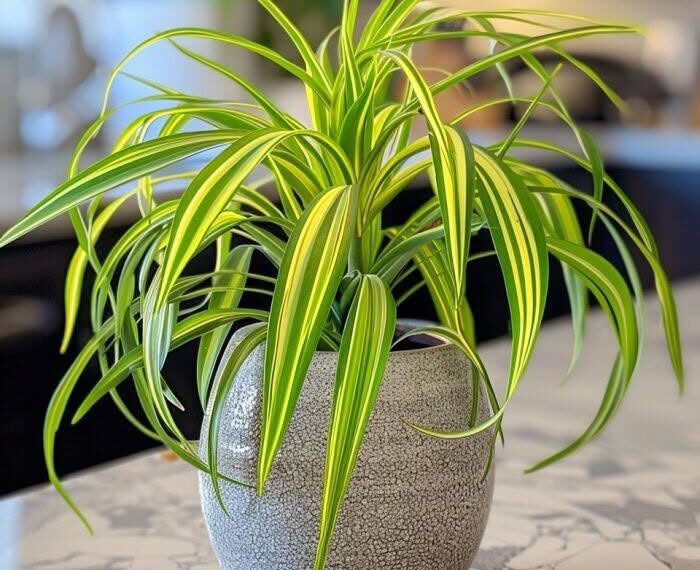
Signs it’s time to repot include:
- Roots growing out of drainage holes.
- Water running straight through the pot.
- Slower growth.
- Frequent wilting despite watering.
Choose a new pot that is only 1–2 inches larger than the current one.
Use a well-draining potting mix containing:
- Peat moss or coco coir
- Perlite
- Compost or quality potting soil
Repotting every two to three years usually keeps the plant vigorous.
5. Prune Dead Leaves and Trim Baby Plantlets
Regular pruning encourages fresh growth.
Use clean scissors to remove:
- Brown leaf tips.
- Yellow leaves.
- Damaged foliage.
If your goal is a bushier plant, you can temporarily remove some baby spiderettes.
Although the baby plants are attractive, producing many of them requires energy that could otherwise go toward growing thicker foliage.
You can always root the plantlets later to create new spider plants.
6. Increase Humidity Around the Plant
Although spider plants adapt well to normal indoor humidity, they perform even better in slightly more humid conditions.
Try these simple methods:
- Place a tray filled with pebbles and water beneath the pot.
- Group several houseplants together.
- Use a room humidifier during dry winter months.
Avoid placing the plant near heating vents or air conditioners, which dry the air.
Higher humidity often results in greener leaves and fewer brown tips.
7. Divide Mature Plants for Healthier Growth
If your spider plant has become extremely large and crowded, dividing it can actually rejuvenate it.
Here’s how:
- Remove the plant from its pot.
- Gently separate the root ball into two or more sections.
- Ensure each division has healthy roots and leaves.
- Replant each section in fresh potting soil.
- Water thoroughly after planting.
Within a few weeks, each division will begin producing fresh leaves and develop into a full, healthy plant.
Bonus Tips for an Even Fuller Spider Plant
Clean the leaves regularly
Dust prevents the leaves from absorbing light efficiently.
Simply wipe the foliage with a damp cloth every few weeks.
Maintain the ideal temperature
Spider plants grow best between:
- 60°F and 80°F (16°C–27°C)
Protect them from frost and sudden temperature changes.
Don’t overpot
Using a pot that’s too large encourages root growth instead of leaf production.
Choose a container that fits the root system comfortably.
Keep pets in mind
Spider plants are generally considered non-toxic to cats and dogs. However, some cats enjoy chewing the leaves, so placing the plant slightly out of reach can prevent damage.
Common Problems and Solutions
| Problem | Likely Cause | Solution |
|---|---|---|
| Brown leaf tips | Fluoride, dry air, overfertilizing | Use filtered water, increase humidity, reduce fertilizer |
| Yellow leaves | Overwatering | Allow soil to dry slightly before watering |
| Pale leaves | Insufficient light | Move to brighter indirect light |
| Few new leaves | Lack of nutrients or root-bound | Fertilize and repot if necessary |
| Drooping plant | Underwatering or crowded roots | Water thoroughly or divide the plant |
Final Thoughts
Spider plants are incredibly forgiving, but they truly flourish with the right care. By providing bright indirect light, watering properly, feeding during the growing season, pruning regularly, and repotting when needed, you can transform a thin, tired-looking plant into a lush, cascading display of vibrant green foliage.
Remember, healthy spider plants don’t become bushy overnight. With consistent care and a little patience, you’ll soon enjoy a fuller, healthier plant that not only enhances your home but also rewards you with countless baby spider plants to share with friends and family.