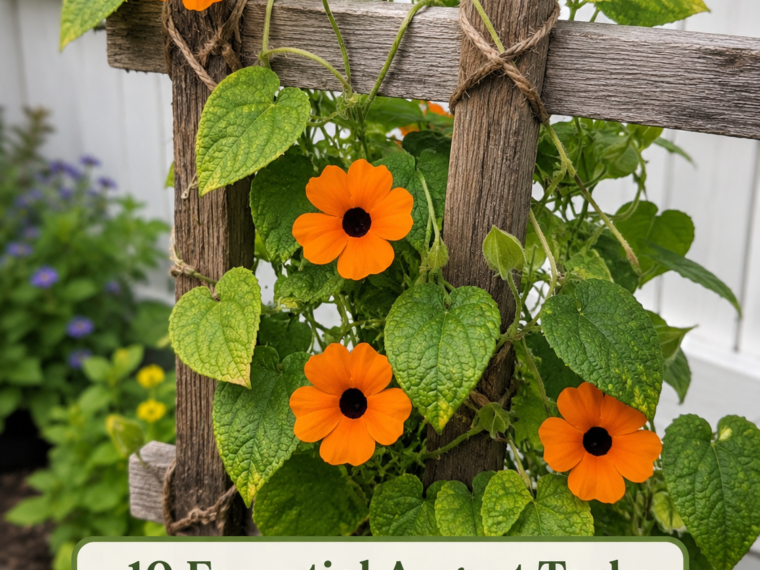
Good supports include:
- Wooden trellises
- Wire fencing
- Bamboo stakes
- Garden arches
- Pergolas
Proper support improves sunlight exposure and encourages more flowers.
6. Add Fresh Mulch
A fresh layer of mulch is incredibly helpful during late summer.
Mulch helps:
- Keep roots cool
- Reduce evaporation
- Prevent weeds
- Improve soil quality
Use:
- Shredded bark
- Straw
- Pine needles
- Compost
- Leaf mulch
Apply about 2–3 inches around the base while keeping mulch a few inches away from the stem.
7. Watch for Common Garden Pests
August is prime season for insects.
Inspect your vine weekly for:
Aphids
Tiny green or black insects that cluster on stems and flower buds.
Spider Mites
Very small pests that create fine webbing and cause leaves to look speckled.
Whiteflies
Small white insects that fly when disturbed.
If pests appear:
- Spray with water
- Use insecticidal soap
- Apply neem oil
- Encourage ladybugs and lacewings
Early treatment prevents major infestations.
8. Prune Lightly to Encourage New Growth
If your vine has become long, leggy, or overgrown, give it a light trim.
Do not cut it back aggressively during August.
Instead:
- Remove overly long stems
- Trim weak growth
- Thin crowded areas
This stimulates fresh side shoots that produce even more flowers.
9. Harvest Seeds—But Not Too Soon
Toward the end of summer you’ll notice seed pods forming.
If you’d like to grow new vines next year:
- Allow a few flowers to mature naturally.
- Wait until seed pods dry completely on the plant.
- Collect and store the seeds in a cool, dry place.
However, avoid letting too many seed pods develop, as excessive seed production signals the plant to slow down flowering.
10. Prepare for the End of the Season
Although frost may still be weeks away, August is the perfect time to plan ahead.
If you live in a colder climate:
- Take stem cuttings for propagation.
- Collect seeds from healthy plants.
- Decide where you’ll plant next year’s vines.
- Clean and repair trellises or supports.
A little preparation now makes next season’s garden even more successful.
Common Problems in August
Yellow Leaves
Usually caused by:
- Overwatering
- Underwatering
- Nutrient deficiency
- Heat stress
Few Flowers
Often due to:
- Too much nitrogen fertilizer
- Insufficient sunlight
- Lack of deadheading
- Drought stress
Wilting
Usually indicates the plant needs water, although constantly wet soil can also damage roots.
Brown Leaf Edges
Often caused by:
- Hot winds
- Dry soil
- Salt buildup from fertilizer
Why Gardeners Love Black-Eyed Susan Vine
This beautiful climber remains one of the easiest flowering vines for beginners.
Its biggest advantages include:
- Fast-growing
- Long blooming season
- Excellent for containers
- Perfect for fences and trellises
- Attracts bees and butterflies
- Adds vibrant color to any garden
- Easy to grow from seed
With just a little weekly maintenance, it can flower continuously from early summer until the first frost.
Final Thoughts
August doesn’t have to mark the end of your garden’s beauty. In fact, it’s the perfect opportunity to give your Black-Eyed Susan Vine the attention it needs for one final spectacular display of blooms.
By deadheading spent flowers, watering deeply, feeding wisely, pruning lightly, controlling pests, and keeping the plant well-supported, you’ll encourage fresh growth and vibrant blossoms that last well into autumn.
Spend just a few minutes each week caring for your vine, and you’ll be rewarded with a cascade of cheerful flowers that brighten your garden right up until the season’s first frost.