If you’ve ever spent a summer evening swatting mosquitoes, you know how frustrating these tiny pests can be. While sprays, citronella candles, and bug zappers may offer temporary relief, nature has its own highly effective mosquito control experts: dragonflies.
These beautiful, fast-flying insects are among the most efficient natural predators of mosquitoes. In fact, a single dragonfly can consume dozens to hundreds of mosquitoes and other small flying insects every day, making them one of the best allies any gardener can have.
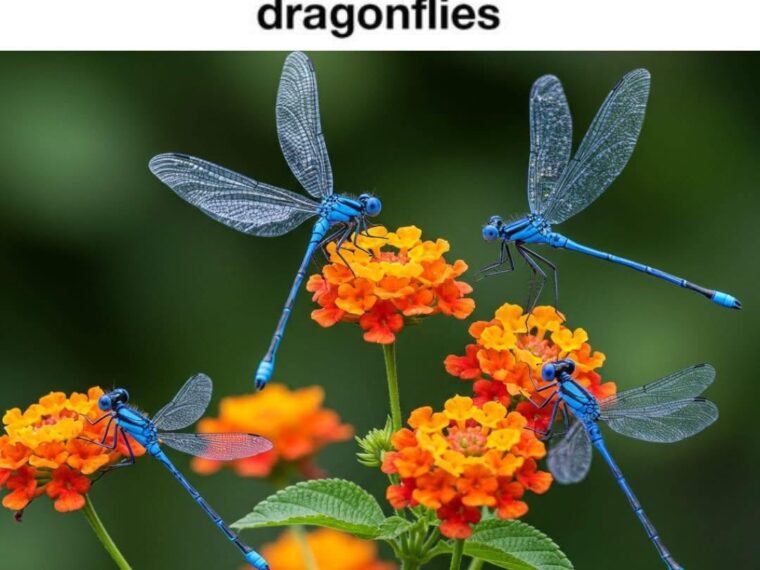
The image above shows several brilliant blue dragonflies resting on colorful flowering plants—a reminder that by creating a dragonfly-friendly garden, you can enjoy fewer mosquitoes while supporting local biodiversity.
Here’s everything you need to know about attracting dragonflies to your yard, along with 12 of the best plants to encourage them to visit.
Why Dragonflies Are Called “Mosquito Hawks”
Dragonflies have existed for more than 300 million years, making them one of Earth’s oldest insect groups.
They’re exceptional hunters because they have:
- Excellent eyesight with nearly 360-degree vision
- Four independently moving wings
- Incredible flying speed
- The ability to hover and fly backward
- Nearly a 95% hunting success rate
Both adult dragonflies and their aquatic young (called nymphs) feed on mosquito populations.
Adult dragonflies catch mosquitoes directly out of the air, while dragonfly nymphs eat mosquito larvae living in ponds and other water sources.
Do Dragonflies Really Eat Hundreds of Mosquitoes?
The popular claim that a dragonfly eats “hundreds of mosquitoes a day” is somewhat simplified, but it’s based on real behavior.
Dragonflies are voracious predators that consume many types of flying insects, including:
- Mosquitoes
- Gnats
- Midges
- Flies
- Small moths
- Aphids
- Whiteflies
The exact number depends on:
- The dragonfly species
- Food availability
- Weather conditions
- Time of year
Even if mosquitoes aren’t their only meal, dragonflies still play an important role in naturally reducing mosquito populations.
Why You Want Dragonflies in Your Garden
Besides mosquito control, dragonflies provide several other benefits.
They help:
- Reduce flying insect pests
- Support healthy ecosystems
- Increase biodiversity
- Pollinate some plants while searching for prey
- Indicate a healthy environment
Unlike mosquitoes, dragonflies do not sting people and generally avoid human contact.
What Attracts Dragonflies?
Dragonflies don’t come to gardens for nectar like butterflies.
Instead, they’re looking for:
- Small insects to hunt
- Sunny places to rest
- Water for breeding
- Tall plants for perching
- Shelter from strong winds
A garden rich in flowers attracts pollinators and other insects—which, in turn, attracts hungry dragonflies.
12 Plants That Help Attract Dragonflies
1. Black-Eyed Susan (Rudbeckia)
Its bright yellow flowers attract bees, butterflies, and tiny insects that dragonflies hunt.
It also provides sturdy stems for dragonflies to perch on.
2. Joe-Pye Weed
A favorite among pollinators.
Its tall flower clusters create excellent hunting grounds for dragonflies.
3. Swamp Milkweed
Besides feeding monarch butterflies, this native perennial attracts many small insects that become dragonfly prey.
4. Purple Coneflower (Echinacea)
One of the easiest native flowers to grow.
Its tall stems make perfect lookout posts.
5. Lantana
The colorful flowers shown in the image resemble lantana, a magnet for butterflies, bees, and other insects.
Dragonflies often patrol around these busy flowers searching for prey.
6. Bee Balm (Monarda)
Its vibrant blooms attract hummingbirds, bees, butterflies, and countless flying insects.
7. Yarrow
TO CONTINUE READING THE ARTICLE PLEAS SEE PAGE 2