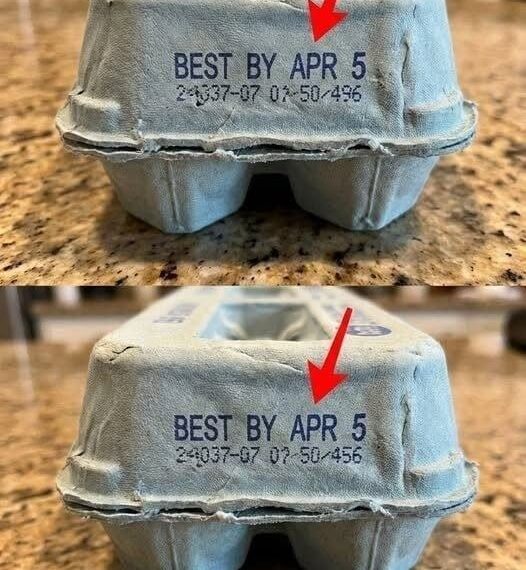
In many cases, they remain safe even beyond the “Best By” date, provided they have been:
- continuously refrigerated,
- not cracked,
- stored properly.
However, freshness gradually declines over time.
How Grocery Stores Rotate Eggs
Many people think grocery employees simply place new cartons on the shelves.
In reality, most stores follow a process called stock rotation.
Older cartons are usually placed toward the front.
Newer cartons are placed behind them.
This helps reduce waste by encouraging shoppers to buy older inventory first.
If you simply grab the first carton you see, you may not be getting the freshest eggs available.
How to Pick the Freshest Eggs
Here are a few simple tips:
✔ Check the pack date
A newer Julian date usually means fresher eggs.
✔ Inspect the carton
Avoid cartons with:
- cracks,
- leaks,
- broken shells.
✔ Open the carton
Many shoppers forget to do this.
Always make sure every egg is intact.
✔ Keep eggs refrigerated
Cold temperatures help maintain freshness and reduce bacterial growth.
Are Eggs Safe After the Best By Date?
Often, yes.
The “Best By” date is primarily about quality, not safety.
If eggs have been refrigerated continuously and show no signs of spoilage, they may still be perfectly usable after the printed date.
However, always inspect eggs before using them.
Discard any eggs that:
- smell bad,
- have cracked shells,
- show unusual discoloration,
- appear slimy.
When in doubt, throw them out.
The Simple Float Test
One popular way to estimate freshness is the water float test.
Fill a bowl with cold water.
Then place the egg inside.
Sinks and lies flat
Very fresh.
Sinks but stands upright
Still safe but older.
Floats
The egg has developed a large air cell and is likely too old to use.
While the float test can indicate age, it does not guarantee safety. Always crack the egg into a separate bowl and check for any unusual odor or appearance before cooking.
Why Older Eggs Sometimes Work Better
Surprisingly, the freshest eggs aren’t always the best choice.
Older eggs are often preferred for:
- hard-boiled eggs,
- deviled eggs,
- egg salad.
As eggs age, the shell becomes easier to peel after boiling.
Fresh eggs, on the other hand, are ideal for:
- frying,
- poaching,
- baking,
- scrambling.
Common Myths About Egg Dates
Myth: Eggs expire on the Best By date.
Fact: The Best By date indicates peak quality, not necessarily the last safe day to eat them.
Myth: Floating eggs are always dangerous.
Fact: Floating usually means the egg is older because the air cell has grown larger. It doesn’t automatically mean it’s spoiled, but you should inspect it carefully after cracking.
Myth: Brown eggs last longer than white eggs.
Fact: Shell color depends on the breed of the hen and has no effect on freshness or shelf life.
Myth: Washing eggs at home makes them cleaner.
Fact: In countries like the United States, commercially sold eggs are already washed and sanitized. Washing them again can actually remove protective barriers and increase the risk of contamination.
How to Store Eggs Properly
To maximize freshness:
- Keep eggs in their original carton.
- Store them in the coldest part of the refrigerator, not in the door.
- Avoid frequent temperature changes.
- Don’t leave eggs at room temperature for extended periods.
Proper storage helps preserve both quality and safety.
Final Thoughts
The next time you’re shopping for eggs, don’t stop at the “Best By” date. Take an extra moment to check the carton for the pack date or Julian date, inspect the shells for cracks, and choose the freshest option available.
While the “Best By” date provides a useful guide to quality, it’s not always the full story. Eggs that have been properly refrigerated often remain safe beyond that date, and the pack date can give you a clearer picture of how fresh they really are.
Knowing how to read these labels can help you make smarter shopping decisions, enjoy fresher eggs, and reduce unnecessary food waste. It’s a small habit that takes only a few seconds—but one that many grocery professionals say most shoppers overlook.