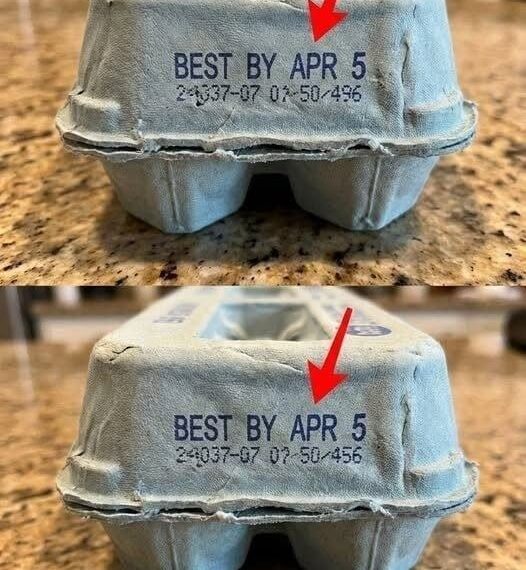
Most of us toss a carton of eggs into the shopping cart without giving it a second thought. We might glance at the price, check for cracked shells, and maybe look at the “Best By” date printed on the carton. But after spending years working in grocery stores, many employees say they’ve noticed one surprising thing:
Most shoppers have no idea what the date on an egg carton actually means—or that another code printed nearby can reveal even more about the eggs they’re buying.
If you’ve always assumed the “Best By” date is the only thing that matters, you’re not alone. But understanding the information printed on your egg carton can help you buy fresher eggs, reduce food waste, and even determine whether eggs are still safe to eat after the printed date has passed.
Let’s crack open the facts.
Is the “Best By” Date an Expiration Date?
One of the biggest misconceptions is that the “Best By” date is an expiration date.
In reality, it usually isn’t.
A “Best By” date is a quality recommendation from the producer. It tells consumers when the eggs are expected to be at their freshest in terms of flavor and texture—not necessarily when they become unsafe.
In many countries, eggs remain safe for some time beyond the “Best By” date if they have been properly refrigerated.
That means throwing away eggs simply because the date has passed can lead to unnecessary food waste.
The Hidden Code Most People Ignore
Take a closer look beneath or beside the “Best By” date.
You’ll often notice a string of numbers and letters, sometimes looking something like this:
24037-07 07:50-456
To most shoppers, it looks like meaningless factory information.
But one part of that code often contains valuable information about when the eggs were actually packed.
Understanding the Julian Pack Date
Many egg cartons, especially in the United States, include what’s called a Julian pack date.
This is a three-digit number ranging from:
- 001 = January 1
- 032 = February 1 (approximately)
- 100 = April 10
- 200 = July 19
- 365 = December 31
For example:
If you see:
085
that means the eggs were packed on approximately March 26.
This date tells you exactly how fresh the eggs were when they entered the carton.
Why the Pack Date Matters More Than You Think
Imagine two cartons sitting side by side.
Both have the same Best By date.
However:
- Carton A was packed three weeks ago.
- Carton B was packed only ten days ago.
Which one would you choose?
Most people would prefer the fresher carton—but they never notice the pack date.
Checking it only takes a few seconds and can help you pick the freshest eggs available.
How Long Do Eggs Stay Fresh?
According to food safety experts, refrigerated eggs generally remain high quality for three to five weeks after the pack date.
In many cases, they remain safe even beyond the “Best By” date, provided they have been:
TO CONTINUE READING THE ARTICLE PLEASE SEE PAGE 2