Every gardener knows the feeling — after a growing season ends, pots are left filled with tired, dry soil that seems completely useless. Most people simply throw it away and buy fresh potting mix every year. But what many gardeners don’t realize is that old potting soil can often be revived and reused successfully with just a few simple steps.
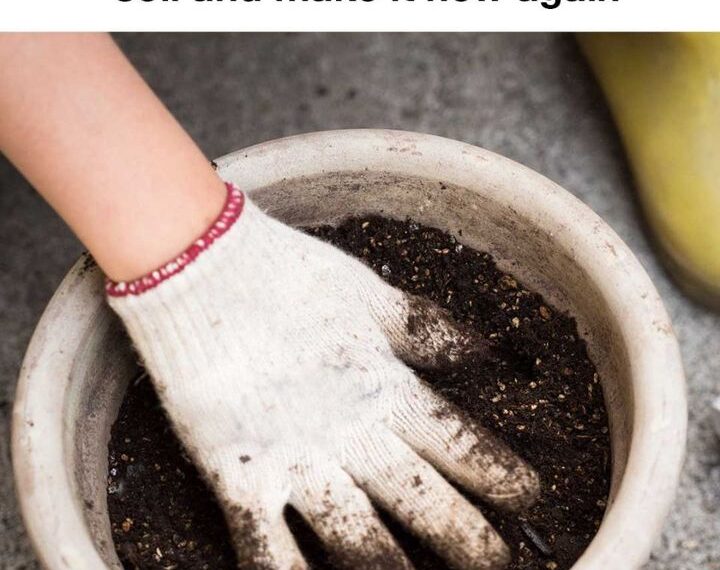
The image shows a gardener’s gloved hand mixing dark soil inside a flower pot, perfectly illustrating the process of refreshing and restoring used potting soil. Instead of wasting money and creating unnecessary waste, you can transform old soil into nutrient-rich growing material once again.
Reusing potting soil is not only economical but also environmentally friendly. With the right methods, you can give your plants a healthy foundation while reducing garden waste at the same time.
Why Potting Soil Becomes “Old”
Over time, potting soil loses many of the qualities that help plants thrive. After months of watering and plant growth, the soil often becomes:
- Compacted
- Nutrient-depleted
- Poorly drained
- Contaminated with roots or debris
- Less able to hold moisture properly
Plants continuously absorb nutrients from the soil, leaving it exhausted after a season of growth.
In some cases, old soil may also contain fungi, pests, or disease organisms, especially if unhealthy plants were previously growing in it.
Can You Really Reuse Old Potting Soil?
Yes — in many cases, absolutely.
As long as the soil is not heavily infected with disease, mold, or pests, it can often be refreshed and safely reused. Many experienced gardeners reuse potting soil every year as part of a sustainable gardening routine.
The key is knowing how to restore its structure and nutrients properly.
Step 1: Remove Old Roots and Debris
The first step is cleaning the soil thoroughly.
Use your hands or a small garden tool to remove:
- Dead roots
- Plant stems
- Leaves
- Rocks or large clumps
Old roots left behind can decay and create problems for future plants.
Breaking up compacted chunks also improves airflow and texture.
Step 2: Check for Signs of Disease
Before reusing soil, inspect it carefully.
Avoid reusing soil if you notice:
- White mold
- Fungus gnats
- Bad odors
- Rotten roots
- Persistent plant diseases
If diseased plants previously grew in the pot, it’s often safer to discard the soil or sterilize it before reuse.
Healthy soil should smell earthy and fresh, not sour or rotten.
Step 3: Sterilize the Soil (Optional but Helpful)
Many gardeners sterilize old potting soil to kill hidden pests, fungi, or weed seeds.
One common method is baking the soil in the oven:
TO CONTINUE READING THE ARTICLE PLEASE SEE PAGE 2