🍃 Why Are My Monstera Leaves Turning Yellow?
Yellow leaves can have several causes, so don’t immediately assume the plant needs more water.
Possible causes include:
Too much water
Especially when the soil remains wet for long periods.
Poor drainage
Even if you’re watering correctly, poorly draining soil can keep roots saturated.
Insufficient light
Low light can contribute to weak growth and other problems.
Natural aging
An older lower leaf may eventually yellow and decline naturally.
Root problems
Damaged or rotting roots can prevent the plant from absorbing water and nutrients properly.
The RHS emphasizes that brown or declining leaves can have multiple causes, so the surrounding symptoms and growing conditions need to be considered rather than diagnosing the problem from leaf color alone.
🍂 Why Are the Leaf Tips Turning Brown?
Brown tips can be caused by several environmental problems.
Common possibilities include:
- dry indoor air
- inconsistent watering
- excessive heat
- excessive fertilizer salts
- root problems
- too much direct sunlight
Don’t automatically solve brown tips by watering more.
Check the whole growing environment first.
🐜 11. Watch for Common Pests
Monsteras can occasionally be affected by pests such as:
- scale insects
- spider mites
- mealybugs
- thrips
- aphids
Both the RHS and Missouri Botanical Garden identify several of these pests as potential problems for Monstera.
Inspect the undersides of leaves and the areas around stems and leaf joints.
Early detection makes pest management much easier.
🧽 12. Clean Those Big Leaves
Large Monstera leaves naturally collect dust.
Every so often, gently wipe the leaves with a clean, damp cloth.
This also gives you an opportunity to inspect the plant for:
- pests
- discoloration
- damaged tissue
- unusual spots
- new growth
Avoid relying on commercial leaf-shine products. A simple gentle cleaning is generally all that’s needed.
🌿 How to Make Your Monstera Produce Bigger Leaves
If your goal is the huge, dramatic leaves seen in mature specimens, concentrate on consistent conditions rather than a secret fertilizer or homemade remedy.
Focus on:
1. Plenty of bright, indirect light
2. Correct watering
3. Well-draining soil
4. A sturdy climbing support
5. Warm temperatures
6. Adequate humidity
7. Regular nutrition during active growth
8. Patience
A mature Monstera can become enormous. The RHS notes that Monstera deliciosa can eventually reach several metres in height, while Missouri Botanical Garden describes its natural climbing habit and very large mature foliage.
🌱 How to Propagate a Monstera
Monstera can be propagated from stem cuttings.
The important thing is that a suitable cutting should contain a node—the point on the stem where growth structures originate.
A leaf by itself isn’t the same as a viable stem cutting.
The RHS lists stem cuttings among the propagation methods for Monstera deliciosa and its cultivars.
Once you’ve successfully propagated a cutting and established roots, it can be transferred into an appropriate growing medium.
⚠️ One Important Safety Note
Although Monstera is a popular houseplant, it isn’t considered safe to eat.
The RHS lists Monstera as harmful if eaten and potentially irritating to the skin and eyes, including for pets.
Therefore, keep the plant and especially fallen leaves or plant material away from small children and pets that may chew on them.
🌿 The Simple Monstera Formula
If you want to remember only a few things, remember this:
Bright light + careful watering + good drainage + warmth + humidity + something to climb = a happier Monstera.
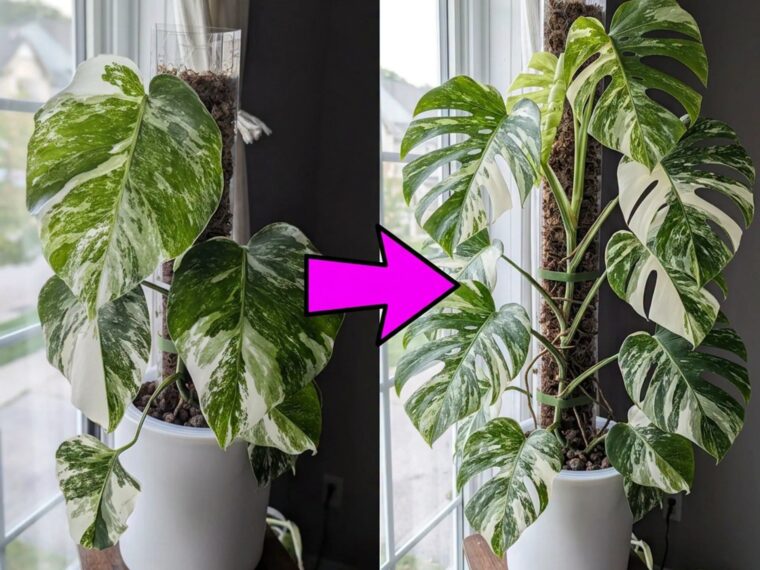
And for the beautiful variegated plant shown in your image:
Give it plenty of filtered light, but protect the white parts of the leaves from harsh direct sun.
There isn’t a magic trick that replaces good plant care. The spectacular Monsteras you see online are usually the result of consistent conditions, a mature plant, adequate light and plenty of time.
With patience, that small plant on your windowsill can eventually become the dramatic tropical centerpiece of an entire room. 🌿
Sources
The care recommendations above are based primarily on guidance from the Royal Horticultural Society and Missouri Botanical Garden, including their plant profiles and Monstera growing guides.