Tip #2: Use Oxygen-Based Whitening for Stubborn Yellowing
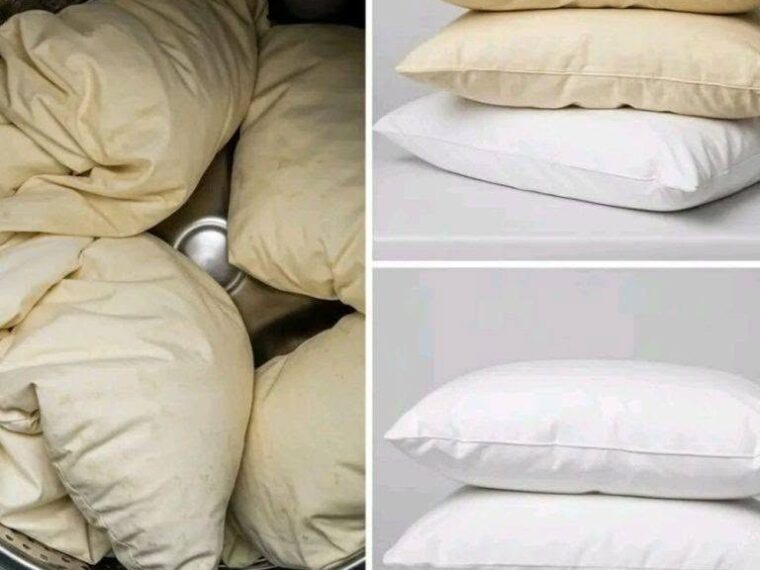
If your washable white pillows have significant yellow discoloration, an oxygen-based laundry whitener can be more effective than ordinary detergent alone.
Look for products based on ingredients such as sodium percarbonate, and always check that the product is suitable for your particular pillow.
This is often preferable to reaching immediately for chlorine bleach.
Why Avoid Chlorine Bleach?
Many people assume that bleach is the best solution for yellow fabric.
But chlorine bleach isn’t always the answer.
Depending on the fabric and the cause of the discoloration, chlorine bleach can:
- Damage fibers
- Weaken fabric
- Affect certain fillings
- Cause discoloration
- React badly with other cleaning products
In some circumstances, bleach can even make certain organic stains appear more yellow.
That’s why it’s better to follow the care label and choose an appropriate oxygen-based product when permitted.
How to Use an Oxygen-Based Whitener
The exact method depends on the product, so follow the package instructions.
A general approach is:
1. Prepare the solution
Dilute the oxygen-based product according to the manufacturer’s directions.
Don’t guess the concentration.
2. Soak if permitted
If the pillow’s care instructions allow soaking, place the pillow in the solution for the recommended amount of time.
Avoid leaving it submerged for much longer than instructed.
3. Wash normally
After soaking, wash the pillow according to its care label.
4. Rinse thoroughly
Make sure all cleaning product has been removed.
5. Dry completely
Again, don’t underestimate this step.
The pillow needs to be thoroughly dry before you use it again.
Tip #3: Deep-Clean Washable Pillows With a Careful Washing Routine
Sometimes the problem isn’t one specific stain.
The entire pillow may simply have accumulated months or years of sweat, oils, dust, and residue.
If the care label permits machine washing, a proper deep-cleaning routine can make a dramatic difference.
Step 1: Wash Two Pillows Together When Appropriate
If your washing machine is large enough, washing two similar pillows together can help maintain balance during the spin cycle.
However, don’t overcrowd the machine.
The pillows need enough space for water and detergent to circulate properly.
If your machine is too small, consider washing them individually or using a larger machine.
Step 2: Use a Gentle Detergent
Choose a quality laundry detergent and use the amount recommended for the load.
Using excessive detergent doesn’t necessarily make the pillow cleaner.
In fact, too much detergent can leave residue behind.
Step 3: Choose the Correct Water Temperature
Don’t automatically choose the hottest setting.
The care label should determine the appropriate temperature.
Some pillow materials tolerate warm or hot water, while others can shrink, deform, or become damaged.
Step 4: Add an Extra Rinse
If your washing machine has an extra-rinse option and the pillow’s care instructions permit machine washing, it can be useful.
This helps remove:
- Detergent residue
- Sweat residue
- Cleaning solution
Step 5: Dry Thoroughly
Drying is essential.
For pillows that are dryer-safe, follow the manufacturer’s temperature recommendations.
Stop periodically to check the pillow and redistribute the filling if necessary.
For certain washable pillows, air drying may be appropriate.
If air drying, place the pillow somewhere with good airflow and turn it periodically so that both sides can dry.
What About Hydrogen Peroxide?
Hydrogen peroxide is sometimes recommended online for yellow stains.
It can have whitening properties, but that doesn’t mean it should automatically be poured onto every pillow.
Before using it:
- Check the care label.
- Check the manufacturer’s recommendations.
- Test on an inconspicuous area if appropriate.
- Never mix it with incompatible cleaning products.
- Don’t assume a stronger concentration is better.
For many households, a properly formulated oxygen-based laundry product is a simpler and more controlled option.
Can You Use Lemon Juice to Whiten Pillows?
Lemon juice is another popular home remedy.
It contains citric acid and can sometimes help with certain stains, but it isn’t a miracle whitening treatment.
If you decide to experiment with acidic ingredients, be cautious about:
- Fabric sensitivity
- Discoloration
- Sun exposure
- Residue
A commercial laundry product designed for whitening is generally easier to control.
What You Should Never Do When Cleaning Pillows
Some cleaning mistakes can permanently damage a pillow.
Don’t Wash Memory Foam Like a Normal Pillow
Memory foam can absorb water and may be difficult to dry completely.
Check the manufacturer’s instructions and generally clean only the removable cover unless the instructions specifically permit otherwise.
Don’t Mix Cleaning Chemicals
This is extremely important.
Never mix chlorine bleach with vinegar, ammonia, or other household cleaning chemicals.
Dangerous fumes can result.
When using cleaning products, follow the label instructions and use one appropriate product at a time.
Don’t Overload the Washing Machine
A tightly packed machine doesn’t allow pillows to move freely.
The result may be poor cleaning and incomplete rinsing.
Don’t Put a Wet Pillow Back on the Bed
Even if the outside feels dry, the center can still contain moisture.
Always make sure the pillow is completely dry.
How Often Should You Wash Your Pillows?
Your pillowcase should generally be washed much more frequently than the pillow itself.
The pillowcase acts as the first barrier against:
- Sweat
- Skin oils
- Hair products
- Dust
- Moisture
A pillow protector provides an additional layer of protection.
Depending on the pillow type and manufacturer instructions, the pillow itself may need washing less frequently.
Always follow the care label.
The Best Way to Prevent Yellow Pillows
Cleaning is useful, but prevention is even better.
1. Use a Pillow Protector
A washable pillow protector can make a huge difference.
Instead of sweat and oils reaching the pillow itself, much of the moisture is caught by the removable protector.
You can then wash the protector regularly.
2. Wash Pillowcases Regularly
Don’t wait until the pillowcase looks dirty.
Regular washing helps remove accumulated sweat and oils before they reach the pillow.
3. Don’t Go to Bed With Wet Hair
If possible, let your hair dry before going to bed.
Wet hair introduces additional moisture into the pillow.
4. Keep Your Bedroom Well Ventilated
Good airflow can help reduce excessive humidity.
Opening a window when appropriate or using ventilation can help keep the sleeping environment drier.
5. Let Pillows Air Out
Occasionally remove the pillowcase and allow the pillow to air out in a clean, dry environment.
Follow the manufacturer’s recommendations, especially if the pillow shouldn’t be exposed to direct sunlight.
A Simple Three-Step Pillow Whitening Routine
If you want the easiest possible routine, remember these three steps.
STEP 1: Pre-treat
For washable pillows, gently treat yellowed areas with an appropriate stain treatment or baking-soda paste.
STEP 2: Wash
Wash according to the care label using an appropriate detergent and, when permitted, an oxygen-based whitening product.
STEP 3: Dry Completely
Dry the pillow thoroughly before using it again.
That’s it.
The key isn’t using the strongest possible chemical. The key is using the right method for the pillow material.
What If the Pillow Is Extremely Yellow?
If a pillow is several years old and heavily discolored, cleaning may improve its appearance but may not return it to its original factory-white condition.
At that point, ask yourself:
- Is the filling still comfortable?
- Does the pillow smell fresh after washing?
- Is the fabric still intact?
- Does it dry properly?
- Is the pillow still providing adequate support?
Sometimes replacing an old pillow is more practical than trying to restore it.
A clean pillow is important, but so is replacing bedding when it has reached the end of its useful life.
Frequently Asked Questions
Why do white pillows turn yellow?
The most common causes are sweat, body oils, saliva, skincare products, hair products, and moisture that gradually pass through the pillowcase.
Can yellow pillows be made white again?
Often, yes. Washable pillows may respond well to proper washing, stain treatment, and oxygen-based whitening products. However, very old or heavily stained pillows may not return completely to their original color.
Can I put pillows in the washing machine?
Only if the care label says they are machine washable. Memory foam, latex, and some specialty pillows generally require different cleaning methods.
Is bleach safe for pillows?
Not necessarily. Always check the care label. Chlorine bleach can damage some fabrics and fillings and can sometimes worsen certain types of yellowing.
How can I stop my pillows from turning yellow?
Use washable pillow protectors, wash pillowcases regularly, avoid going to bed with wet hair, and keep the bedroom well ventilated.
How do I know whether a yellow pillow needs replacing?
If it remains stained or develops an unpleasant smell after proper cleaning, the filling has deteriorated, the pillow no longer provides support, or it cannot be cleaned and dried properly, replacement may be the better option.
Final Thoughts
Yellow pillows don’t necessarily mean that your bedding is beyond saving.
In many cases, the discoloration is simply the result of years of sweat, body oils, moisture, and everyday use.
The three most useful strategies are:
1. Gently pre-treat yellowed areas before washing.
2. Use an appropriate oxygen-based whitening product when the pillow’s care instructions allow it.
3. Wash and dry the pillow properly, paying particular attention to complete drying.
Most importantly, don’t treat every pillow the same way. A polyester pillow that can go into the washing machine is very different from a memory foam or latex pillow.
And once you’ve restored your pillows, prevention becomes much easier: use pillow protectors, wash pillowcases regularly, and keep moisture away from the pillow whenever possible.
With the right routine, your pillows can stay cleaner, fresher, and brighter for much longer.