You will need:
- 1 part white vinegar.
- 1 part water.
- A spray bottle.
- A soft sponge or cloth.
How to do it
Start by mixing equal amounts of white vinegar and water in a spray bottle.
Spray the solution onto the bathroom tiles.
Allow it to sit for a few minutes so it can help loosen light mineral buildup and soap residue.
Next, wipe the tiles using a soft sponge or cloth.
Rinse the surface thoroughly with clean water.
Finally, dry the tiles with a microfiber cloth.
Drying the tiles is an important step because it helps prevent new water marks from appearing as the surface dries.
Important: Not Suitable for Every Surface
Vinegar is acidic, so it should not be used on every type of bathroom surface.
Avoid using vinegar on acid-sensitive natural stones such as:
- Marble.
- Travertine.
- Limestone.
- Other delicate natural stone surfaces.
If you are unsure what your tiles are made of, always test the cleaning method on a small hidden area first.
Method 2: Use Baking Soda for Stubborn Dirt
When your bathroom tiles have more stubborn buildup, baking soda can be useful as a gentle cleaning paste.
Its mild abrasive action can help lift certain types of dirt without the need for harsh scrubbing.
You will need:
- Baking soda.
- A small amount of water.
- A soft sponge or small brush.
Make a simple cleaning paste
Place a few spoonfuls of baking soda into a small bowl.
Slowly add a small amount of water until you create a thick paste.
The mixture should be thick enough to stay on the surface.
Apply the paste to the dirty areas.
Leave it for a few minutes.
Then gently scrub the area using a soft sponge or brush.
Rinse thoroughly with clean water.
This method can be particularly useful for stubborn soap residue or small areas that need extra attention.
Method 3: Use Lemon to Freshen Bathroom Surfaces
Lemon is another popular ingredient often used in natural cleaning routines.
Lemon juice contains citric acid, which may help with certain types of residue on compatible surfaces while leaving behind a fresh scent.
Simply cut a lemon in half.
You can gently rub the cut side over a suitable tile surface, leave it for a short time, and then rinse thoroughly.
Another option is to mix a small amount of lemon juice with water for light cleaning.
However, just like vinegar, lemon is acidic.
Avoid using it on acid-sensitive natural stone surfaces, and always test it on a small hidden area first.
Method 4: The Simple Dish Soap Solution
For regular cleaning, you may not need a strong cleaning solution at all.
A few drops of dish soap mixed with warm water can help remove everyday dirt and soap residue.
Here is how to do it:
- Fill a bowl or bucket with warm water.
- Add a few drops of dish soap.
- Dip a soft sponge into the solution.
- Wipe the bathroom tiles.
- Rinse with clean water.
- Dry with a microfiber cloth.
This method is ideal for regular maintenance.
The more regularly you clean your bathroom surfaces, the less time soap residue and mineral deposits have to build up.
How to Naturally Clean Tile Grout
Grout is often one of the most difficult areas to clean.
Even when the tiles themselves look shiny, dirty grout can make the entire bathroom look neglected.
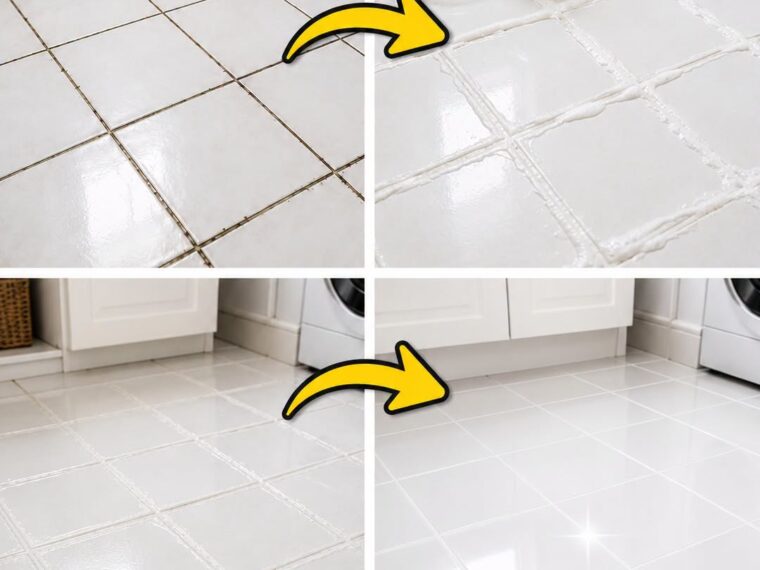
A simple baking soda paste can be useful for cleaning lightly to moderately dirty grout.
Mix baking soda with a small amount of water until it forms a thick paste.
Apply the paste directly to the grout lines.
Leave it for a few minutes.
Then use an old toothbrush or a small soft brush to gently scrub the grout.
Work slowly and avoid using excessive force.
Once you have finished, rinse the area thoroughly with clean water.
Finally, wipe the surface dry with a clean cloth.
What About Very Dirty Grout?
If certain areas are heavily stained, it may be better to repeat a gentle cleaning process rather than immediately using an extremely harsh cleaner.
Several gentle cleaning sessions can sometimes be preferable to aggressive scrubbing, which may damage grout or certain tile surfaces.
Patience is often one of the secrets to effective cleaning.
Should You Mix Vinegar and Baking Soda?
Mixing vinegar and baking soda is one of the most popular cleaning tricks on the internet.
When these two ingredients are combined, they create a fizzy reaction.
While the bubbling action can look impressive, it is important to understand that vinegar is acidic and baking soda is alkaline. When they react, they largely neutralize each other.
For this reason, it can often make more sense to use them separately depending on the type of cleaning you need.
For example:
- Use diluted vinegar for certain mineral deposits on compatible surfaces.
- Use a baking soda paste when gentle scrubbing is needed.
Always rinse the surface thoroughly between different cleaning steps.
Try a Two-Step Cleaning Method
If your bathroom tiles have not been cleaned for a long time, a two-step approach can be helpful.
Step 1: Remove Soap and Everyday Buildup
Start with warm water and a few drops of dish soap.
Use a soft sponge to clean the entire surface.
Then rinse with clean water.
Step 2: Treat Remaining Marks
Once the soap residue and general dirt have been removed, you can focus on any remaining marks.
For compatible surfaces, a mild acidic solution such as diluted vinegar may help with certain mineral deposits.
For areas that need gentle scrubbing, a baking soda paste may be useful.
Always rinse the tiles thoroughly when you finish.
How to Keep Bathroom Tiles Clean for Longer
The best cleaning routine is often one that prevents heavy buildup from happening in the first place.
By adopting a few simple habits, you can reduce the amount of dirt, water marks, and residue that collect on your bathroom tiles.
Dry the Walls After Showering
After taking a shower, use a squeegee or microfiber cloth to remove excess water from the tiles.
This simple habit can help reduce water spots and mineral buildup.
Improve Ventilation
Bathrooms can become very humid.
Open a window when possible or use an appropriate ventilation system.
Good airflow helps surfaces dry faster and can reduce excess moisture.
Do a Quick Weekly Clean
Instead of waiting until the tiles become heavily soiled, spend a few minutes each week cleaning the most frequently used areas.
Regular maintenance is usually much easier than deep cleaning.
Common Mistakes to Avoid
Even natural ingredients can cause problems when they are used incorrectly.
Here are some common mistakes to avoid.
1. Using Vinegar on Every Surface
Vinegar is not suitable for every material.
Because it is acidic, it can damage or dull certain natural stone surfaces.
Always check what type of tile or surface you have before using acidic cleaners.
2. Using an Extremely Abrasive Sponge
Steel wool and very rough cleaning pads can scratch certain tiles and finishes.
Whenever possible, choose a soft sponge or microfiber cloth.
3. Mixing Cleaning Products Randomly
Never mix household cleaning products unless you know they are safe to combine.
Most importantly, never mix vinegar or other acids with bleach, as this can create dangerous gases.
4. Forgetting to Rinse
After using a cleaning solution, rinse the surface thoroughly whenever appropriate.
Leftover residue can leave marks or attract additional dirt.
5. Skipping the Patch Test
Whenever you use a new cleaning method, test it first on a small, hidden area.
This is especially important if you are unsure about the material or finish of your bathroom tiles.
A Simple Bathroom Tile Cleaning Routine
You can follow this easy routine to keep your bathroom looking clean.
After Every Shower
Remove excess water from the tiles using a squeegee or cloth.
Once a Week
Clean the tiles with warm water and a small amount of dish soap.
When Limescale Appears
Use an appropriate cleaning method for the surface, such as diluted white vinegar on compatible materials.
For Dirty Grout
Use a baking soda paste and gently scrub with a small brush.
Final Thoughts
You do not always need a cupboard full of expensive cleaning products to keep your bathroom tiles looking clean and fresh.
Simple household ingredients such as baking soda, lemon, white vinegar, and dish soap can be useful for regular cleaning and certain types of buildup when used correctly.
The secret is choosing the right method for the type of dirt and the type of surface.
For everyday cleaning, warm water and a little dish soap may be all you need.
For stubborn areas, a baking soda paste can provide gentle scrubbing power.
For certain mineral deposits on compatible surfaces, diluted white vinegar can be a useful option.
Most importantly, remember that regular maintenance is the easiest way to keep your bathroom looking its best.
A few minutes of cleaning each week can prevent heavy buildup and save you from spending hours scrubbing later.
With a few simple ingredients from your kitchen and the right cleaning habits, you can help keep your bathroom tiles looking fresh, clean, and shiny day after day.