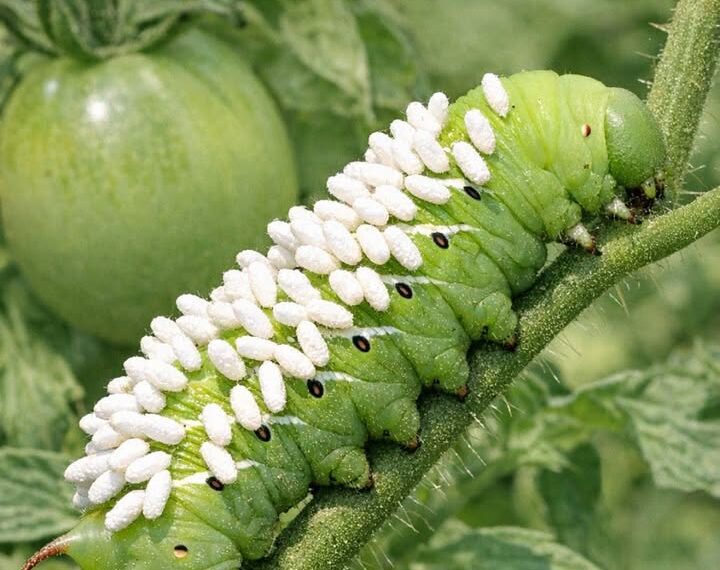
If you’ve ever walked into your garden and spotted a giant green caterpillar covered in dozens of tiny white objects that look like grains of rice, your first reaction is probably disgust—or panic. Many gardeners assume the caterpillar is carrying eggs or suffering from some strange disease.
The truth is far more fascinating.
The caterpillar in the image is most likely a tomato hornworm, one of the most destructive pests found in tomato gardens. However, those white “rice-like” structures covering its body are not its eggs. They are actually the cocoons of a tiny parasitic wasp that may have just saved your tomato plants.
Meet the Tomato Hornworm
Tomato hornworms are among the largest caterpillars found in North American gardens.
They can grow up to:
- 4 inches (10 cm) long
- As thick as a finger
- Bright green in color
- With a distinctive horn-like projection on the rear end
Despite their impressive appearance, they are notorious garden pests.
A single hornworm can quickly devour:
- Tomato leaves
- Pepper plants
- Eggplant foliage
- Potato plants
- Young stems and shoots
Because they blend perfectly with green foliage, gardeners often don’t notice them until significant damage has already occurred.
What Are the White Rice-Like Things?
The white structures are the cocoons of braconid wasps, tiny beneficial insects that naturally control hornworm populations.
Here’s what happened:
- A female braconid wasp found the hornworm.
- She injected dozens of eggs beneath the caterpillar’s skin.
- The eggs hatched inside the hornworm.
- The developing larvae fed on the caterpillar’s internal fluids without immediately killing it.
- When mature, the larvae emerged from the hornworm and spun white cocoons on its body.
Those white “rice grains” are actually protective cocoons where the young wasps are developing into adults.
Is the Caterpillar Carrying Its Own Eggs?
No.
This is one of the biggest gardening myths.
Hornworms do not carry their eggs on their backs.
The white structures belong entirely to the parasitic wasps.
The caterpillar has become an unwilling host.
Should You Remove the Caterpillar?
Surprisingly, the answer is usually no.
Many gardeners instinctively pick off and destroy every hornworm they see. But when a hornworm is covered with braconid wasp cocoons, it is already helping control future pest populations.
Leaving it alone allows:
- The wasps to complete their development
- New adult wasps to emerge
- More hornworms to be controlled naturally
In other words, this caterpillar has become a nursery for one of your garden’s most valuable allies.
Are Braconid Wasps Dangerous?
TO CONTINUE READING THE ARTICLE PLEASE SEE PAGE 2