Are Braconid Wasps Dangerous?
Not at all.
Braconid wasps are:
- Extremely small
- Non-aggressive
- Beneficial to gardens
- Harmless to humans
Most species are too tiny to sting people, and those that can rarely do.
Their entire purpose is to locate and control insect pests.
Nature’s Own Pest Control System
This relationship is a remarkable example of biological control.
Instead of relying on pesticides, nature has developed a highly effective way of keeping destructive caterpillar populations in check.
Benefits include:
- Fewer tomato pests
- Reduced pesticide use
- Healthier garden ecosystems
- Better protection for pollinators
Many experienced gardeners actively encourage beneficial insects like braconid wasps because they provide free pest management.
How to Attract More Beneficial Wasps
If you want more natural pest control in your garden, try planting flowers that provide nectar for adult wasps.
Excellent choices include:
🌼 Dill
🌼 Fennel
🌼 Yarrow
🌼 Sweet alyssum
🌼 Queen Anne’s lace
🌼 Marigolds
🌼 Cosmos
Avoid broad-spectrum insecticides whenever possible, as they can kill beneficial insects along with pests.
Can the Hornworm Survive?
Usually not.
Once heavily parasitized, the hornworm becomes weak and eventually dies.
However, it may continue feeding for a short period before the developing wasps complete their life cycle.
The wasps ultimately emerge as adults and begin searching for new hornworms.
The Bottom Line
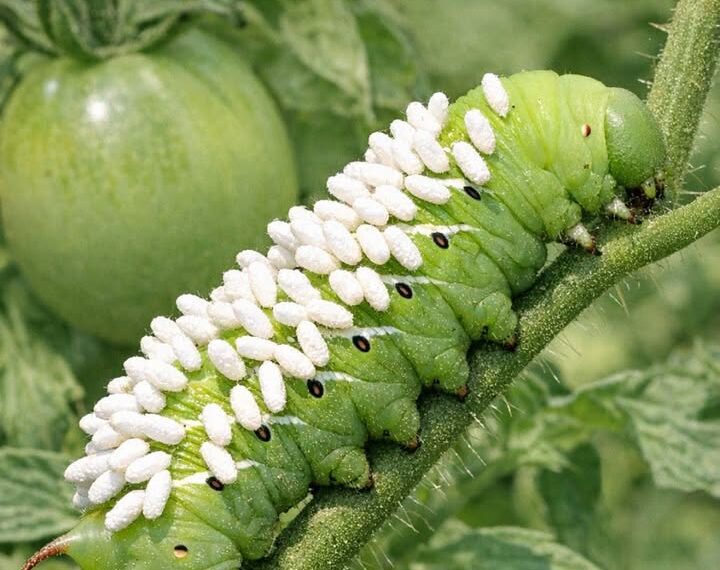
That strange green caterpillar covered in white “rice grains” isn’t carrying eggs, and it isn’t suffering from a disease. It’s a tomato hornworm that has been parasitized by beneficial braconid wasps. Those white structures are wasp cocoons, and they represent one of nature’s most effective forms of pest control.
So if you find one in your garden, resist the urge to remove it. It may look unsettling, but it’s actually a sign that your garden’s natural defenses are hard at work—and your tomato plants may soon be much safer because of it. 🍅🐛🪰