How to Collect Zinnia Seeds
Once the flower heads are completely dry, the actual collection process is surprisingly simple.
Step 1: Choose a dry day
Try to collect seeds when the weather is dry.
Avoid harvesting immediately after rain or when the flower heads are damp with morning dew.
Moisture is one of the biggest enemies of stored seeds.
Step 2: Cut the dried flower head
Use clean scissors or garden snips to cut the dried flower head from the plant.
Leave a small section of stem attached if it makes handling easier.
Place the flower heads into a paper bag, basket, or container.
Step 3: Let them dry further if necessary
If the flower heads don’t feel completely dry, spread them out in a dry, well-ventilated place.
Don’t seal damp plant material inside a plastic bag.
Trapped moisture can encourage mold.
Step 4: Break apart the flower head
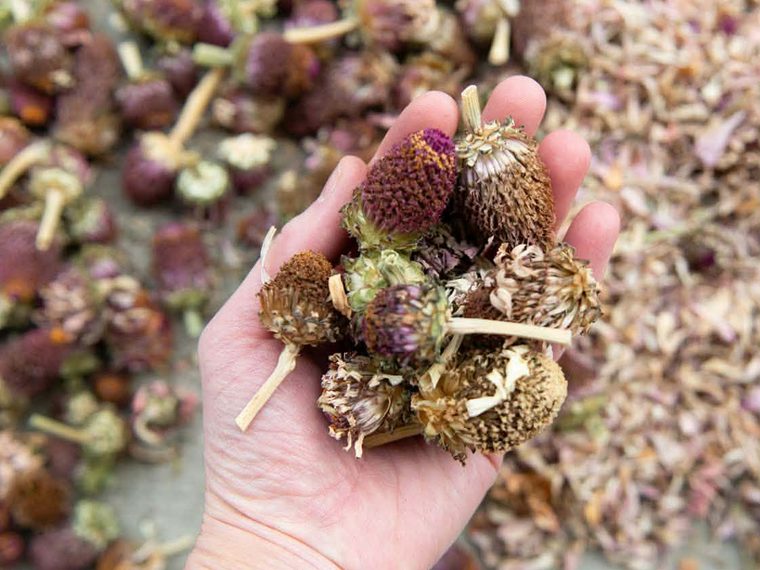
Once the flower head is thoroughly dry, gently pull it apart with your fingers.
You will find dried petals, plant material, and seeds mixed together.
The seeds can look somewhat different depending on the variety.
What Do Zinnia Seeds Look Like?
Zinnia seeds are relatively easy to identify once you know what you’re looking for.
They are generally small, flat, and somewhat arrowhead- or wedge-shaped.
Their appearance can vary depending on the variety.
You may find several different-looking pieces inside a dried flower head, which is why beginners sometimes aren’t sure which parts are actually seeds.
The easiest approach is to gently separate the dried material and look for the firm, seed-like pieces.
Don’t worry if you accidentally collect some dried plant material along with the seeds.
You can remove the larger pieces later.
Do You Need to Remove Every Piece of Dried Flower Material?
No.
Your saved seeds don’t need to be perfectly cleaned.
You can gently separate the seeds from the dried petals and other material, but a little plant debris isn’t necessarily a problem.
The most important thing is that the seeds are:
mature + dry + properly stored.
If you want cleaner seed packets, gently shake or rub the dried flower heads over a sheet of paper and remove the larger pieces by hand.
The Most Important Step: Dry the Seeds Properly
This step should not be rushed.
Before storing zinnia seeds, make sure they are thoroughly dry.
Spread them in a single layer on:
- A sheet of paper
- A paper plate
- A shallow tray
- A clean cardboard surface
Place them somewhere dry and well ventilated.
Avoid strong direct sunlight and humid locations.
Allow the seeds to dry naturally for several days if necessary.
The exact drying time depends on the humidity and the condition of the flower heads.
Never Store Damp Seeds
This is one of the easiest ways to ruin an otherwise successful seed-saving project.
If you put damp seeds into a sealed container, moisture can become trapped inside.
That can lead to:
- Mold
- Rot
- Reduced germination
- Unpleasant odors
- Seeds becoming unusable
When it comes to seed storage, dryness is essential.
If you’re unsure whether your seeds are dry enough, give them more time rather than rushing to seal them.
How Should You Store Zinnia Seeds?
Once completely dry, place the seeds in a suitable container.
Good options include:
- Paper envelopes
- Small seed packets
- Airtight containers
- Small glass jars
- Resealable bags designed for dry storage
If using an airtight container, make sure the seeds are completely dry first.
Paper envelopes are particularly convenient because they allow you to label each batch easily.
Always Label Your Seeds
This is a small step that can save you a lot of confusion later.
Write down:
Zinnia
Then add:
- Flower color
- Variety, if known
- Garden location
- Year collected
For example:
Zinnia – Pink – Backyard Garden – 2026
If you collected seeds from several different plants, you may want to keep them separate.
That way, you’ll know which seeds came from which flowers.
Where Should You Keep the Seeds?
Choose a location that is:
- Cool
- Dry
- Dark
- Protected from temperature extremes
Avoid storing seed packets in places that become hot and humid.
For example, a sunny windowsill or warm outdoor shed may not be ideal.
A dry indoor storage location is usually much better.
The goal is to protect the seeds from heat, moisture, and light.
Can You Store Zinnia Seeds for More Than One Year?
Yes.
Properly dried and stored seeds can remain viable beyond the following growing season, although germination rates generally decline as seeds age.
Good storage conditions can help extend their useful life.
This is another reason to keep seeds dry and protected from heat.
If you’re collecting seeds every year, you can create a simple rotation system and label each packet with the collection year.
What If You Have Different Zinnia Colors Growing Together?
This is where seed saving becomes particularly interesting.
Zinnias are pollinated by insects, including bees and butterflies.
If you grow several varieties close together, pollen can move between plants.
As a result, the seeds you collect may produce plants with characteristics that differ from the parent flower.
For example, a seed collected from a pink zinnia doesn’t necessarily guarantee that every future plant will produce exactly the same shade of pink.
You may see variations in:
- Color
- Flower shape
- Size
- Plant height
- Other characteristics
For many home gardeners, this isn’t a problem at all.
In fact, it can be part of the fun.
You may end up with unexpected combinations of colors and flower forms.
Can You Get the Exact Same Zinnia Next Year?
Not always.
This is particularly important if you’re growing hybrids.
Some commercial zinnia varieties are bred to produce specific characteristics, and saved seed may not reproduce those characteristics exactly.
Open-pollinated varieties are generally more suitable for gardeners who want to save seed and maintain a more predictable line over generations.
Even then, cross-pollination can introduce variation.
So think of saved zinnia seeds as your own garden’s next generation, rather than guaranteed clones of the original flowers.
Why Seed Saving Is So Rewarding
There’s something special about growing flowers from seeds that you collected yourself.
You can look at a beautiful zinnia in your garden and think:
“I grew this from seeds I saved last year.”
Then, at the end of the season, you collect seeds from that plant and start the process all over again.
Over time, your garden can develop its own unique collection of flowers.
You may even discover particular colors or flower forms that perform exceptionally well in your local growing conditions.
Save Seeds From Healthy Plants
Don’t collect seeds indiscriminately.
If a plant suffered from severe disease, poor growth, or serious pest problems, you may want to avoid using it as your primary seed source.
Instead, select seeds from plants that were:
- Healthy
- Vigorous
- Productive
- Attractive
- Well adapted to your garden
You’re essentially selecting the plants that you want to reproduce in future seasons.
Can You Save Seeds From Cut Flowers?
If you have zinnias growing in your garden, it’s much easier to let some flowers mature naturally on the plant.
Cut flowers sold in bouquets may not always have developed mature seeds before they were harvested.
For seed saving, flowers that have remained on the living plant and completed their natural life cycle are generally the better choice.
How Many Seeds Should You Collect?
You don’t need hundreds of seeds to have a beautiful garden.
A handful of mature seeds can be enough to get started.
However, collecting more than you need gives you several advantages.
You can:
- Plant multiple seedlings.
- Share seeds.
- Replace failed seedlings.
- Experiment with different locations.
- Keep some seeds in reserve.
Since one mature flower head can contain numerous seeds, it doesn’t take long to build a useful collection.
What Should You Do With Extra Seeds?
If you collect more seeds than you can use, don’t throw them away.
Consider sharing them with:
- Friends
- Family members
- Neighbors
- Gardening clubs
- Community gardens
You can create small handmade seed envelopes and label them with the flower color and collection year.
It can be a lovely way to introduce someone else to gardening.
When Should You Plant the Saved Seeds?
Zinnias are warm-season flowers.
The appropriate planting time depends on your local climate, but they generally perform best when the danger of frost has passed and the soil and air have warmed.
Zinnias don’t appreciate cold conditions.
If you’re starting them indoors, you can get a head start before transplanting them outdoors once conditions are suitable.
Alternatively, they can be sown directly into the garden when the weather is warm enough.
Always consider your local growing season rather than following a single calendar date.
How to Start Your Saved Zinnia Seeds
When planting time arrives, prepare a sunny location with reasonably well-drained soil.
Sow the seeds according to the depth recommended for zinnias and keep the soil appropriately moist while they establish.
Once the seedlings emerge, provide plenty of light.
As they grow, avoid keeping the soil excessively wet.
Zinnias generally appreciate sunlight and good air circulation.
Give Zinnias Plenty of Sun
One of the keys to growing vigorous zinnias is providing sufficient sunlight.
A sunny location encourages strong growth and abundant flowering.
If plants are grown in insufficient light, they may become stretched or produce fewer flowers.
Choose the sunniest practical location in your garden while also considering your local climate and watering needs.
Don’t Forget to Leave Some Flowers Again
The cycle doesn’t end when your saved seeds become flowers.
Once your new zinnias bloom next year, choose a few of your favorites and allow those flowers to mature.
Then collect their seeds.
You can repeat the process year after year.
This creates a simple gardening cycle:
Plant → Bloom → Dry → Collect → Store → Plant Again
And that’s one of the most satisfying things about growing annual flowers from seed.
Common Mistakes When Saving Zinnia Seeds
Collecting seeds too early
If the flower is still fresh, the seeds may not be fully mature.
Storing damp seeds
Moisture can lead to mold and poor germination.
Forgetting to label packets
After several months, you may not remember which seeds came from which plant.
Storing seeds somewhere hot
High temperatures can reduce seed longevity.
Using diseased plants as seed sources
It’s generally better to collect from healthy, vigorous plants.
Expecting identical flowers
Saved seeds may produce variation, particularly when different varieties grow together.
Throwing away every faded flower
If you want seeds, deliberately leave some flowers to mature.
A Simple Seed-Saving Routine
If you want to make this process as easy as possible, use this routine:
During the flowering season:
Choose your favorite zinnia plants.
As flowers fade:
Leave several blooms on the plant.
When the flower heads become dry:
Cut them on a dry day.
After harvesting:
Allow the flower heads and seeds to dry thoroughly.
Before storage:
Separate the seeds from excess plant material.
For storage:
Place them in labeled envelopes or containers.
Next growing season:
Plant the saved seeds once conditions are warm enough.
It’s really that simple.
Final Thoughts
If you love the zinnias growing in your garden this year, don’t let all those dried flower heads go to waste.
The faded blooms you’re tempted to remove may contain exactly what you need for next year’s garden.
By leaving a few flowers on the plant until they become fully dry, collecting the mature seeds, and storing them somewhere cool and dry, you can create your own supply of zinnia seeds with very little effort.
And perhaps the most exciting part is that your next garden doesn’t have to look exactly like this year’s.
Because zinnias can cross-pollinate, saved seeds may produce interesting variations in color, size, and flower form. Your garden could gradually develop its own unique collection.
So when you see those brown, dried zinnia heads at the end of the season, don’t automatically throw them away.
Collect them, dry them, label them, and save them.
Next year, those seemingly finished flowers could be the beginning of an entirely new display of color.