🐜 3. What About Ants?
Ants are a little different.
Seeing ants in your garden doesn’t automatically mean that the ants are eating your plants.
In fact, ants are often attracted to plants because they’re interested in honeydew, a sugary substance produced by certain sap-feeding insects such as aphids, whiteflies, and scale insects.
This creates an important relationship.
You may think:
“I have an ant problem.”
But the underlying problem may actually be:
“I have aphids or another honeydew-producing pest.”
That’s why simply killing visible ants may not solve the problem.
Inspect the plant carefully for aphids, whiteflies, scale insects, or other sap-feeding pests.
If you control the underlying pest population, the ants may have much less reason to remain on the plant.
🌱 4. Keep Plants Healthy
Healthy plants are not immune to pests, but good growing conditions can help plants tolerate damage better.
Pay attention to:
Watering
Avoid both severe drought stress and constantly waterlogged soil.
Air circulation
Don’t overcrowd plants.
Good spacing can reduce humidity and improve airflow.
Pruning
Remove severely damaged or diseased plant material when appropriate.
Cleanliness
Remove fallen leaves and heavily infested plant debris rather than allowing pests to establish themselves.
Regular inspection
Spend a few minutes each week checking your plants.
Early detection is one of the simplest forms of pest control.
🪴 5. The Most Important Rule: Spray the Pest, Not Everything
A common mistake is to see a few insects and immediately spray the entire garden.
That can create unnecessary problems.
Broad, indiscriminate spraying may harm beneficial insects along with the pests.
Instead, inspect the affected plant and identify where the insects are concentrated.
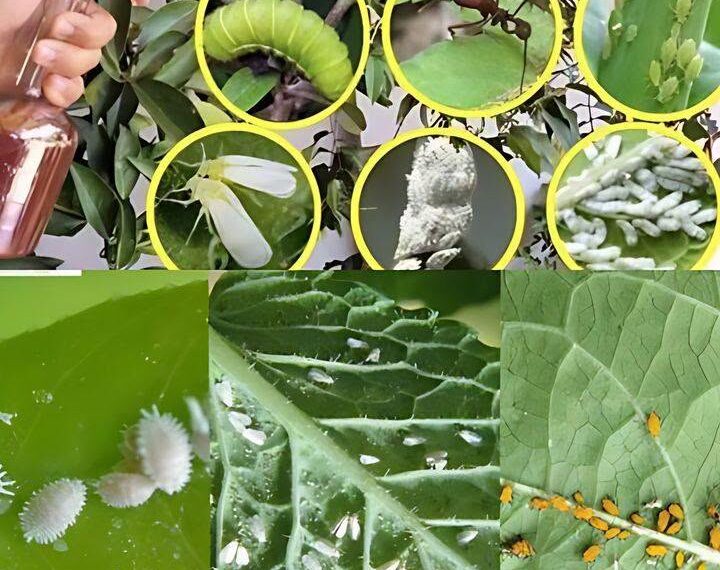
For whiteflies, for example, the undersides of leaves are particularly important.
For caterpillars, inspect both sides of foliage and look for eggs.
For aphids, examine new growth and tender stems.
Targeted treatment is usually better than spraying everything “just in case.”
🛏️ 6. But What About Bed Bugs?
This is where the title requires an important clarification.
Bed bugs are not garden pests, and the same homemade spray used on garden insects should not be considered a reliable bed bug treatment.
If you actually have bed bugs inside your home, the problem requires a different strategy.
The U.S. Environmental Protection Agency recommends an integrated approach because bed bugs can hide in cracks, furniture, mattresses, and other locations, while their eggs can survive many treatment methods.
Useful non-chemical measures can include:
- Washing and drying bedding appropriately
- Using a clothes dryer at high temperatures for suitable items
- Vacuuming carefully
- Using mattress and box-spring encasements
- Placing interceptors beneath furniture legs
- Reducing hiding places
- Monitoring regularly
EPA guidance notes that drying bedding and clothing at high temperatures can kill bed bugs, while simply washing may not be sufficient.
For a significant infestation, professional pest management may be necessary.
⚠️ Never Use Dangerous “Home Remedies” for Bed Bugs
This is especially important.
Do not spray your bedroom with gasoline, kerosene, rubbing alcohol, or other highly flammable substances.
Do not improvise pesticide mixtures.
Do not use outdoor pesticides indoors.
Do not increase the temperature of your home using space heaters or other dangerous heating methods in an attempt to kill bed bugs.
EPA specifically warns that some popular DIY approaches can cause fires, poisoning, or other serious hazards.
If pesticides are necessary, use a product legally registered for bed bug control in your country and follow the label exactly.
🌿 A Better Natural Pest-Control Strategy
Rather than looking for one magical homemade spray, think of pest management as a series of small steps.
Step 1: Identify the insect
Don’t spray before you know what you’re dealing with.
Step 2: Inspect the plant
Look underneath leaves, around stems, and near new growth.
Step 3: Remove what you can manually
Pick off caterpillars, remove badly infested leaves, and wash away small colonies of soft-bodied pests when appropriate.
Step 4: Encourage beneficial insects
Avoid unnecessary broad-spectrum insecticide use.
Ladybugs, lacewings, predatory mites, parasitic wasps, and other beneficial organisms can contribute to natural pest control.
Step 5: Use targeted products when necessary
For garden pests, select a product specifically labeled for the pest and plant.
Step 6: Monitor
Don’t assume that one treatment has solved everything.
Check the plant again after treatment and continue monitoring.
🧪 Why “Natural” Doesn’t Always Mean Harmless
This is another misconception worth addressing.
People sometimes assume that anything made from household ingredients or plants must be completely safe.
That’s not necessarily true.
Natural substances can still burn leaves, harm beneficial insects, irritate skin, or become dangerous when mixed incorrectly.
For example, concentrated oils, strong detergents, vinegar, bleach, or other household chemicals should not be randomly combined and sprayed on plants.
Never mix bleach with other household cleaners.
And don’t increase the concentration of a garden treatment simply because you think a stronger solution will work faster.
More isn’t always better.
🌱 A Safer Homemade Approach: Start With Physical Control
For a home garden, one of the safest first steps is often physical rather than chemical.
Try:
A strong water spray to dislodge certain small pests.
Hand-picking for visible caterpillars.
Removing heavily infested leaves when appropriate.
Pruning affected growth when the plant can tolerate it.
Using insect netting or row covers to prevent certain pests from reaching plants.
These techniques can significantly reduce pest pressure without coating the entire garden in chemicals.
🐛 What Works Best for Each Pest?
| Pest | First approach | Important note |
|---|---|---|
| Caterpillars | Hand-picking, removing egg masses, physical barriers | Inspect leaves regularly |
| Whiteflies | Water spray, monitoring, targeted insecticidal soap where appropriate | Focus on leaf undersides |
| Ants | Find and address the underlying cause | Check plants for aphids/whiteflies |
| Bed bugs | Integrated pest management | Garden sprays are not a reliable solution |
The biggest lesson is that different pests require different strategies.
🌿 The Real Secret to a Pest-Free Garden
The most effective home solution isn’t necessarily a bottle of homemade spray.
It’s prevention plus early detection.
Walk through your garden regularly.
Look closely at new leaves.
Check underneath foliage.
Watch for sticky residue.
Look for holes, eggs, webs, discoloration, and unusual insect activity.
The earlier you detect a problem, the easier it is to control.
And rather than trying to eliminate every insect you see, focus on pests that are actually causing unacceptable damage.
That approach protects your plants while also preserving the beneficial insects that make your garden healthier.
🌱 Final Thoughts
A homemade pest-control solution can sound like the perfect answer: one bottle, one recipe, and every unwanted insect disappears.
Real gardens are more complicated.
Caterpillars, whiteflies, ants, and bed bugs behave differently and should not be treated as if they were the same pest.
For garden insects, start with identification, physical removal, water sprays, good plant care, and targeted treatments when necessary.
For bed bugs, don’t rely on a homemade garden spray. Use a systematic indoor control strategy, monitor carefully, and seek professional help when the infestation is difficult to eliminate. EPA guidance emphasizes that successful bed bug control often requires multiple coordinated methods rather than a single treatment.
The goal isn’t to make your garden completely insect-free.
The goal is to keep harmful pest populations under control while protecting your plants, beneficial insects, family, pets, and the environment.