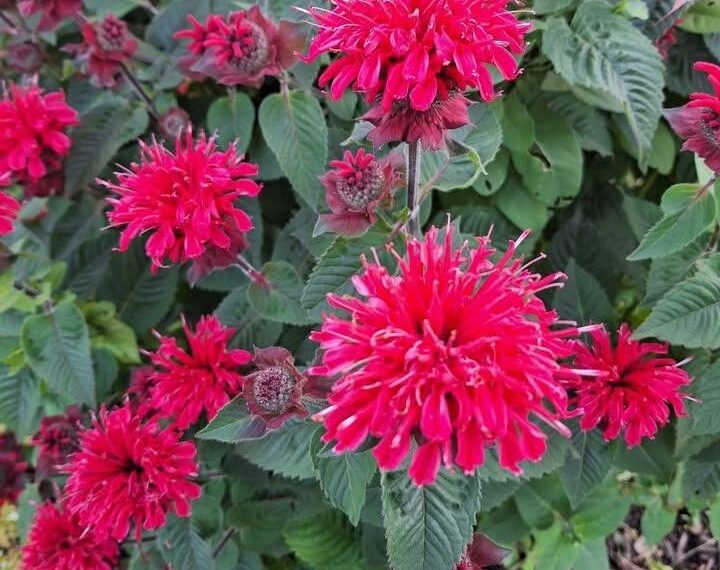
It grows well in:
- Cottage gardens
- Pollinator gardens
- Native landscapes
- Rain gardens
- Borders
- Meadow plantings
Even beginner gardeners usually have success with bee balm.
Growing Conditions
Bee balm performs best when given the right conditions.
Sunlight
Full sun produces the heaviest flowering.
In very hot climates, afternoon shade is beneficial.
Soil
It prefers:
- Moist soil
- Rich organic matter
- Well-drained conditions
However, mature plants tolerate short periods of drought surprisingly well.
Water
Water regularly during the first growing season.
After establishment, watering becomes less frequent except during prolonged dry spells.
A Long-Lived Perennial
Unlike annual flowers that must be replanted every year, bee balm returns each spring.
Healthy clumps can live for many years with minimal care.
Every few years, dividing mature plants helps:
- Maintain vigor
- Reduce overcrowding
- Prevent disease
- Produce free new plants
One purchase can eventually fill an entire garden bed.
It Smells Wonderful
Crush one of the leaves between your fingers.
You’ll notice a pleasant fragrance similar to:
- Mint
- Oregano
- Citrus
- Bergamot
The aromatic oils naturally discourage browsing by deer and rabbits, making bee balm more resistant than many other flowering plants.
It Has a Rich History
Long before modern gardens existed, Indigenous peoples valued bee balm for both culinary and medicinal purposes.
Traditionally, it was used to prepare herbal teas and infusions.
The nickname Oswego Tea originated after American colonists began drinking bee balm tea during periods when imported tea was unavailable.
Today, many gardeners still enjoy brewing herbal tea from pesticide-free leaves, although it should always be properly identified and prepared.
Excellent Companion Plant
Bee balm pairs beautifully with many other native perennials, including:
- Black-eyed Susan
- Purple Coneflower
- Blazing Star
- Coreopsis
- Joe-Pye Weed
- Asters
- Phlox
- Milkweed
Together, these plants create a garden that blooms continuously while supporting pollinators throughout the growing season.
Common Problems
Like any plant, bee balm has a few challenges.
Powdery Mildew
This is the most common issue.
Fortunately, it rarely kills the plant.
To reduce mildew:
- Space plants properly.
- Improve air circulation.
- Water at the base rather than overhead.
- Choose mildew-resistant cultivars.
Spreading Habit
Because bee balm spreads by underground rhizomes, it can gradually expand.
Some gardeners appreciate this natural growth.
Others divide plants every few years to keep them contained.
How to Keep Bee Balm Blooming
For the biggest display of flowers:
✔ Plant in full sun.
✔ Water during dry periods.
✔ Remove faded flowers.
✔ Divide crowded clumps every 3–5 years.
✔ Add compost each spring.
These simple practices encourage vigorous growth and abundant blooms.
Why Wildlife Loves It
After flowering, bee balm continues to benefit the garden.
Its seed heads provide food for birds, while the dense foliage offers shelter for beneficial insects.
Instead of removing plants immediately in autumn, many gardeners leave the stems standing through winter to support overwintering insects and provide additional habitat.
Is Bee Balm Right for Your Garden?
If you’re looking for a perennial that combines beauty, ecological value, and ease of care, bee balm is difficult to beat.
It offers:
- Spectacular summer flowers
- Reliable year-after-year performance
- Exceptional pollinator support
- Hummingbird attraction
- Pleasant fragrance
- Native biodiversity benefits
- Low maintenance once established
Whether you have a large country garden or a small backyard flower bed, bee balm can become one of the most rewarding plants you grow.
Final Thoughts
Every garden has the potential to become more than just a collection of beautiful plants—it can become a thriving ecosystem. Bee balm proves that a single native perennial can provide vibrant color, support pollinators, attract hummingbirds, and bring life to your landscape all summer long.
If you’re planning your next garden project, consider adding this spectacular native perennial. Not only will you enjoy its brilliant blooms, but you’ll also be helping bees, butterflies, birds, and countless other beneficial creatures that depend on native plants. Sometimes, the most beautiful flowers are also the ones that give back the most.