3. Why Were M&M’s Originally Made for Soldiers?
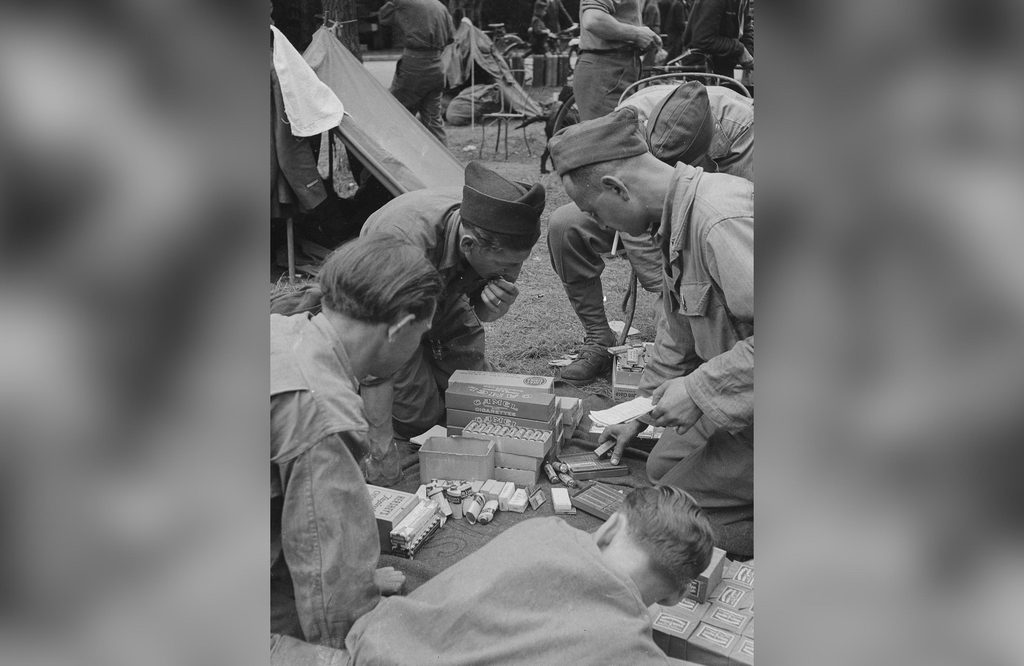
One of the most surprising facts about M&M’s is that they were not originally created as a Halloween treat or a cinema snack.
They were developed with military use in mind.
During World War II, soldiers needed food that was convenient to transport and could withstand difficult conditions. Ordinary chocolate was not always practical because it could melt in warm weather.
M&M’s offered a clever solution.
Their hard sugar coating protected the chocolate inside, making the candies easier to carry and store.
Production began in Newark, New Jersey, in 1941, and the candies were initially supplied almost exclusively to the American military.
They were originally sold in cardboard tubes rather than the familiar colorful packets we see today. Mars Global+2
This is why the famous candy has a connection to military history that many modern consumers never realize.
4. What Does the M Printed on Each Candy Mean?
Here is another interesting detail: the two M’s in the brand name are not the same thing as the small letter printed on each individual candy.
The company introduced the famous printed letter in 1950.
At the time, M&M’s had become popular, and the company wanted consumers to be able to distinguish its genuine candies from imitations.
The solution was simple: print a small letter “m” on every piece.
Initially, the letter was black. In 1954, it was changed to white, giving the candies the familiar appearance many people recognize today.
The company even used the slogan “Look for the m on every piece.” M&M’S+1
So the next time you eat an M&M, take a closer look. That tiny letter is part of the candy’s identity and history.
5. How Did M&M’s Become So Popular?
After World War II, M&M’s became available to the general public and gradually developed into one of the world’s best-known chocolate candies.
Several factors helped the brand grow:
Convenient packaging: Small packets made the candies easy to carry, share, and store.
The colorful appearance: Different candy colors made the product attractive to children and adults.
The hard outer shell: It helped protect the chocolate and made the candies convenient for everyday snacking.
Advertising: Memorable campaigns and recognizable characters helped make the brand part of popular culture.
New varieties: The company expanded beyond the original chocolate candies, introducing peanut M&M’s in 1954 and many other varieties over the following decades. M&M’S+1
Today, M&M’s are enjoyed in many countries and are used in everything from cookies and brownies to ice cream and party decorations.
6. Why Are M&M’s So Popular During Halloween?
Halloween is one of the occasions when colorful candy becomes especially popular.
M&M’s fit perfectly into the Halloween tradition because they are:
- Small and easy to distribute.
- Convenient to share with trick-or-treaters.
- Available in colorful varieties.
- Easy to use in themed desserts.
- Popular with both children and adults.
Their bright colors also make them useful for decorating Halloween cupcakes, cookies, brownies, and party treats.
You can even use orange, brown, yellow, and other seasonal colors to create festive desserts.
However, if you are handing out candy to children, remember to keep the original packaging and check allergy information. Some varieties contain peanuts, milk, or other allergens.
7. Fun M&M’s Facts You Probably Didn’t Know
Now that you know what the two M’s mean, here are some additional facts that make the candy even more interesting.
1. M&M’s were introduced in 1941.
The original plain chocolate candies entered production in Newark, New Jersey, during World War II.
2. The original packaging was different.
The first candies were sold in cardboard tubes rather than the familiar plastic bags.
3. The printed M arrived later.
The small letter on each candy was introduced in 1950, several years after the product itself.
4. Peanut M&M’s came in 1954.
This was one of the first major variations on the original chocolate candy.
5. M&M’s have been to space.
In 1981, M&M’s were included in the food supply for NASA’s first space shuttle mission, making them one of the memorable snacks associated with space travel. M&M’S+1
6. The company has experimented with many colors.
The familiar assortment has changed over the years, and different colors have been introduced, discontinued, or brought back.
7. The name is connected to two real people.
Unlike many brand names that are invented for marketing purposes, M&M’s has a name rooted in the surnames of its original business partners.
8. A Simple Answer You Can Give Your Child
If your child asks what the two M’s stand for, you can give them this simple explanation:
“The first M stands for Mars, the last name of Forrest Mars, who helped create the candy. The second M stands for Murrie, the last name of his business partner Bruce Murrie. They joined forces to make the chocolate candies we know today as M&M’s!”
And if they ask why the candies have a hard shell, you can tell them that it was originally designed to help protect the chocolate from melting, making the candies easier to transport.
It’s a little history lesson hidden inside a packet of chocolate!
Frequently Asked Questions
1. What does M&M stand for?
M&M stands for Mars and Murrie, the surnames of Forrest Mars Sr. and Bruce Murrie, the original business partners behind the candy.
2. Who invented M&M’s?
Forrest Mars Sr. developed the product concept and partnered with R. Bruce Murrie to establish the business that produced the candies.
3. When were M&M’s first made?
M&M’s were introduced in 1941 in Newark, New Jersey, in the United States.
4. Were M&M’s originally made for Halloween?
No. They were initially developed as a convenient chocolate snack for military personnel during World War II.
5. Why do M&M’s have a hard shell?
The hard sugar coating helps protect the chocolate inside and makes the candy easier to transport and handle.
6. When did M&M’s start printing an M on each candy?
The company introduced the printed letter in 1950. It was originally black and changed to white in 1954.
7. When were peanut M&M’s introduced?
Peanut M&M’s were introduced in 1954.
Final Thoughts: A Little Candy With a Big History
It is funny how something as ordinary as a packet of candy can hide such an interesting story.
For years, millions of people have enjoyed M&M’s without thinking twice about the meaning of their name. But those two little letters represent the surnames of two businessmen whose partnership helped create one of the world’s most recognizable chocolate treats.
The next time you are shopping for Halloween candy, watching a movie, or baking cookies with M&M’s, you will know the story behind the name.
Mars and Murrie. Two surnames, two business partners, and one candy that became famous around the world.
And perhaps the best part is that a simple question from a curious child can teach the whole family something new!