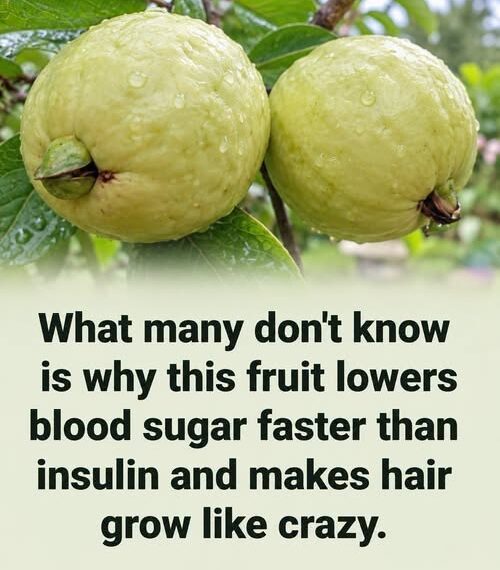
Guava is a tropical fruit that has attracted considerable attention for its nutritional value and its potential role in supporting healthy blood sugar levels. With its naturally sweet flavor, abundant fiber, vitamin C, antioxidants, and plant compounds, guava can be a useful addition to a balanced diet.
The image associated with this topic makes a strong claim that guava can “lower blood sugar faster than insulin” and make hair “grow like crazy.” However, these statements are misleading and are not supported by good clinical evidence. Guava may help support healthy glucose regulation, but it is not a replacement for insulin or diabetes medication, and there is no reliable evidence that eating guava dramatically accelerates hair growth.
What the research does suggest is much more interesting: guava may have properties that can help moderate the rise in blood glucose after eating, particularly because of its fiber content and certain plant compounds.
Why Guava Is Interesting for Blood Sugar Management
Guava, scientifically known as Psidium guajava, is a nutrient-dense fruit that provides relatively substantial dietary fiber compared with many commonly eaten fruits.
Fiber is particularly important when discussing blood glucose. Unlike foods containing rapidly digested carbohydrates, fiber can slow the movement and digestion of food through the digestive tract. This can influence how quickly glucose becomes available in the bloodstream.
Research comparing different fruits has found that guava produces a relatively low glycemic response. In one randomized crossover study involving healthy adults, whole guava had a glycemic index of approximately 29, while guava puree had a GI of approximately 47. Both were substantially lower than the glucose reference used in the study.
This does not mean that guava “lowers blood sugar” in the same way medication does. Rather, it means that consuming guava can result in a more gradual rise in blood glucose than consuming an equivalent reference amount of rapidly available glucose.
The Importance of Guava’s Fiber
One of guava’s most interesting nutritional characteristics is its fiber content.
A cup of raw guava provides roughly 9 grams of dietary fiber, along with substantial amounts of vitamin C and other nutrients.
Dietary fiber can contribute to better blood sugar management in several ways.
First, fiber can slow the digestion and absorption of carbohydrates. This may reduce the speed at which glucose enters the bloodstream after a meal.
Second, fiber contributes to fullness. Feeling satisfied after eating can make it easier to avoid excessive snacking and large portions, which can indirectly support healthier blood glucose levels.
Third, diets containing adequate fiber are generally associated with better overall metabolic health.
This is one reason why eating whole guava can be more beneficial than drinking sweetened guava juice. Juice removes much of the fruit’s physical structure and can make it easier to consume a large amount of sugar and calories quickly.
Can Guava Actually Reduce Blood Sugar?
There is some human research suggesting that guava or guava-derived preparations may influence glucose responses, but the evidence needs to be interpreted carefully.
A randomized clinical study examined a guava fruit extract in 31 adults. Participants consuming the extract alongside glucose experienced a significantly smaller rise in post-meal blood glucose at certain time points compared with the control condition. The researchers proposed that the extract could interfere with intestinal glucose absorption.
Another randomized study examined ripe guava consumption in healthy adults over six weeks. The researchers found some favorable changes in the group consuming guava pulp without the peel, but the decrease in fasting plasma glucose was not statistically significant. Interestingly, the group consuming guava with the peel actually experienced an increase in fasting glucose in that particular study.
This is important because it demonstrates why social-media claims about guava should not be taken literally.
The evidence does not justify saying:
“Guava lowers blood sugar faster than insulin.”
Insulin is a hormone that plays a fundamental role in glucose regulation, and prescribed insulin can be essential for people with certain forms of diabetes. Guava cannot replace it.
A more accurate statement would be:
“Guava is a fiber-rich, relatively low-glycemic fruit that may help support a healthier post-meal blood glucose response when included as part of a balanced diet.”
Guava Fruit vs. Guava Leaves
Another important distinction is between guava fruit and guava leaves.
Much of the research surrounding blood sugar has actually focused on guava leaves rather than the fruit itself.
Guava leaves contain compounds such as flavonoids and other polyphenols that have been investigated for their potential effects on carbohydrate digestion and glucose metabolism. Laboratory research has suggested that guava leaf extracts can inhibit enzymes involved in carbohydrate digestion, including alpha-glucosidase.
More recent reviews have continued to investigate guava leaves and their potential glucose-lowering effects, although researchers emphasize that more high-quality clinical evidence is necessary before these preparations can be considered a treatment for diabetes.
This distinction matters because evidence about guava leaf extract cannot automatically be applied to eating an ordinary guava fruit.
Could Guava Help Reduce Blood Sugar Spikes After Meals?
TO CONTINUE READING THE ARTICLE PLEASE SEE PAGE 2