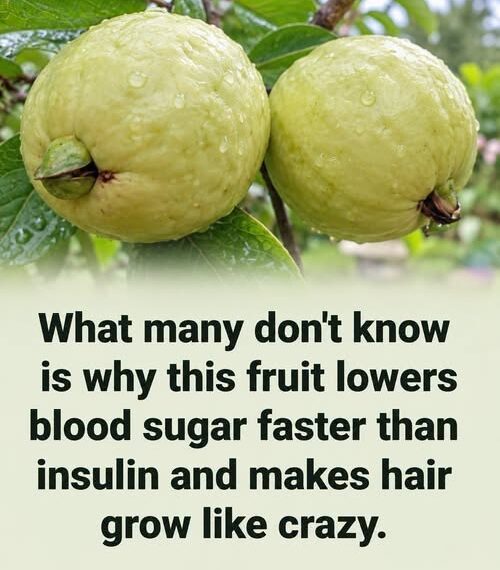
Could Guava Help Reduce Blood Sugar Spikes After Meals?
This is perhaps the most reasonable area of interest.
Blood glucose naturally rises after eating carbohydrates. The size and speed of that increase depend on many factors, including:
- The amount of carbohydrate consumed
- The type of carbohydrate
- Fiber content
- Food processing
- Portion size
- Physical activity
- Insulin sensitivity
- Individual metabolism
- What other foods are eaten at the same meal
Because guava contains fiber and has a relatively low glycemic response, eating whole guava may produce a more moderate glucose response than consuming foods containing rapidly absorbed carbohydrates.
A particularly interesting clinical study found that guava fruit extract reduced the post-meal glucose response compared with glucose alone. However, this involved a specific concentrated extract, not simply eating one ordinary guava.
Therefore, it would be inappropriate to assume that eating guava produces the same effect as the extract used in that research.
Why Whole Guava Is Generally Preferable to Guava Juice
If your goal is to include guava in a blood-sugar-conscious diet, whole fruit is generally the more sensible choice.
Whole guava provides:
- Dietary fiber
- Vitamin C
- Plant polyphenols
- Carotenoids
- Water
- Naturally occurring carbohydrates
- A satisfying texture that requires chewing
Juicing can dramatically change the way a fruit is consumed. A person can easily drink the juice from several fruits without experiencing the same level of fullness produced by eating the whole fruit.
Commercial guava drinks can be an even bigger concern because some contain added sugar.
For people concerned about blood glucose, unsweetened whole guava is a very different food from a sugar-sweetened guava beverage.
What About Guava and Insulin Sensitivity?
It is tempting to say that guava “improves insulin sensitivity,” but the human evidence is not yet strong enough to make such a sweeping claim.
Guava contains antioxidants and polyphenolic compounds that have been investigated for their possible effects on oxidative stress, inflammation, carbohydrate digestion, and metabolic processes.
These mechanisms are biologically interesting, but laboratory findings do not automatically mean that eating guava produces a clinically meaningful improvement in insulin sensitivity.
This distinction is particularly important when discussing diabetes.
A food can be nutritious and potentially beneficial without being a treatment.
Guava and Weight Management
Guava may also fit well into a diet designed to support a healthy body weight.
Its fiber and water content can contribute to satiety, while the whole fruit provides fewer calories per volume than many highly processed desserts and snacks.
Maintaining a healthy weight can be important for metabolic health because excess body fat, particularly around the abdomen, is associated with increased insulin resistance in many people.
However, guava itself should not be described as a “fat-burning” food.
Successful weight management still depends on the overall dietary pattern, physical activity, sleep, calorie intake, and many other factors.
Does Guava Make Hair Grow Faster?
The image also claims that guava makes hair “grow like crazy.”
There is not sufficient clinical evidence to support this claim.
However, guava does contain nutrients that are relevant to normal health. Vitamin C, for example, plays an important role in collagen formation and also helps the body absorb iron from plant foods.
Adequate intake of protein, iron, zinc, vitamin D, B vitamins, and other nutrients is important for maintaining normal hair growth. A diet that is severely deficient in essential nutrients can contribute to hair problems.
But eating guava does not appear to act as a powerful hair-growth treatment.
It is therefore better to think of guava as one nutritious component of a healthy diet, rather than a miracle solution for hair loss or slow-growing hair.
Antioxidants in Guava
One of guava’s strongest nutritional features is its antioxidant content.
Guava is particularly rich in vitamin C and also contains various plant compounds, including flavonoids, carotenoids, and phenolic compounds.
Antioxidants help protect cells from oxidative damage caused by reactive molecules.
Oxidative stress is involved in numerous biological processes, and researchers are studying the relationship between oxidative stress, inflammation, insulin resistance, and metabolic disease.
This does not mean that guava can prevent or cure diabetes. Instead, it demonstrates why nutrient-rich fruits such as guava can have a valuable place in an overall healthy eating pattern.
How to Eat Guava for a Balanced Diet
For most people, guava can be enjoyed simply as a whole fruit.
Try:
Fresh guava as a snack
Wash the fruit thoroughly, slice it, and eat it whole. Depending on the variety, the seeds can be eaten as well, although some people prefer to remove them.
Guava with plain yogurt
Combining guava with unsweetened Greek yogurt provides fiber and carbohydrates from the fruit together with protein from the yogurt.
Guava with nuts
A small serving of guava paired with almonds, walnuts, or another unsalted nut can provide a combination of fiber, healthy fats, and protein.
Guava in a fruit bowl
Combine guava with other whole fruits rather than turning it into a sugar-sweetened smoothie or juice.
Avoid heavily sweetened guava products
Guava jams, syrups, sweetened juices, desserts, and canned products can contain considerable amounts of added sugar.
The health characteristics of the final product depend heavily on how the fruit has been prepared.
How Much Guava Should You Eat?
There is no universally established “diabetes dose” of guava.
A reasonable approach is to treat it like other fruits and pay attention to portion size and your overall carbohydrate intake.
For someone with diabetes, the amount that works best can depend on medications, glucose control, activity level, and the rest of the meal.
If you monitor your blood glucose, you can also observe how your body responds to different portions of fruit.
Individual responses can vary considerably.
Important Precautions for People With Diabetes
Guava can be part of a healthy diet, but people taking diabetes medication should not use guava as a substitute for prescribed treatment.
This is especially important for people taking insulin or medications that can cause hypoglycemia.
Guava fruit itself is a normal food, whereas concentrated guava leaf extracts, teas, and supplements are different preparations. Their doses and concentrations can vary, and interactions with medications are not as well established.
Research on guava leaf preparations remains promising but also contains uncertainties regarding preparation, dosage, study populations, and long-term safety.
Anyone with diabetes who wants to regularly use concentrated guava leaf products should discuss this with a healthcare professional rather than changing medication independently.
The Bottom Line
Guava deserves attention, but not because it is a miracle fruit.
Its real strengths are much more practical: it is a nutrient-dense fruit containing fiber, vitamin C, antioxidants, and other beneficial plant compounds, while whole guava appears to have a relatively low glycemic response.
Research also suggests that certain guava extracts may reduce the rise in blood glucose following carbohydrate consumption, although the evidence is still developing and some studies have produced mixed findings.
So the viral claim that guava “lowers blood sugar faster than insulin” should not be repeated as a medical fact. Guava does not replace insulin, diabetes medication, or medical treatment.
Instead, the more evidence-based message is simple:
Adding whole guava to a balanced diet may be a smart way to increase fiber and micronutrient intake while choosing a fruit that generally produces a relatively modest blood glucose response.
And while guava can contribute valuable nutrients to a diet that supports healthy skin and hair, there is currently no good evidence that it makes hair grow dramatically faster.
In other words, guava is worth eating—not because it is a miracle cure, but because it is a genuinely nutritious fruit that can fit very well into a blood-sugar-conscious eating pattern.