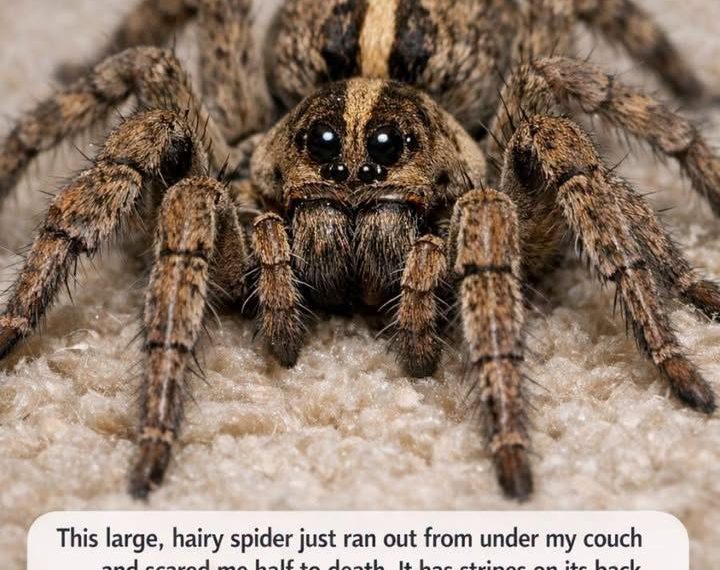
5. What should you do if you find one underneath your couch?

The first thing to do is remain calm.
If you have cats, dogs, or small children, keep them away from the area until the spider has been safely removed.
Here is a practical approach:
Step 1: Keep your pets away.
Move your pets into another room and close the door if possible. This prevents them from trying to catch or investigate the spider.
Step 2: Avoid touching the spider.
Do not attempt to pick it up with your bare hands. Even a spider that is not medically dangerous can bite if squeezed or handled roughly.
Step 3: Use a container and a piece of cardboard.
If the spider is visible and you can approach it safely, place a sufficiently large transparent container over it.
Carefully slide a stiff piece of cardboard underneath the container, keeping your hands away from the spider.
Step 4: Release it outside.
Take the container outdoors and release the spider away from the entrance to your home, following local wildlife and safety considerations.
If you cannot reach it safely, or you suspect it may be a medically important species, contact a pest-control professional.
Step 5: Inspect the surrounding area.
Check underneath the couch, behind furniture, around baseboards, and near windows for other spiders or insects.
Avoid spraying insecticides indiscriminately around pets. Some household pest-control products can be toxic to cats and dogs.
6. Could there be more spiders hiding nearby?
This is another question that often worries homeowners.
Some female wolf spiders have a fascinating reproductive behavior: they carry their egg sacs attached to the back of their bodies.
When the eggs hatch, the tiny spiderlings climb onto their mother’s abdomen and remain there for a period of time.
Seeing a female carrying dozens of baby spiders can certainly be alarming!
However, this does not mean that your home is infested.
Wolf spiders are generally solitary hunters. Finding one wandering around your living room does not automatically indicate that there are dozens more hiding in the walls or furniture.
Nevertheless, if you repeatedly encounter spiders, it is worth inspecting your home and reducing the conditions that attract insects and provide hiding places. apps.extension.umn.edu+2
7. How to prevent large spiders from entering your home
If the thought of finding another large, hairy spider underneath your couch makes you uncomfortable, there are several practical steps you can take.
1. Seal gaps around doors and windows
Inspect the bottom of exterior doors and the edges of windows. Install suitable door sweeps and repair damaged screens.
2. Keep your home free of insects
Spiders enter buildings partly because they are searching for food. Reducing flies, mosquitoes, cockroaches, and other insects can make your home less attractive to hunting spiders.
3. Vacuum underneath furniture regularly
Dust, debris, and undisturbed spaces can provide hiding places. Move your furniture occasionally and clean underneath sofas, beds, and cabinets.
4. Avoid leaving shoes and clothes on the floor
Always check shoes, clothing, blankets, and storage boxes that have been left undisturbed, especially if they are kept in dark areas.
5. Keep outdoor areas tidy
Remove unnecessary piles of wood, leaves, cardboard, and other debris near exterior walls. These materials can provide shelter for spiders and the insects they hunt.
6. Check openings around pipes and cables
Small gaps around plumbing, electrical installations, and ventilation openings can provide entry points. Seal suitable gaps without blocking necessary ventilation.
These measures are recommended in integrated pest-management guidance for reducing spiders around homes. USU+1
8. Are wolf spiders actually beneficial?
Surprisingly, yes!
Although most people would rather not share their living room with a large spider, wolf spiders play an important role in the natural environment.
They help control populations of insects and other small invertebrates.
Their diet may include:
- Flies.
- Mosquitoes.
- Small cockroaches.
- Crickets.
- Other small spiders.
- Various garden insects.
Because they hunt rather than relying on webs to catch their prey, they can help reduce certain insect populations around gardens and outdoor spaces.
This is one reason why experts generally recommend relocating harmless spiders instead of automatically killing them.
A spider that looks frightening may actually be helping maintain the natural balance around your property. USU+2
9. When should you be concerned about a spider bite?
Although wolf spiders are generally not considered a serious threat, pet owners should know when to seek professional help.
If you suspect your cat or dog has been bitten, observe the animal carefully.
Contact your veterinarian if you notice:
- Sudden swelling or significant pain.
- Persistent licking or biting at one particular area.
- Unusual restlessness or discomfort.
- Vomiting or excessive drooling.
- Muscle tremors or weakness.
- Difficulty walking.
- Difficulty breathing or collapse.
Severe neurological symptoms or breathing difficulties require emergency veterinary attention.
If possible, take a photograph of the spider from a safe distance. This may help a pest specialist or qualified expert identify the species.
Never try to capture a potentially dangerous spider with your bare hands just to identify it.
Also, do not apply household chemicals, essential oils, or human medications to a suspected bite without veterinary advice.
The Merck Veterinary Manual explains that only a relatively small proportion of the world’s spider species are capable of causing medically significant problems in animals, but identifying the species and assessing the symptoms are important. Merck Veterinary Manual
10. The biggest misconception about large, hairy spiders
Many people believe that the larger a spider is, the more dangerous it must be.
This is simply not true.
Size, hairiness, speed, and frightening appearance are not reliable ways to determine how dangerous a spider is.
Some relatively small spiders can have medically important venom, while some impressively large spiders pose little risk to humans or household pets.
The spider in the photograph looks intimidating, but its appearance alone cannot establish whether it is a wolf spider or another species.
The safest approach is to avoid handling unfamiliar spiders, keep pets away, and arrange professional identification if there is any doubt.
Final thoughts: Should you be worried if you find this spider in your home?
Finding a large, hairy spider running out from underneath your couch is certainly not something most people want to experience!
However, there is no reason to panic simply because a spider looks frightening.
The spider pictured may be a wolf spider, a ground-hunting species that generally avoids humans and is not considered medically dangerous to pets.
If you discover one in your home, keep your animals away, remove it safely if possible, and inspect potential entry points to prevent future encounters.
Remember that spiders also play an important role in controlling insects, so relocating a harmless visitor is often a better solution than killing it.
And now, one important question for pet owners:
Have you ever found a large, hairy spider hiding underneath your couch, bed, or furniture? Did your cat or dog try to chase it?
Share your experience in the comments. You might help another pet owner know what to do the next time one of these unexpected visitors appears!