When Should You Worry?
Although the jelly is normal, there are certain warning signs that indicate the product may have spoiled.
Do not eat the Spam if you notice:
A Bulging Can
A swollen can may indicate gas production from bacterial growth.
Leaking or Rust Damage
Deep rust or leaks can compromise the seal.
Foul Odor
Fresh Spam has a salty, cooked meat smell. A sour or rotten odor is a warning sign.
Strange Colors
Gray, green, black, or unusual discoloration can indicate spoilage.
Excessive Foaming
If liquid bubbles aggressively upon opening, discard the can.
Why Is the Jelly Sometimes Clear and Sometimes Cloudy?
The appearance of the jelly can vary depending on:
- Storage temperature
- Fat content
- Production batch
- Age of the product
A can stored in a cooler place may have firmer jelly, while warmer temperatures can make it softer or more liquid.
Both are generally normal if the product remains within its expiration date.
How Long Does Spam Last?
One reason Spam is so popular worldwide is its impressive shelf life.
An unopened can can last for years when stored:
- In a cool, dry place
- Away from direct sunlight
- Below extreme temperatures
Always check the best-by date, though canned foods often remain safe beyond that date if the can remains undamaged.
What Happens During the Canning Process?
The canning process creates a vacuum seal that prevents bacteria from entering.
Inside the can:
- Meat cooks under pressure
- Air is removed
- The contents become commercially sterile
This is why canned foods can remain shelf-stable for long periods without refrigeration.
The jelly forms naturally as proteins cool after processing.
Is the Jelly Unique to Spam?
Not at all.
Many canned meat products contain similar gelatin, including:
- Ham
- Corned beef
- Chicken
- Pâté
- Meat spreads
You may even notice a similar effect in homemade bone broth or slow-cooked meats.
Can You Cook with the Jelly?
Absolutely.
Some people leave the jelly attached when frying Spam because it melts during cooking and can add flavor.
Others prefer to rinse it off before slicing.
Popular ways to prepare Spam include:
- Pan-frying
- Grilling
- Sandwiches
- Fried rice
- Breakfast dishes
- Musubi
The choice comes down to personal preference.
A Quick Safety Checklist
Before eating canned Spam, ask yourself:
| Question | Safe Sign |
|---|---|
| Is the can bulging? | No |
| Is there a bad smell? | No |
| Is the color normal? | Yes |
| Is the seal intact? | Yes |
| Is the jelly clear or slightly cloudy? | Normal |
If all answers point to normal conditions, the product is generally safe to eat.
Final Verdict: Normal or Bad?
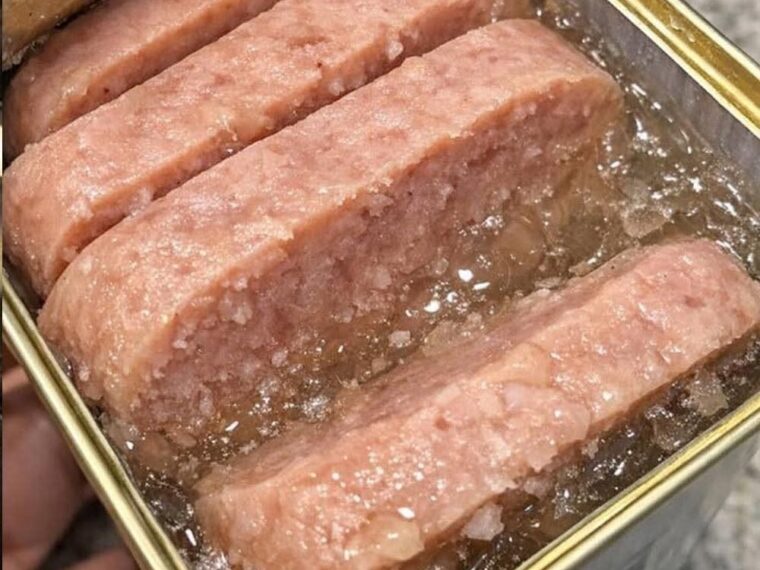
Based on the image, the clear jelly surrounding the Spam appears to be the natural gelatin that commonly forms during the canning process. This is typically normal and not a sign of spoilage.
As long as the can was not damaged, swollen, leaking, or foul-smelling, the product is likely safe to consume.
Sometimes the strangest-looking things in food are simply science at work. In this case, that mysterious jelly is usually just a reminder of how canned foods preserve flavor, moisture, and shelf life.