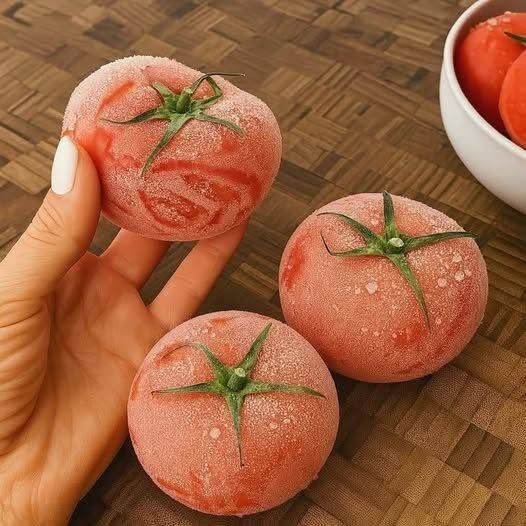
Follow these simple steps
- Wash the tomatoes under running water and remove the stems.
- Cut them into quarters or small chunks using a clean knife.
- Decide whether to keep the seeds and juice. Both can generally be retained for cooked dishes.
- Divide the pieces into small freezer-safe containers or bags.
- Flatten the bags gently so they stack neatly in the freezer.
- Label each package with the date and approximate quantity.
For extra convenience, freeze the chopped tomatoes in portions corresponding to your usual recipes.
For example, you could prepare small packages for one pot of soup, medium packages for pasta sauce, and larger packages for family-sized stews.
Remember that chopped tomatoes release liquid as they thaw. If you prefer a thicker sauce, you can simmer the tomatoes uncovered to allow some of that moisture to evaporate.
Best use: quick weekday dinners, vegetable soups, pasta sauces, and casseroles.
6. Method Four: Freeze Tomato Sauce in Portions

One of the most practical ways to preserve tomatoes is to turn them into sauce before freezing.
This is particularly useful if you have a large harvest or want to reduce the amount of preparation required when cooking later.
Ingredients
- 1 kg ripe tomatoes.
- 1 small onion, optional.
- 1–2 garlic cloves, optional.
- A little olive oil, optional.
- Herbs such as basil or oregano, optional.
- Salt and pepper, according to taste.
Preparation
Step 1: Wash and chop the tomatoes.
Remove the stems and cut the tomatoes into pieces.
Step 2: Cook the ingredients.
If using onion and garlic, soften them in a small amount of olive oil. Add the tomatoes and stir.
Step 3: Simmer the sauce.
Cook gently for approximately 20–40 minutes, depending on the tomatoes’ water content and your preferred consistency. Stir occasionally to prevent sticking.
Step 4: Season to taste.
You can add herbs and seasoning, but you may prefer to leave the sauce relatively plain so you can adapt it to different recipes later.
Step 5: Cool safely.
Divide the sauce into shallow containers to help it cool more quickly. Refrigerate promptly rather than leaving it at room temperature for an extended period.
Step 6: Package and freeze.
Once cooled, transfer the sauce to suitable freezer-safe containers, leaving headspace for expansion. Label and date each portion.
For safety, refrigerate perishable cooked food within two hours of cooking, or within one hour when the surrounding temperature exceeds 32°C (90°F).
A useful money-saving trick
Freeze the sauce in quantities that match your household’s needs. Small portions are convenient for one or two people, while larger containers may work better for family meals.
This reduces waste because you only thaw what you intend to use.
7. Method Five: Freeze Cherry Tomatoes for Roasting and Cooking

Cherry tomatoes are easy to preserve because they are small and do not require chopping.
You can freeze them raw, but you can also roast them first if you enjoy a deeper, sweeter flavor.
Option A: Freeze them raw
- Wash and dry the cherry tomatoes.
- Remove the stems.
- Arrange them in a single layer on a freezer-safe tray.
- Freeze until firm.
- Transfer them to a labeled freezer bag.
When you need them, add the frozen tomatoes directly to a hot pan, soup, or sauce.
Option B: Roast them before freezing
- Preheat your oven to approximately 200°C (400°F).
- Wash and dry the tomatoes.
- Place them on a baking tray with a small amount of olive oil.
- Add garlic or herbs if desired.
- Roast until softened and lightly caramelized, usually around 20–30 minutes, depending on their size.
- Cool promptly and safely in shallow portions.
- Package and freeze once cooled.
Roasted tomatoes can add concentrated flavor to sauces, pasta, soups, and grain dishes.
Because the tomatoes are already cooked, they can make a future meal quicker to prepare. However, freezing them does not make them inherently healthier or guarantee a better flavor than fresh tomatoes.
8. How Long Can You Keep Tomatoes in the Freezer?

For the best flavor and texture, use frozen tomatoes within approximately 8–12 months when stored continuously at 0°F (-18°C) or below.
This is a quality guideline rather than a strict safety deadline. Food kept continuously frozen at that temperature can remain safe longer, although its flavor and texture may deteriorate.
| Tomato preparation | Suggested quality guideline |
|---|---|
| Whole raw tomatoes | 8–12 months |
| Chopped raw tomatoes | 8–12 months |
| Peeled tomatoes | 8–12 months |
| Homemade tomato sauce | Around 3–6 months for best quality |
Actual quality depends on packaging, freezer temperature, ingredients, and how much air remains in the container. Sauces containing other ingredients may have different quality characteristics.
Tips for keeping frozen tomatoes in good condition
- Use freezer-safe bags or airtight containers.
- Remove excess air where practical.
- Label every package with the contents and date.
- Keep the freezer at a steady temperature.
- Avoid repeatedly thawing and refreezing the same portion.
- Store the packages where they will not be crushed or punctured.
If the tomatoes develop freezer burn, they may still be safe to eat if they have remained continuously frozen, but their flavor and texture may be poorer.
9. Should You Thaw Frozen Tomatoes Before Cooking?

The good news is that you usually do not need to thaw tomatoes before adding them to cooked dishes.
Your choice depends on the recipe.
- Soups and stews: Add frozen tomatoes directly to the pot and allow them to heat thoroughly.
- Pasta sauce: Add them to the saucepan and simmer until they soften and release their juices.
- Casseroles: Add chopped frozen tomatoes according to the recipe, allowing sufficient cooking time.
- Recipes requiring peeled tomatoes: Thaw whole frozen tomatoes just enough for the skins to loosen, then remove them.
- Cold salads: Frozen tomatoes are generally unsuitable because thawing makes them soft and watery.
If you prefer to thaw your tomatoes first, place them in a container in the refrigerator. Do not leave them on the kitchen counter for hours to thaw.
Frozen tomatoes may release considerable liquid after thawing. Drain some of it if necessary, or incorporate it into your recipe to retain flavor.
10. Seven Common Mistakes to Avoid When Freezing Tomatoes

Even though freezing tomatoes is straightforward, a few mistakes can affect their quality.
Mistake 1: Freezing spoiled tomatoes. Freezing does not reverse spoilage or reliably eliminate harmful microorganisms. Start with tomatoes that are suitable for eating.
Mistake 2: Forgetting to wash them. Rinse tomatoes under running water before cutting or freezing them. Do not use soap.
Mistake 3: Packing them while wet. Excess surface moisture can contribute to ice buildup and make tomatoes stick together.
Mistake 4: Using unsuitable containers. Ordinary thin bags may tear, while containers filled to the brim may split as their contents expand. Choose packaging intended for freezer storage.
Mistake 5: Forgetting labels. Frozen tomatoes can be difficult to distinguish from other frozen ingredients. Record the contents and date.
Mistake 6: Expecting fresh tomato texture after thawing. Freezing damages the tomato’s structure. Plan to use thawed tomatoes in cooked dishes rather than expecting them to remain firm.
Mistake 7: Thawing too much at once. Freeze tomatoes in portions that suit your recipes so you can avoid unnecessary waste.
11. Five Delicious Ways to Use Your Frozen Tomatoes


Once you have a supply of frozen tomatoes, there are many ways to use them.
1. Homemade tomato pasta sauce
Cook frozen tomatoes with garlic, onion, olive oil, and herbs. Simmer until the sauce thickens, then serve over pasta.
2. Warming tomato soup
Add frozen tomatoes to a saucepan with onion, vegetable stock, and seasoning. Simmer until tender, then blend until smooth if desired.
3. Moroccan-style tagine
Frozen tomatoes work well in many cooked tagines. Add them to the pot with onions, spices, vegetables, or meat, following your usual recipe.
4. Tomato and chickpea curry
Cook onions and spices, add tomatoes and chickpeas, and simmer until the flavors combine. Serve with rice or bread.
5. Homemade pizza sauce
Simmer frozen tomatoes until much of the excess moisture evaporates. Season with garlic and oregano, then allow the sauce to cool before spreading it on pizza dough.
These dishes are particularly useful when fresh tomatoes are expensive or unavailable.
12. Frequently Asked Questions About Freezing Tomatoes
Can I freeze tomatoes without blanching them?
Yes. Whole tomatoes, chopped tomatoes, and cherry tomatoes can all be frozen without blanching. Blanching is optional and is mainly useful if you want to remove the skins before freezing.
Can I freeze tomatoes in ordinary plastic bags?
It is better to use bags specifically designed for freezer storage. They generally provide better protection against air exposure and freezer burn.
Do frozen tomatoes taste as good as fresh tomatoes?
They can retain much of their flavor, especially when frozen ripe and used in cooked recipes. However, their texture changes, so they are not a perfect replacement for fresh tomatoes in every dish.
Can I freeze tomatoes that are very soft?
Soft tomatoes may be suitable for freezing if they are still fresh and show no signs of spoilage. If they are moldy, rotten, leaking because of deterioration, or smell unpleasant, discard them.
Can I freeze tomatoes whole with their skins on?
Absolutely. Wash and dry them, remove the stems if desired, and freeze them in suitable packaging. The skins can often be removed easily after partial thawing.
Is it better to freeze tomatoes raw or cooked?
Neither method is universally better. Raw freezing offers convenience and flexibility, while cooking tomatoes into sauce beforehand saves time when preparing meals later.
Do frozen tomatoes need to be used immediately after thawing?
Not necessarily, but thawed tomatoes should be handled as perishable food. Thaw them in the refrigerator, keep them refrigerated, and use them promptly. Do not leave them at room temperature for extended periods.
Final Thoughts: A Simple Freezer Trick That Can Save Money

Freezing tomatoes is one of the simplest ways to make your grocery shopping go further.
When tomatoes are abundant, inexpensive, or ready to harvest from your garden, you can preserve them for future meals instead of trying to eat them all at once. With a little preparation, you can keep whole tomatoes, chopped tomatoes, or homemade sauce ready for soups, pasta, stews, and other family favorites.
The most important thing to remember is that frozen tomatoes are best used in cooked dishes. Their texture will change, but their flavor can remain wonderfully useful in everyday cooking.
So the next time you find ripe tomatoes at a great price, consider buying a few extra. Wash them, prepare them in convenient portions, label your freezer bags, and enjoy having a useful ingredient ready whenever you need it.
One simple habit can help reduce food waste, save preparation time, and make better use of seasonal produce.