What if you could preserve the delicious taste of summer tomatoes, avoid throwing away overripe produce, and save money on groceries—all with a simple trick using your freezer?
Tomatoes are among the most versatile ingredients in the kitchen. We use them in soups, pasta sauces, stews, curries, casseroles, homemade pizza, and countless family recipes. But when tomatoes are in season, they can ripen faster than we can eat them. Before long, the beautiful tomatoes purchased at the market begin to soften, wrinkle, and spoil.
Instead of letting those tomatoes go to waste, there is a surprisingly simple solution: freeze them for later use.
Freezing tomatoes is an easy way to preserve surplus produce, take advantage of seasonal prices, and keep a convenient ingredient ready for future meals. You do not need expensive equipment, complicated preservation methods, or hours of preparation.
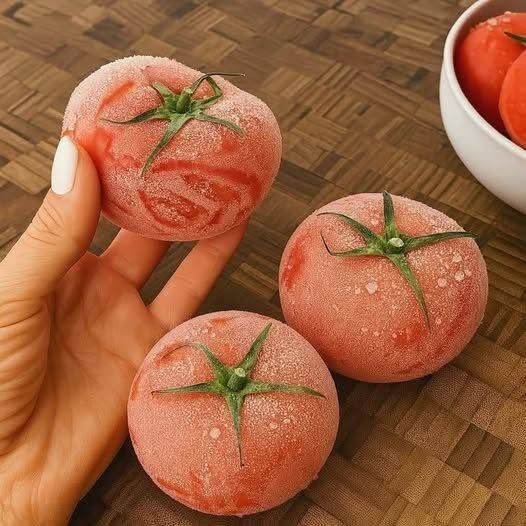
The photograph accompanying this article shows tomatoes with a frosty surface, illustrating the idea of keeping tomatoes frozen for later. However, the best way to freeze tomatoes depends on how you intend to use them, and there are a few important steps that can help preserve their quality.
In this detailed guide, you will learn how to freeze whole tomatoes, sliced tomatoes, peeled tomatoes, and homemade tomato sauce, along with practical storage tips, common mistakes to avoid, and delicious ways to use your frozen harvest.
1. Why Freezing Tomatoes Is Such a Good Idea

If you have ever bought a large bag of tomatoes because they were on sale, you know how quickly they can become difficult to use before they spoil. The same problem happens when a vegetable garden produces more tomatoes than a family can eat.
Freezing gives you a practical way to deal with that surplus.
Save money when tomatoes are cheap
Tomatoes are often less expensive when they are abundant and in season. Buying extra during these periods and freezing them for later can reduce the need to purchase tomatoes at higher prices.
For example, imagine finding ripe tomatoes at a local market for a particularly good price. Instead of buying only what you can eat in the next few days, you can buy enough for several future meals, provided you have sufficient freezer space.
Reduce food waste
Softening tomatoes are not necessarily spoiled. If they are still fresh, free of mold, and suitable for eating, they can often be frozen before they deteriorate.
Freezing allows you to preserve tomatoes that might otherwise be forgotten at the back of the refrigerator.
However, freezing does not make spoiled food safe. Discard tomatoes that are moldy, rotten, or otherwise unsuitable for consumption.
Make cooking easier
Imagine preparing dinner and discovering that the tomatoes you need are already in your freezer.
Frozen tomatoes can be especially convenient for:
- Homemade tomato sauce.
- Vegetable soups.
- Pasta dishes.
- Moroccan tagines and other slow-cooked stews.
- Curries and casseroles.
- Chili and bean dishes.
- Homemade pizza sauce.
You can prepare a supply when you have time and use it whenever you need it.
Enjoy the taste of seasonal tomatoes
Freezing can preserve much of a tomato’s flavor, especially when you start with ripe, good-quality fruit.
There is one important detail, though: frozen tomatoes do not retain the same firm texture as fresh tomatoes. Their cells are damaged by ice crystals, so they become softer after thawing.
That makes them excellent for cooked dishes but less suitable for salads, sandwiches, and recipes that depend on a firm, juicy tomato.
2. How to Choose the Best Tomatoes for Freezing

The quality of your frozen tomatoes begins with the tomatoes you choose.
You do not need perfectly shaped tomatoes. Small imperfections in appearance are usually unimportant, provided the fruit is otherwise fresh and sound.
Look for tomatoes that are:
- Fully ripe or nearly fully ripe.
- Firm enough to handle without falling apart.
- Free from mold and rotten areas.
- Free from unpleasant or fermented odors.
- Suitable for eating when you freeze them.
Different varieties work well for different purposes.
Roma tomatoes: These are particularly useful for sauces because they tend to have relatively thick flesh and less watery pulp.
Cherry tomatoes: These are convenient for freezing whole and adding to soups, sauces, and roasted vegetable dishes.
Beefsteak tomatoes: Their large size makes them useful for soups, sauces, and stews once they have been cut into smaller pieces.
Homegrown tomatoes: Freezing is an excellent way to preserve a garden harvest when several tomatoes ripen at once.
You can freeze different varieties together, but keeping them in separate labeled bags makes it easier to choose the right type for a recipe.
3. Method One: How to Freeze Whole Tomatoes

This is one of the simplest methods because it requires very little preparation. You do not have to peel, chop, or cook the tomatoes first.
What you need
- Fresh ripe tomatoes.
- Drinking-quality running water.
- A clean kitchen towel or paper towels.
- A freezer-safe bag or airtight container.
- A freezer.
Step-by-step instructions
Step 1: Select and inspect the tomatoes.
Choose ripe tomatoes without signs of mold or rot. Remove any damaged fruit that is no longer suitable for eating.
Step 2: Wash them thoroughly.
Rinse each tomato under running water. Gently rub the surface with your hands to remove dirt. Do not use soap or household cleaning products.
Step 3: Remove the stems.
Take off the green stems and any tough stem remnants. You can also remove the small core if you prefer, although it is not essential.
Step 4: Dry the tomatoes completely.
Place them on a clean towel and pat them dry. Removing excess surface moisture helps reduce ice buildup in the package.
Step 5: Freeze them individually if possible.
Arrange the tomatoes in a single layer on a tray lined with baking paper or another freezer-safe liner. Place the tray in the freezer until the tomatoes are firm.
The time required depends on their size and your freezer, so check them periodically.
Step 6: Transfer them to freezer bags.
Once frozen, place the tomatoes in freezer-safe bags or airtight containers. Remove as much excess air as practical without crushing the fruit.
Step 7: Label and date the package.
Write the freezing date and the number of tomatoes on the bag. This makes meal planning easier and helps you use older packages first.
What happens when you thaw whole tomatoes?
The skin often loosens as the tomatoes thaw. You may be able to slip it off easily, especially if the tomatoes have been partially thawed or briefly rinsed with warm water after removal from the freezer.
Alternatively, add the tomatoes directly to a simmering sauce or stew, allowing them to soften as they cook.
Best use: soups, sauces, stews, and other cooked dishes.
4. Method Two: Freeze Tomatoes Without Their Skins

If you frequently make smooth tomato sauces, peeled tomatoes can save you time later.
This method requires a little more preparation, but it is useful when you want to prepare ingredients in advance.
How to peel tomatoes before freezing
Step 1: Wash the tomatoes.
Rinse them thoroughly under running water.
Step 2: Make a small cross-shaped cut.
Using a clean knife, score a shallow X in the skin at the bottom of each tomato. Avoid cutting deeply into the flesh.
Step 3: Blanch briefly.
Bring a pot of water to a boil. Place the tomatoes in the boiling water for approximately 30–60 seconds, depending on their size and ripeness.
Step 4: Cool them immediately.
Transfer the tomatoes to a bowl of ice water to stop the cooking process.
Step 5: Remove the skins.
Once cool enough to handle, gently pull away the loosened skin.
Step 6: Pack and freeze.
Leave the tomatoes whole or cut them into pieces. Transfer them to freezer-safe containers, leaving appropriate headspace if you are packing them with liquid.
Label the containers and freeze promptly.
Is blanching necessary?
No. Blanching is optional for tomatoes intended for freezing. You can freeze them with their skins on and remove the skins later if you prefer.
Choose the method that best suits the dishes you prepare most often.
5. Method Three: Freeze Chopped Tomatoes for Quick Meals

If you regularly cook soups, pasta sauces, or stews, chopped frozen tomatoes can be especially convenient.
Instead of taking out a large frozen tomato and waiting for it to soften, you can portion your tomatoes into quantities that match your recipes.
Follow these simple steps
TO CONTINUE READING THE ARTICLE PLEASE SEE PAGE 2