⚠️ When should unusual rubbing concern you?
Normal rubbing against people and furniture is usually nothing to worry about.
However, there’s an important distinction between normal social rubbing and repetitive or compulsive behavior.
If a cat suddenly begins rubbing excessively, especially if the behavior is accompanied by:
- intense scratching;
- hair loss;
- skin redness;
- wounds;
- persistent itching;
- unusual vocalization;
- changes in eating or drinking;
- lethargy;
- other sudden behavioral changes,
it is worth discussing the situation with a veterinarian.
A sudden change in behavior can sometimes indicate discomfort or another underlying problem, and veterinary guidance is appropriate when the behavior seems abnormal.
🐾 The fascinating world of cat communication
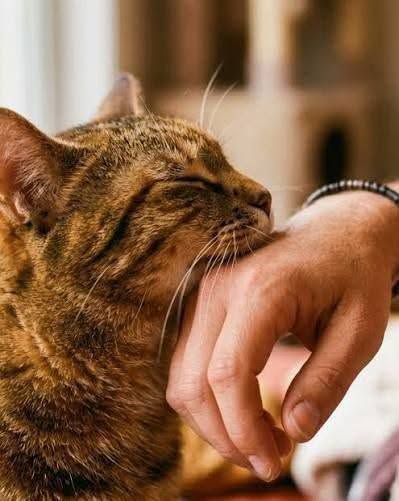
The next time your cat walks toward you and gently presses its head against your hand, don’t dismiss it as a random habit.
Your cat may be:
Greeting you.
Reconnecting with you.
Leaving its scent.
Showing trust.
Seeking attention.
Gathering information.
Or asking for something.
Often, several of these explanations can be true at the same time.
The most important clue is not just what your cat does, but what the rest of its body is saying.
Final thought
Cats may not express affection in exactly the same way humans do, but they have their own remarkably sophisticated ways of communicating.
That gentle head bump, cheek rub, or affectionate nuzzle can be one of the little signs that your cat feels safe, familiar and comfortable around you.
So if your cat suddenly walks over and rubs against your hand, you might want to enjoy the moment.
After all, in the mysterious world of cats, being chosen for a little head bump is a pretty special privilege. 🐱❤️