You may identify with some of these characteristics:
- Imaginative: You enjoy exploring possibilities and thinking creatively.
- Thoughtful: You tend to consider situations from different perspectives.
- Curious: You enjoy discovering hidden details and asking questions.
- Reflective: You sometimes prefer to observe before taking action.
You might also enjoy nature, peaceful environments, and activities that allow you to use your imagination.
3. If You Noticed Both Images Almost Immediately
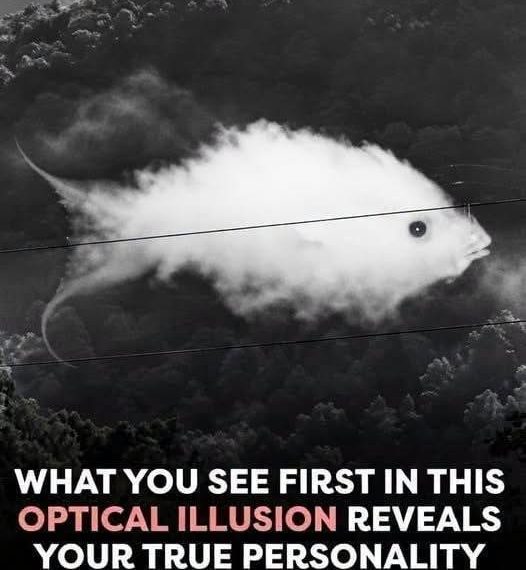
Some people recognize the different visual elements almost simultaneously. They may notice the white animal-like shape while also paying attention to the surrounding landscape.
This can make the illusion particularly interesting because the brain is switching between different interpretations of the same visual information.
In a playful personality reading, this is sometimes associated with flexibility, curiosity, and an interest in different perspectives.
You may enjoy solving problems, exploring new ideas, and looking beyond the obvious.
Why Does Your Brain See Different Things?
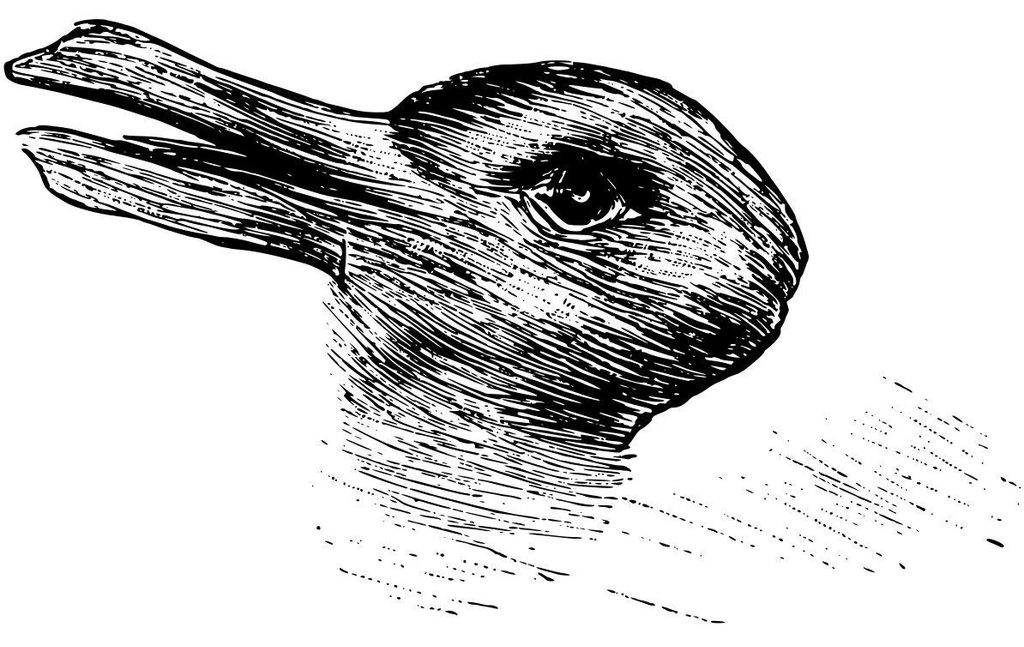
Optical illusions work because our brains do not simply record everything our eyes see. Instead, the brain constantly interprets visual information, using shapes, colors, contrasts, patterns, and previous experiences to understand the world.
When an image contains ambiguous shapes, the brain may interpret the same visual information in more than one way.
Several factors can influence what you notice first:
1. Attention: Your eyes naturally focus on certain areas before others.
2. Previous experiences: Familiar shapes and objects can influence how you interpret an unfamiliar image.
3. Visual context: Light, shadows, contrast, and surrounding elements can change how an object appears.
4. Expectations: Sometimes, knowing that an image contains a hidden shape makes it easier to recognize it.
This is why two people can look at exactly the same picture and describe completely different things.
Can Optical Illusions Really Reveal Your Personality?
This is where things get interesting.
Although social media personality tests often claim that your first impression reveals your deepest personality traits, scientific evidence does not support most of these claims.
A 2025 study published in the scientific journal PeerJ, by researchers Richard Wiseman and Caroline Watt, investigated whether people’s interpretations of ambiguous images could reveal their personalities and thinking styles.
The researchers examined four popular optical illusions and compared participants’ answers with established personality measurements.
Their findings showed that many popular claims about personality and optical illusions lacked empirical support. Some associations were observed, but they were small and did not establish that one visual choice could reliably describe someone’s personality. PubMed+1
In other words, these puzzles are entertaining ways to explore visual perception, but they should not be treated as psychological assessments.
Try Another Optical Illusion!
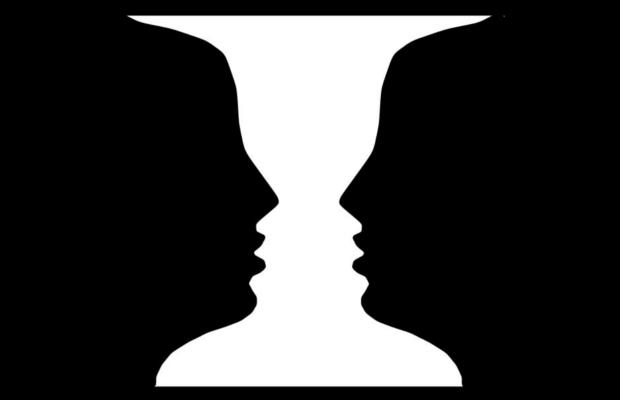
If you enjoyed this picture, try another classic illusion. Look at the image above.
What did you notice first: a vase in the middle or two faces looking at each other?
You might be surprised by how quickly your perception changes once someone points out the alternative image!
Final Thoughts
Optical illusions remind us that seeing is not always as simple as it seems. A single image can contain several possible interpretations, and our brains are constantly working to make sense of what is in front of us.
So, what did you see first in today’s picture: the white fish-like shape, the surrounding landscape, or both?
There is no right or wrong answer. The most interesting part is discovering how differently people can experience the same image.
Tell us in the comments what you noticed first! You can also share this picture with your friends and family to see whether they see the same thing as you.
Editorial note: This article presents the personality interpretations as a fun social experiment, not a scientifically validated personality test.