3. How Can You Tell If the Spots Are Serious?
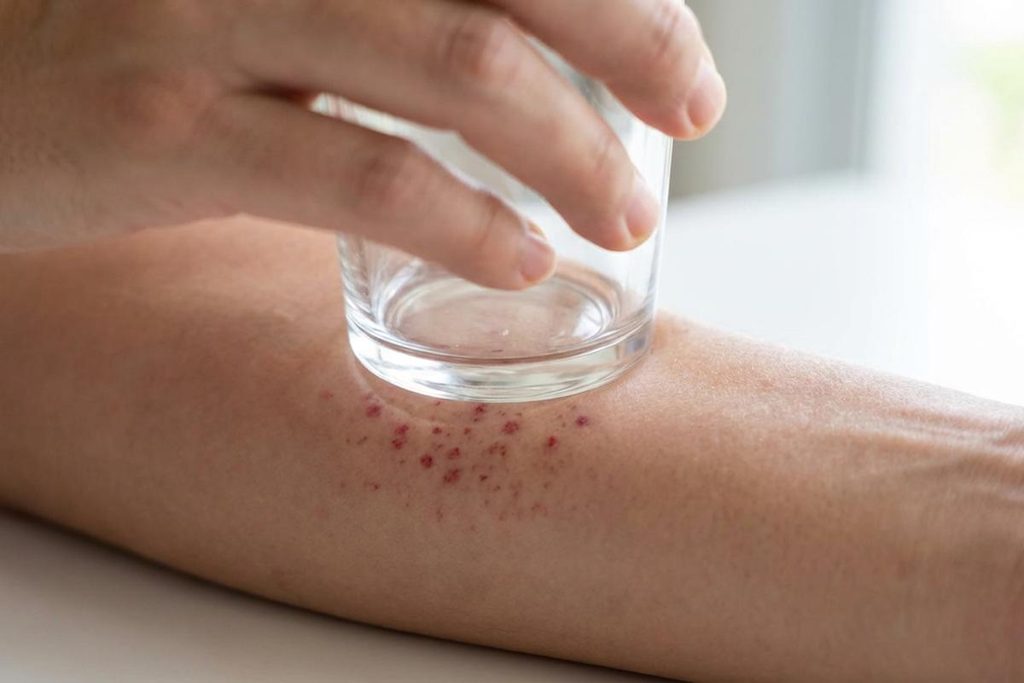
One useful observation is whether the spots disappear when gentle pressure is applied.
This is sometimes called the glass test.
- If the spots become lighter or disappear temporarily, they may be caused by surface blood-vessel changes.
- If they remain visible, they may represent bleeding beneath the skin.
However, this test cannot identify the cause or rule out a dangerous illness. Do not delay medical care to perform it. MedlinePlus+1
4. When Should You Seek Emergency Medical Help?
Seek emergency help immediately if purple spots appear alongside any of these symptoms:
- Fever or chills.
- Severe headache or stiff neck.
- Difficulty breathing.
- Confusion or unusual sleepiness.
- Severe abdominal or muscle pain.
- Fainting or extreme weakness.
- Rapidly spreading purple spots.
- Unusual bleeding from the nose or gums.
Importantly, a serious infection can sometimes cause a dangerous rash even before all the typical symptoms appear.
Do not wait for a fever to develop before seeking help. CDC+1
5. What Will Doctors Check?
When someone arrives with unexplained purple spots, doctors may perform several examinations to identify the underlying cause.
Depending on the symptoms, these may include:
Complete blood count (CBC): Checks platelet levels and other blood cells.
Blood clotting tests: Help determine whether the blood is clotting normally.
Physical examination: Checks the skin, mouth, joints, and other areas for signs of bleeding or inflammation.
Additional tests: Depending on the suspected cause, doctors may examine kidney function, liver function, urine, or look for infections.
The treatment depends entirely on the diagnosis. MedlinePlus+1
6. What Should You Do While Waiting for Medical Attention?
If someone suddenly develops unexplained purple spots:
- Take photographs to document how the rash changes.
- Note when the spots first appeared.
- Make a list of medications and supplements being taken.
- Avoid aspirin or ibuprofen unless a healthcare professional specifically advises otherwise.
- Do not massage or aggressively rub the affected skin.
- Seek urgent medical assessment rather than waiting to see whether the spots disappear.
Do not stop prescribed medication without medical advice.
Final Thoughts: Never Ignore Sudden Purple Spots on the Legs
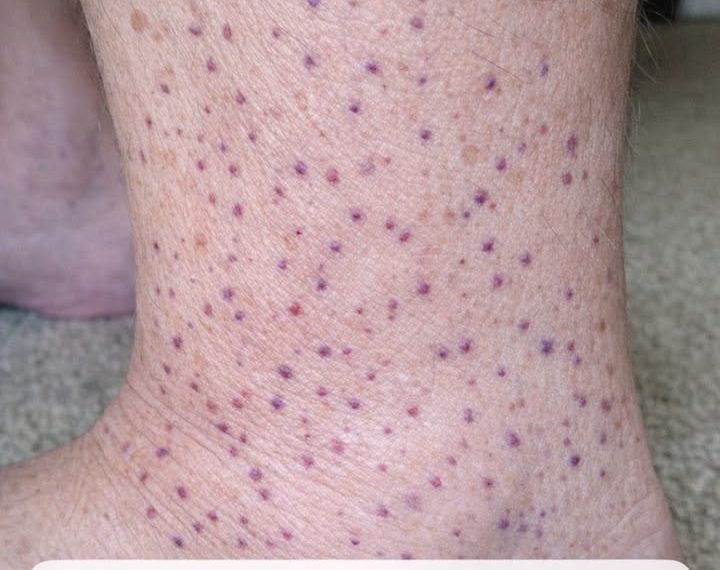
The tiny purple dots shown in the photograph may look like ordinary bruises, but their appearance can sometimes indicate bleeding beneath the skin.
Possible causes include low platelet counts, inflammation of blood vessels, medication reactions, and infections.
Some causes are manageable, while others require immediate treatment.
The most important message is simple: sudden, unexplained, or spreading purple spots deserve prompt medical attention, even when the person initially feels well.
If you notice these spots on yourself or someone you love, don’t simply wait for them to disappear. Get them checked.
Have you ever experienced unexplained purple or red spots on your legs? Share your experience in the comments. Your story might help someone recognize an important warning sign.
Medical disclaimer: This article is for educational purposes and cannot diagnose the condition shown in the photograph. A photograph alone cannot establish the cause of a skin rash. Sudden or spreading petechiae or purpura should be assessed urgently by a medical professional.